Soldered brass, 13 x 30 x 7, 2008.
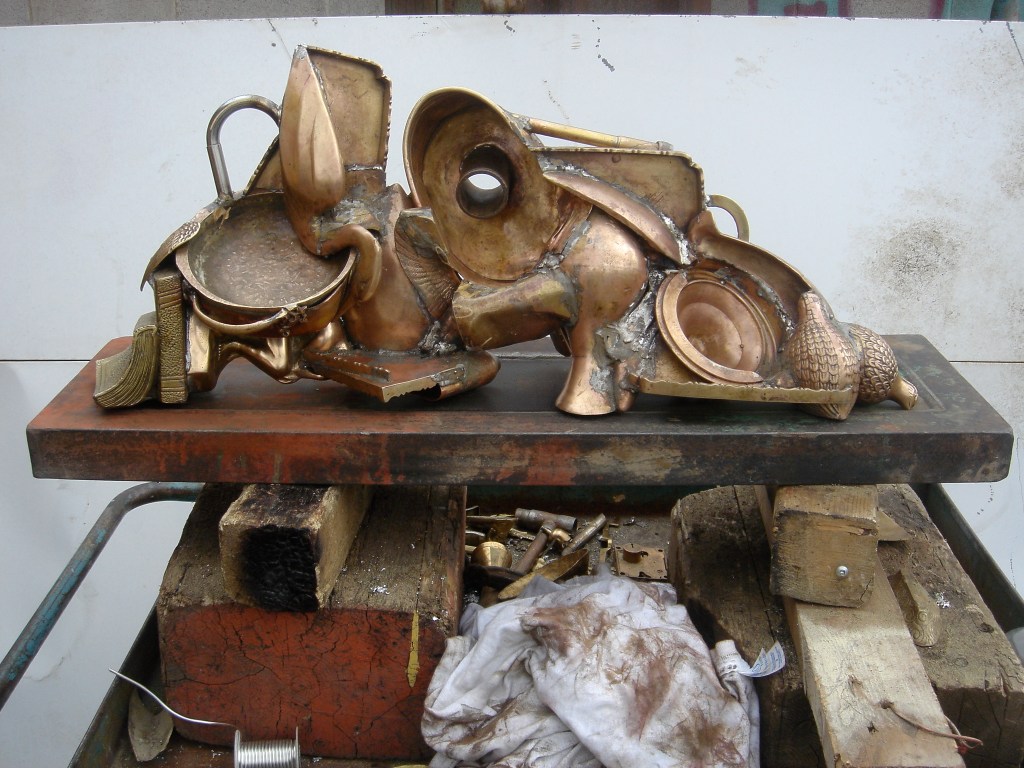
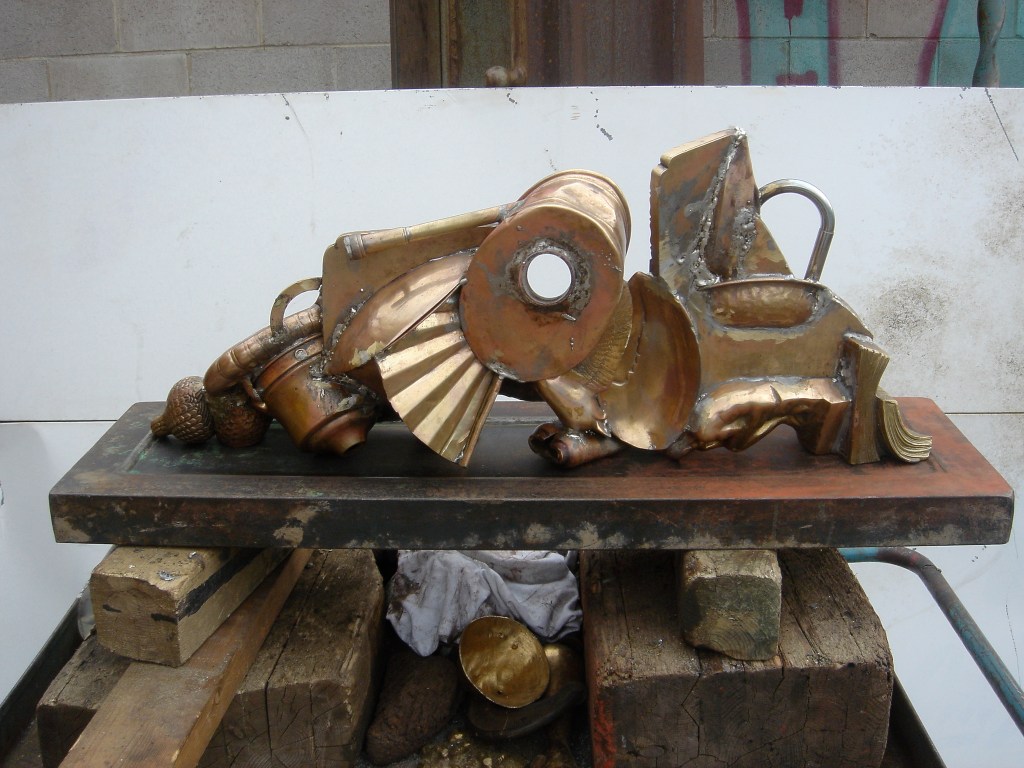
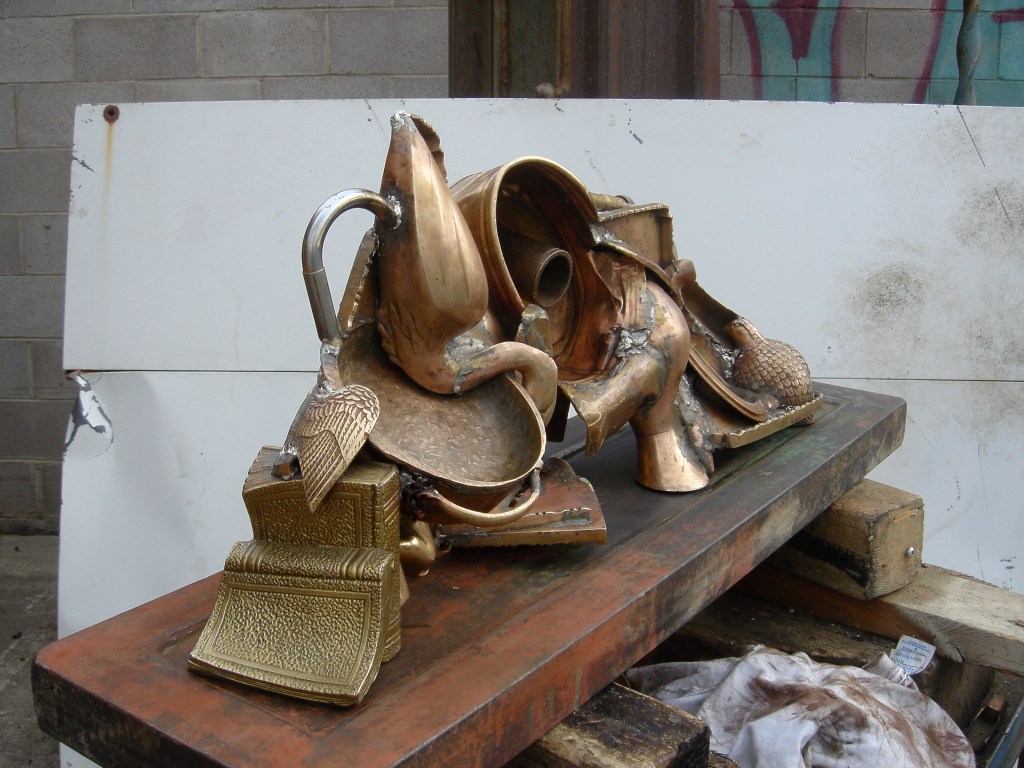
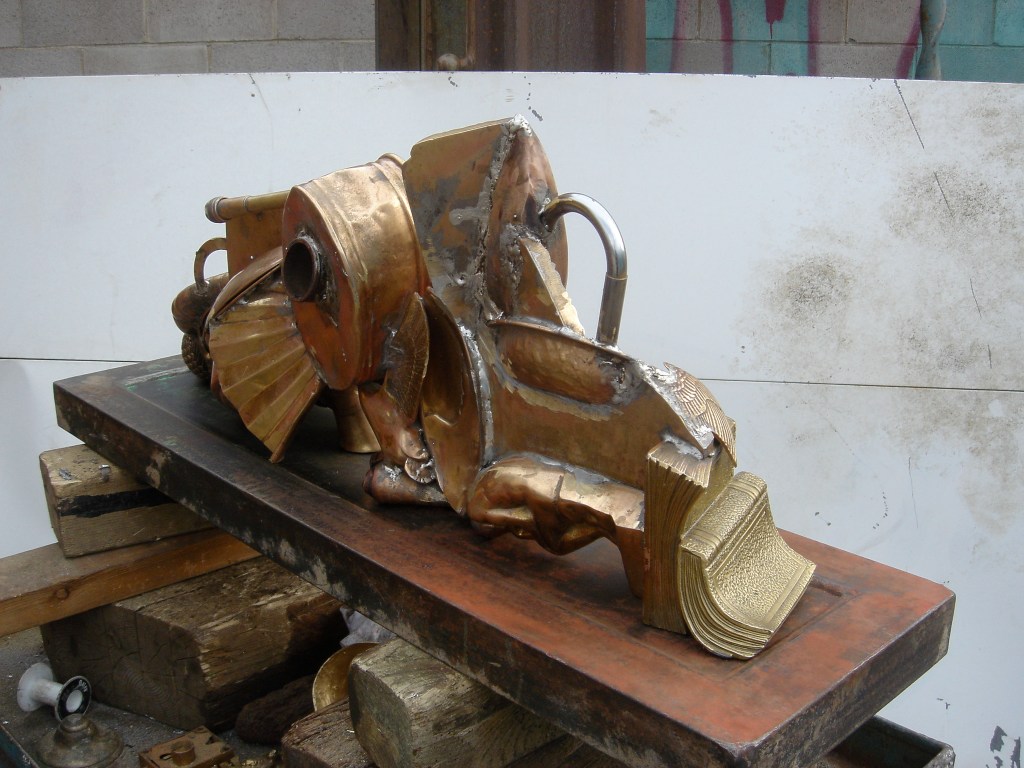
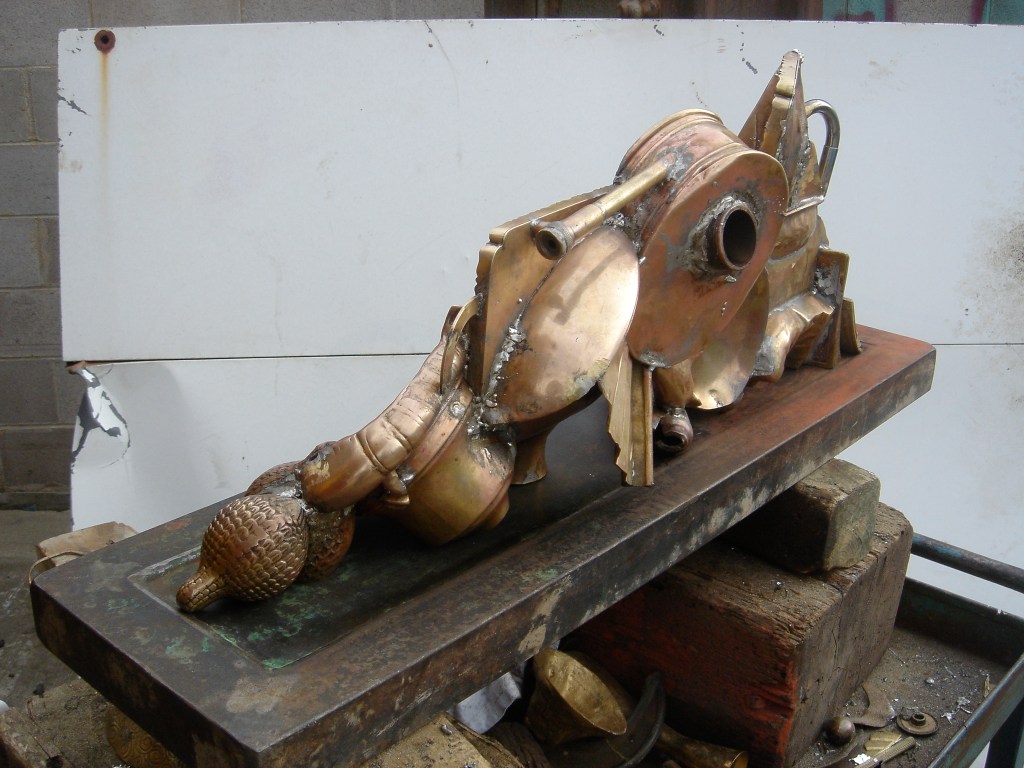
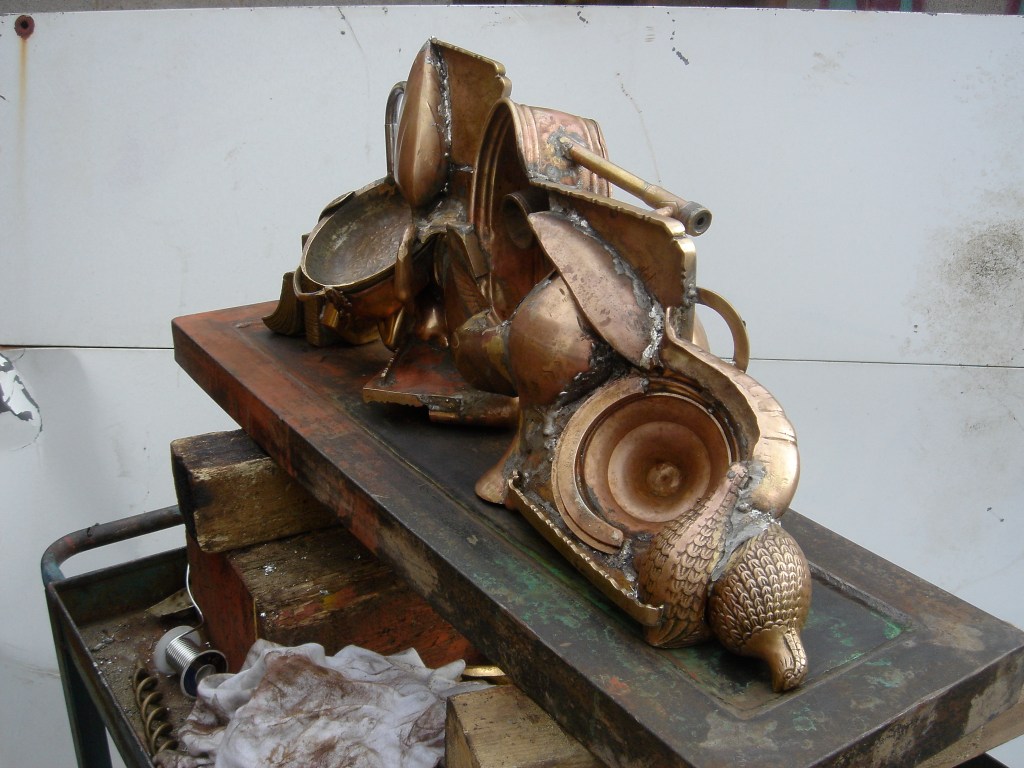
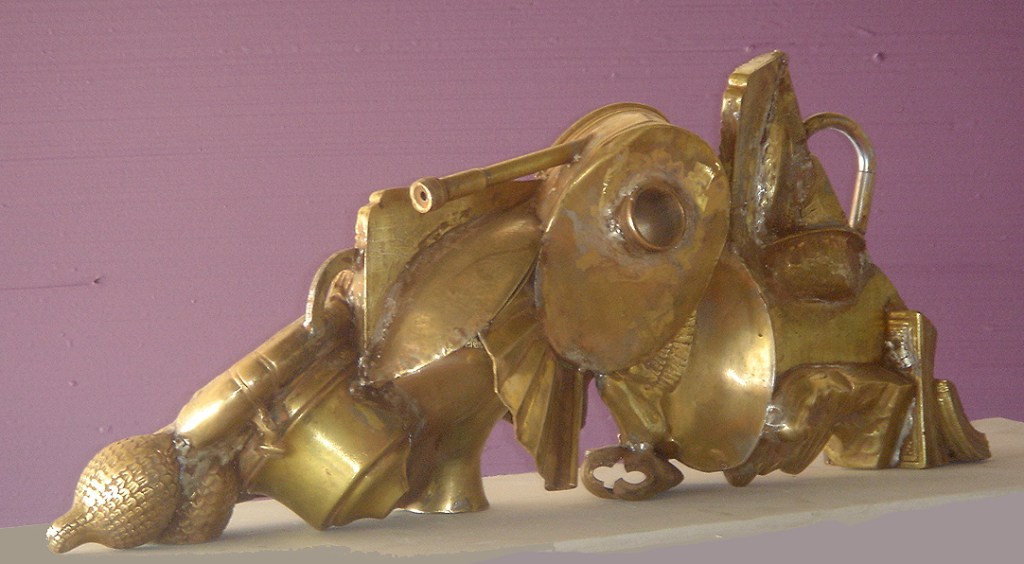
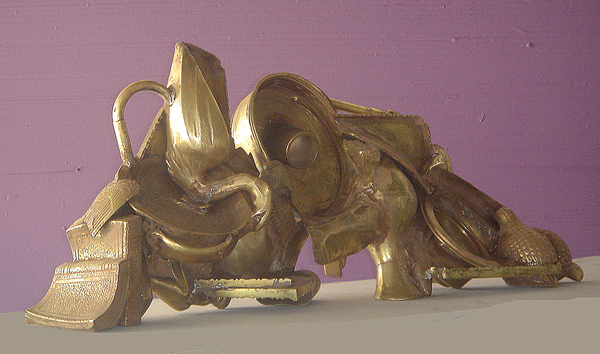
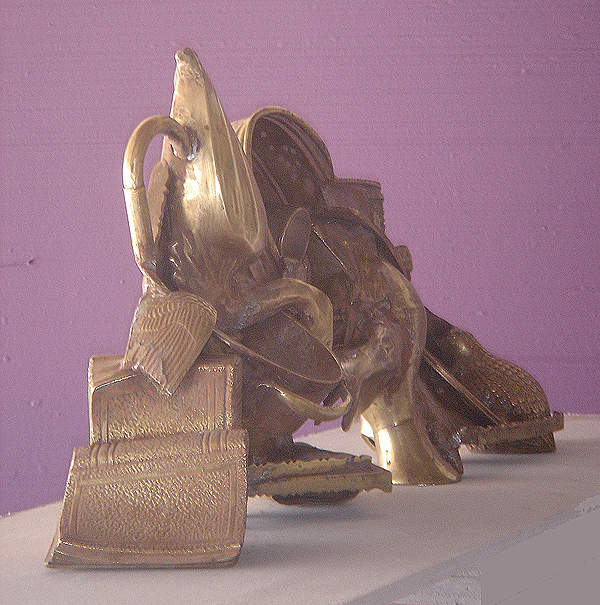
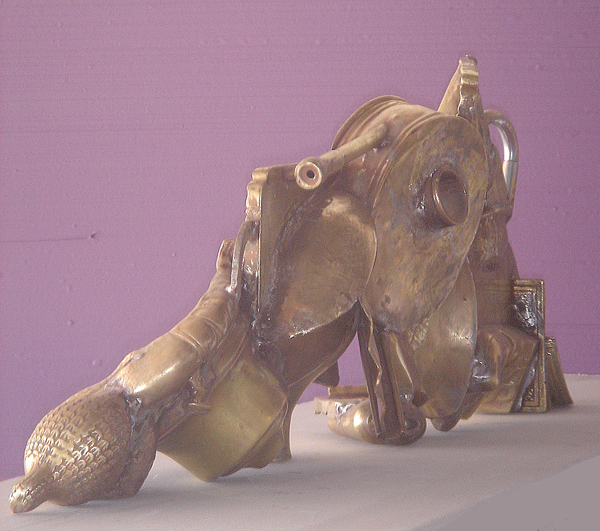
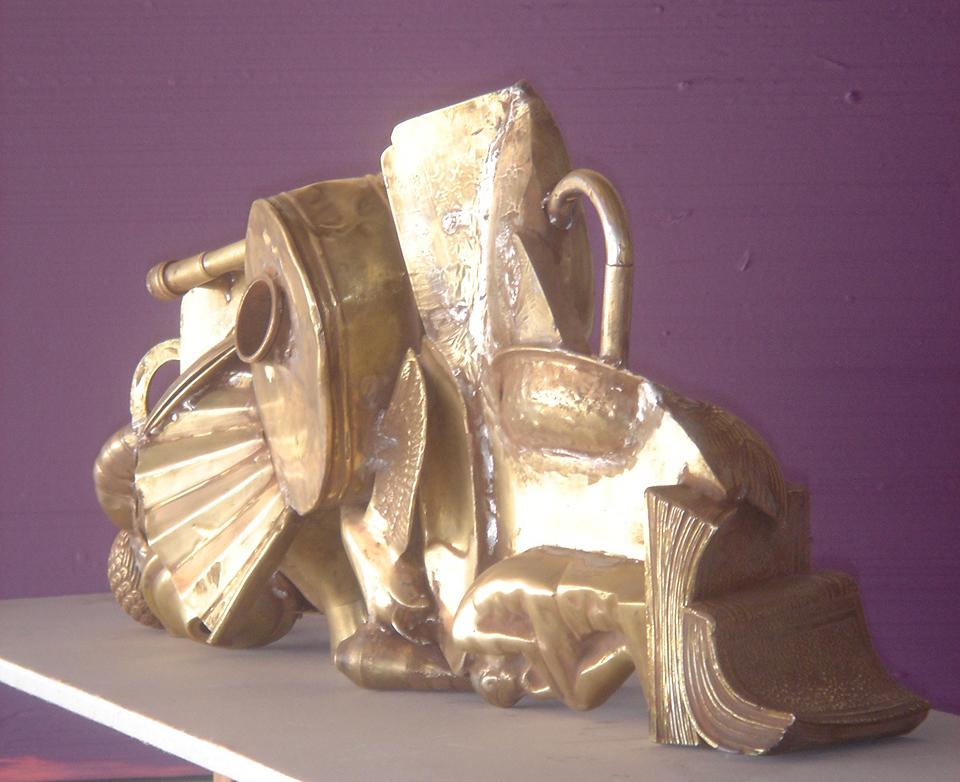
After Armageddon takes the final battle as already finished. Apocalypse is imagined as a vertical event, with fire descending and trumpets overhead. This work lies flat, thirty inches long and seven deep, in the posture of a tomb effigy or a reclining figure, and what lies in it is the aftermath. Two bodies rest on their sides. The left one has the proportions of a horse, with an ear raised, a tassel hanging from its flank and a looped handle standing up from its back. The right one is a machine, with a round bore, a slender barrel along its top and a ribbed fan splayed at one end. Both have gone down in the same direction, and neither is a rider or a weapon any longer.
The pairing is the oldest in warfare: the animal that carried the army and the engine that replaced it. The Four Horsemen come out of Revelation, and the same text has the armies gather at Armageddon. The sculpture sets the horse and the gun side by side on the ground and gives them the same stillness. The ordinary end of a battle is stillness of this kind, and it levels the two.
At the near end a stack of pages stands upright, ridged along the edge. Revelation is a book in which books are opened and the dead are judged by what is written in them. Here the book is the one object that stays upright, set at the end of the long body like a marker at the head of a grave. The reading is done, and the judgment is a physical thing that remains on the plinth with the rest.

