Painted welded steel, 120 x 108 x 90, 2003.
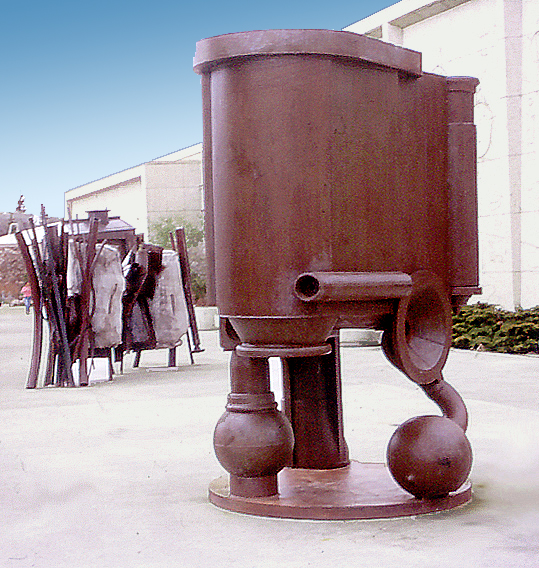
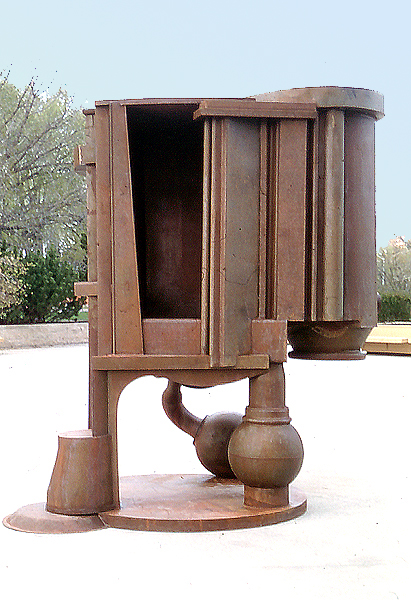
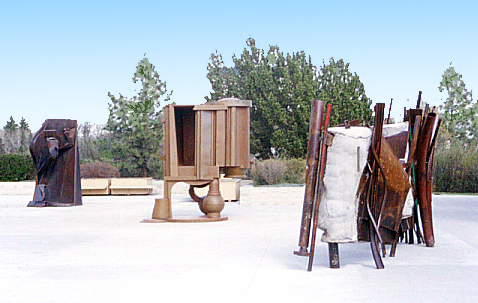
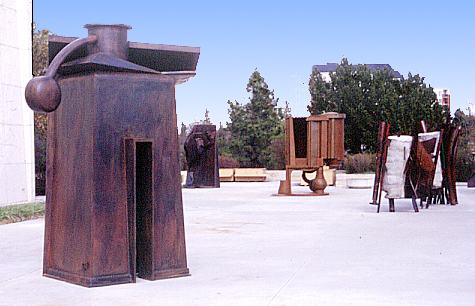
Solus is Latin for alone, and the room the sculpture offers is a bath. At ten feet high, nine wide and seven and a half deep, it can be climbed into, or entered from below. A grab handle stands at the edge of an opening, and a bank of vertical folds hangs beside it like a curtain drawn back. Behind them is a deep, dark chamber with room for one body.
The plumbing is on the outside. A pipe projects from the side of the body and ends in an open mouth. A flared horn on a bent pipe drops to a ball-shaped fitting on the base, and the whole chamber stands up off the ground on a swelling stem and spheres, as a tub stands on its feet.
A bath is the room where people are most completely alone: undressed, unobserved and shut in. Solus puts that room on open ground at the scale of a monument, in sight of everyone. Latin gives the title an old comparison. Roman baths were among the most communal rooms in the city, places to meet and be seen, and this one holds a single person at a time. A city provides water and drainage as a service to its people, and this sculpture provides, in the same terms, a place to be alone.

