
Soldered brass, 23.5 x 23 x 14, 2022
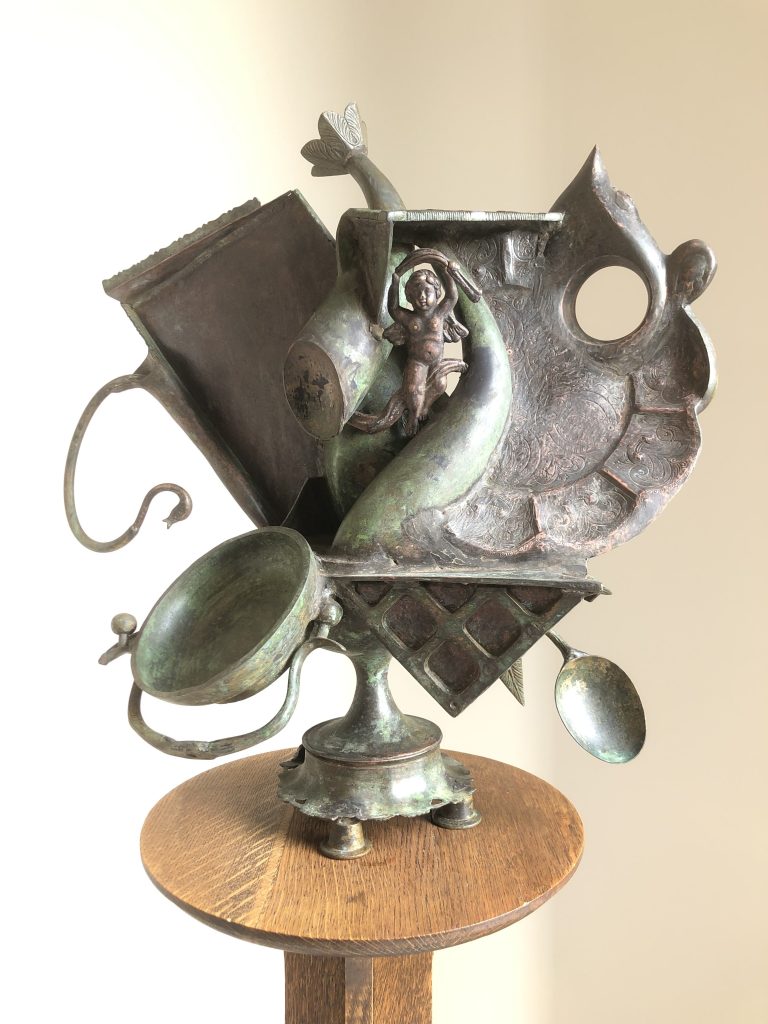
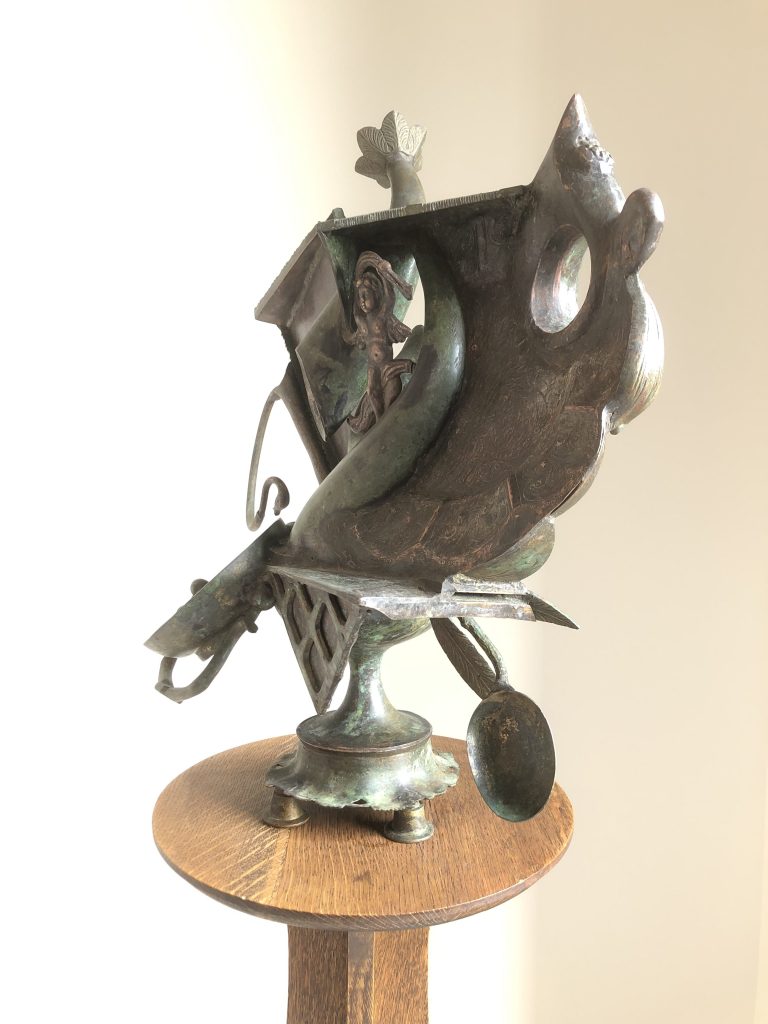
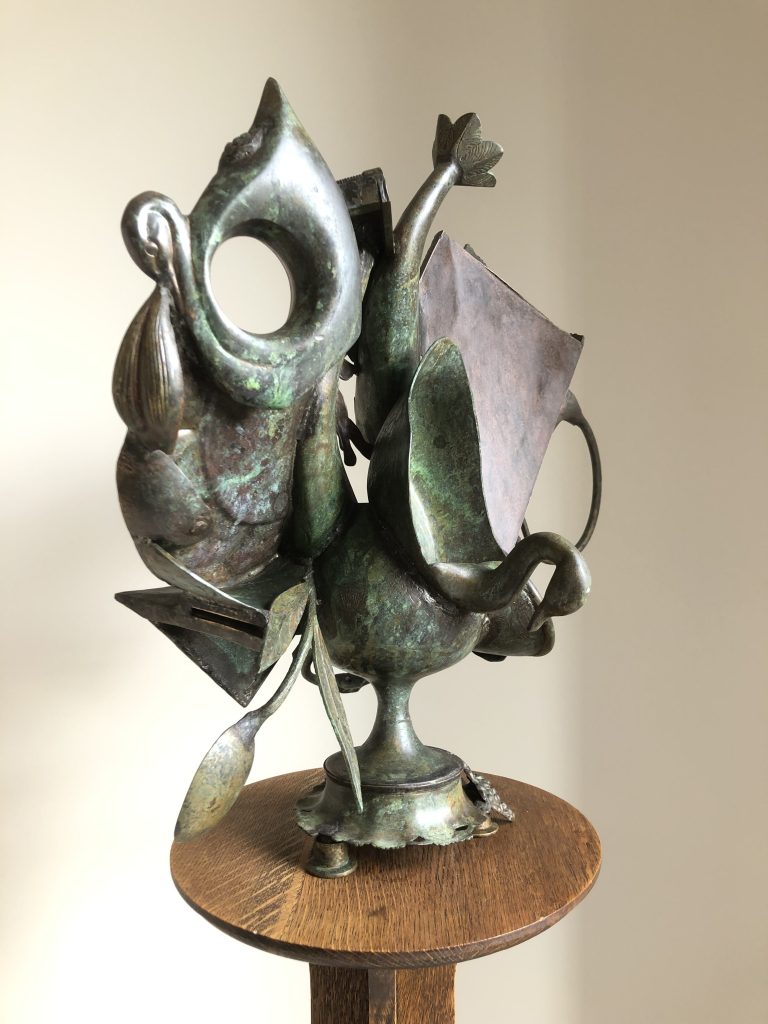
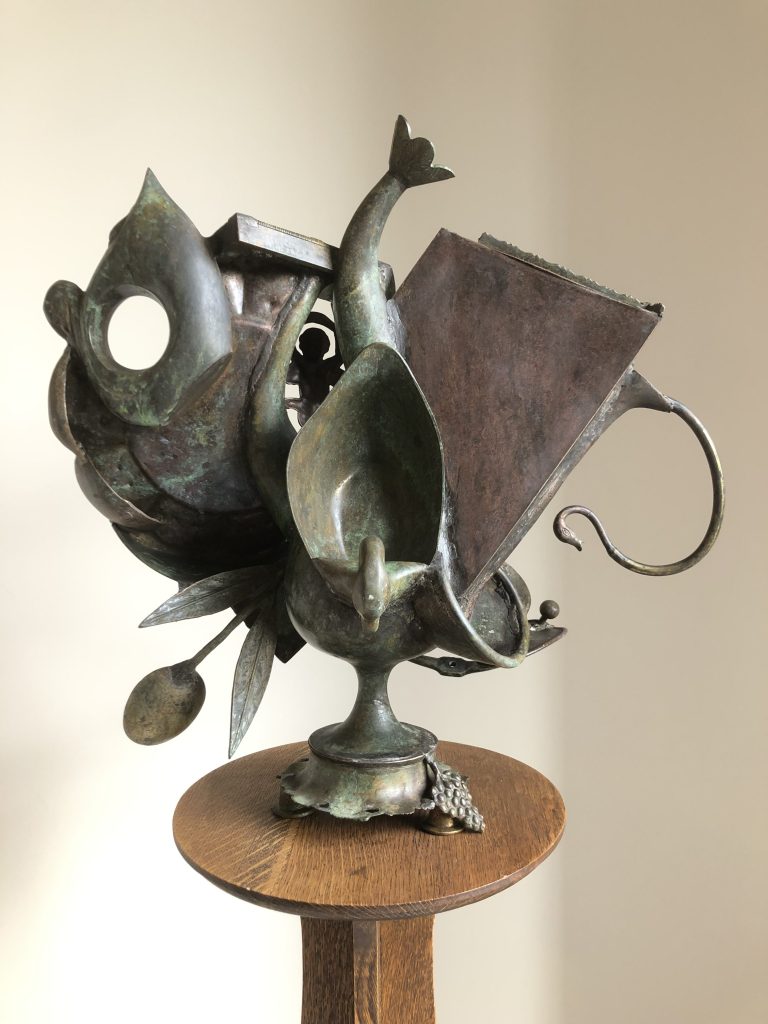
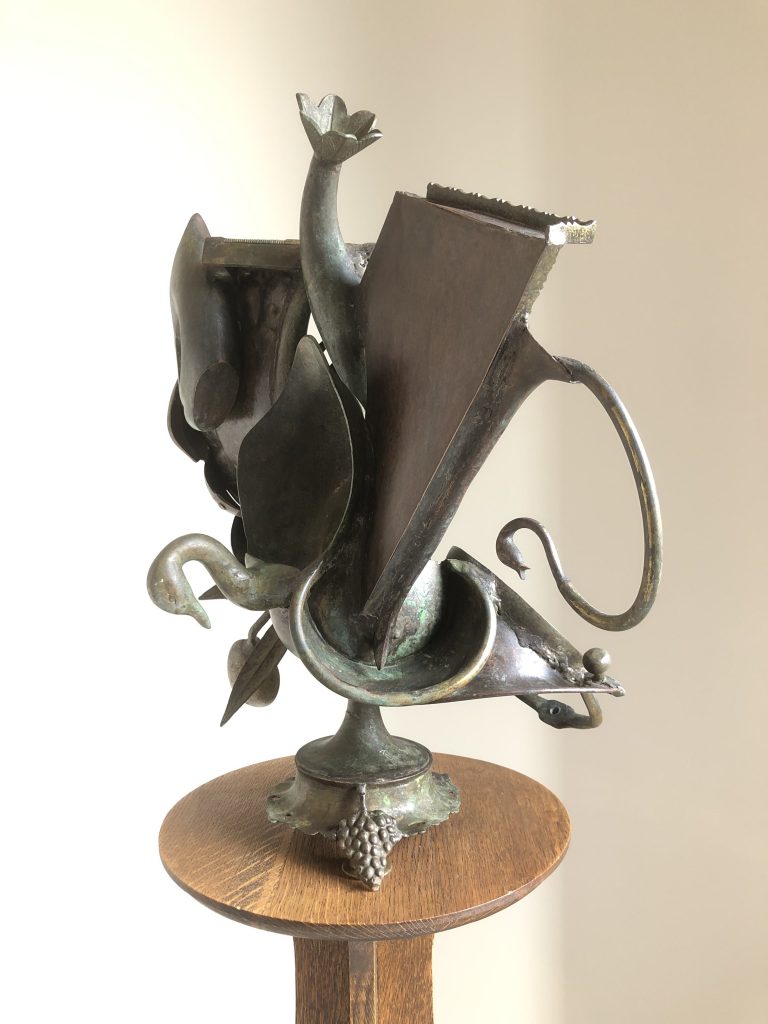
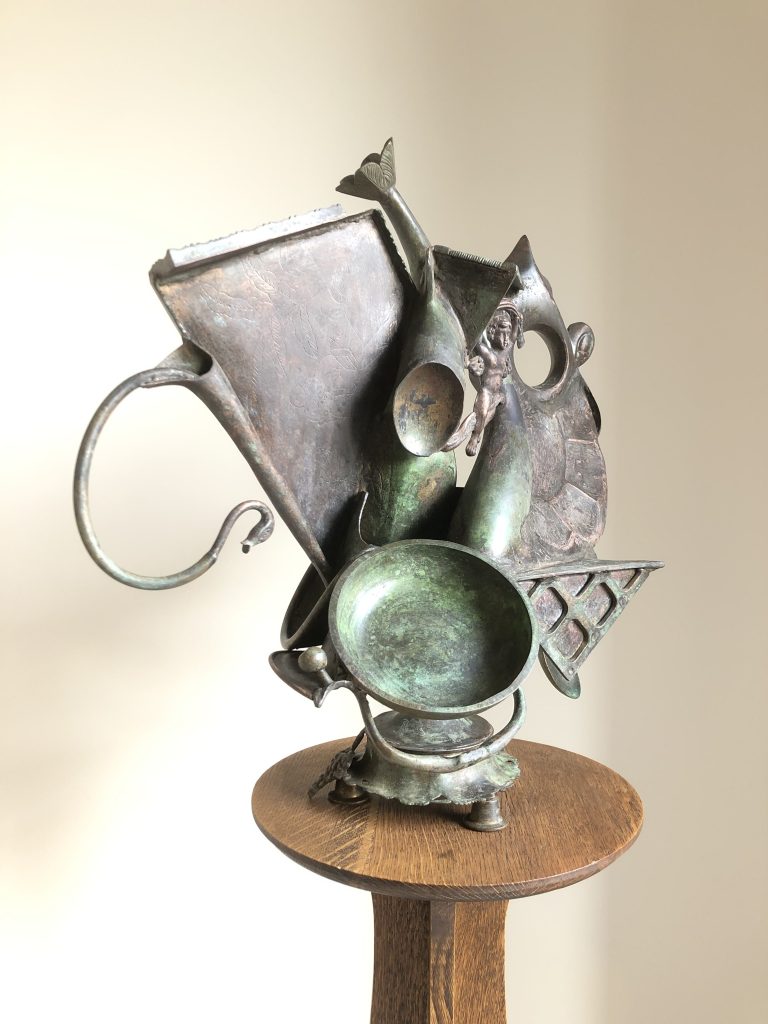
“Grotesque” first named an ornamental style. Grottesche were the painted fantasies of putti, birds, vases, garlands, and hybrid monsters, interwoven with strange fruits and flowers, that Renaissance artists found on the walls of Nero’s buried Golden House, which they entered like caves (grotte). The sculpture is that ornament in three dimensions. A putto holds a garland aloft among swan-necked handles, a leaf-tipped stalk, a bunch of grapes, and a bowl with a spoon: human and animal forms interwoven with foliage and fruit, with the natural distorted into absurdity. The verdigris over all of it is the green of excavated bronze, as if the work had been dug out of the grotto.
‘Display’ supplies the other half of the title, and the display is a bouquet. A stemmed vase on a footed base holds an arrangement of curved stems, a calla-like cup, a stalk tipped with a leaf, and long leaves with a spoon among them. The blooms are vessels and the stems are handles and swan necks, so the flowers are made of the tableware that would otherwise stand beside them. The word also names what a bird does with its plumage, and an engraved platter, fanned like a tail and pierced with a round eye, performs that too. The vase presents the monster, and the monster puts itself on show. The two words make a stock phrase for something bizarre and incongruous on view, and here it is literal: a bouquet in which nothing grows, a bird made of a platter, a putto among the stems.

