
Soldered brass, 15.5 x 25 x 10, 2021.
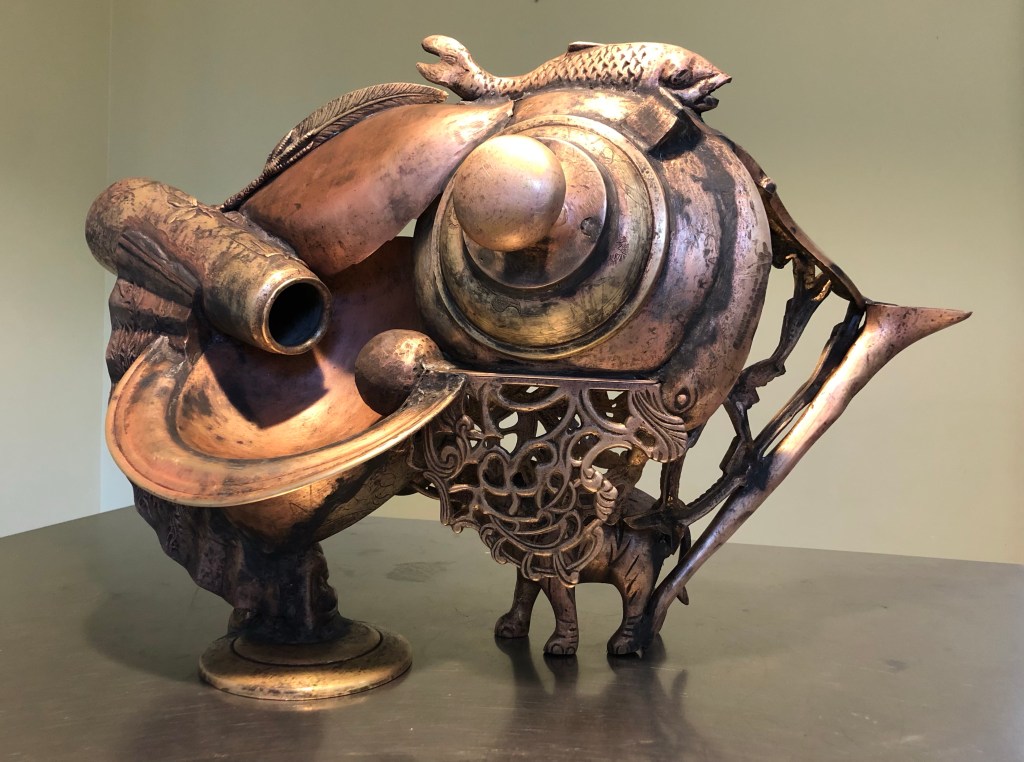
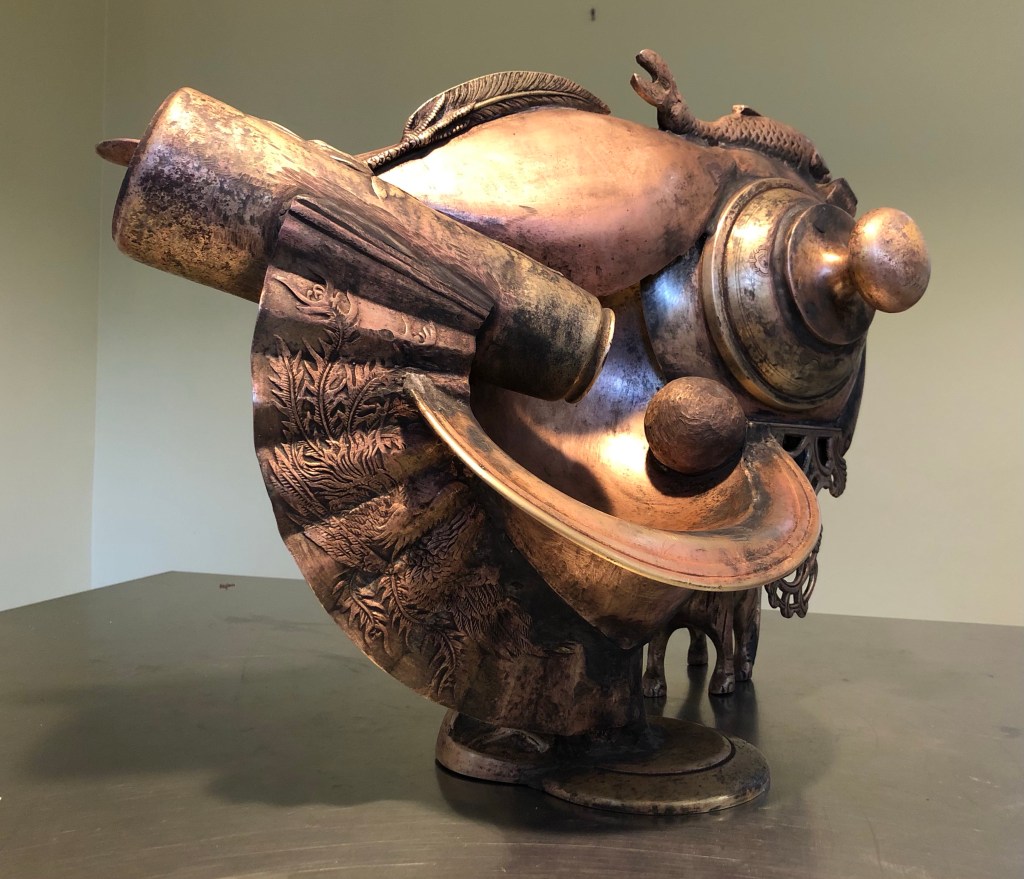
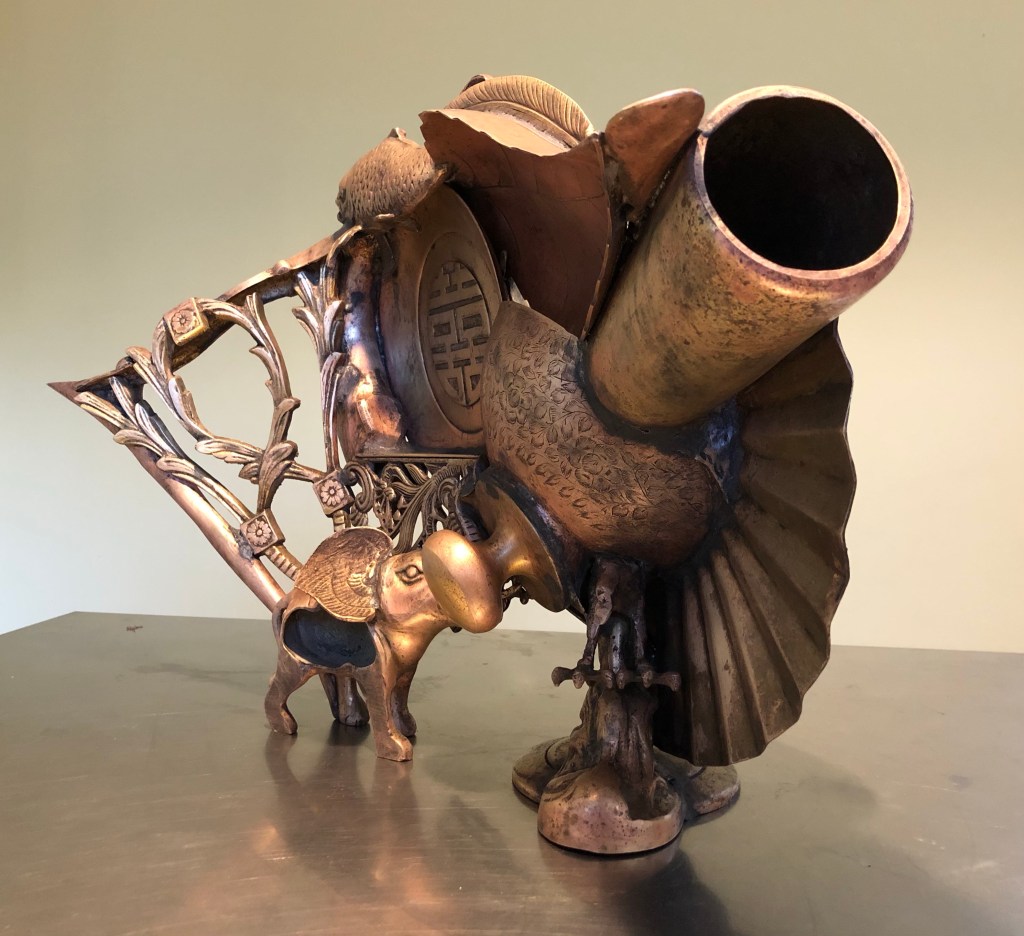
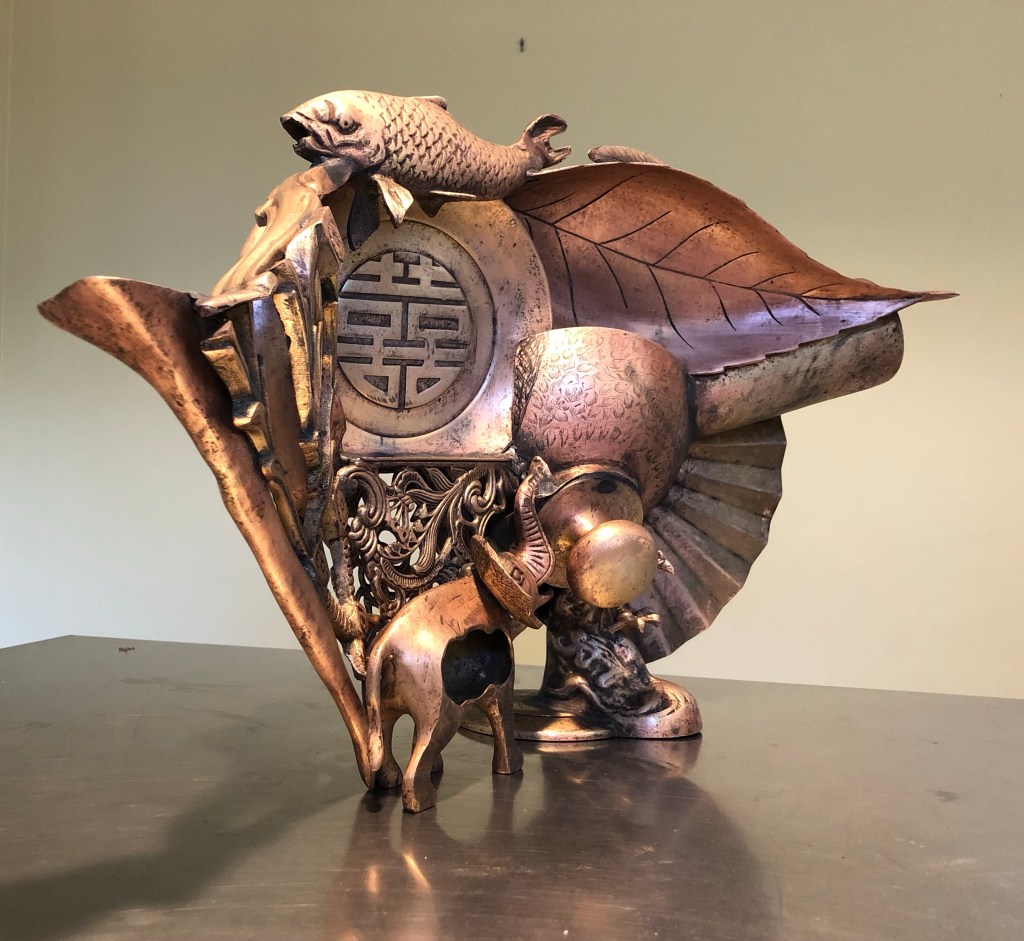
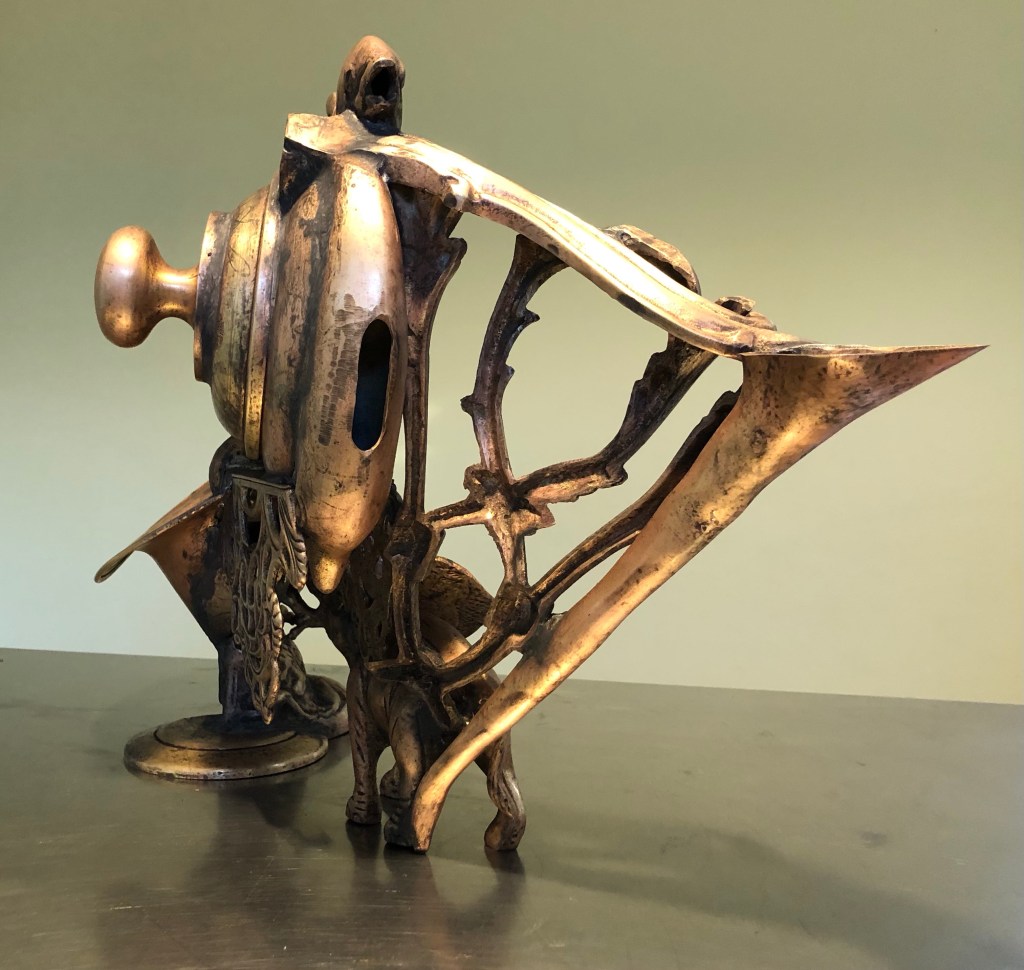
Schiller’s ode, as Beethoven set it in the finale of the Ninth Symphony, says that joy’s magic binds together again what custom has strictly divided. The sculpture takes that line as its method. Its parts come from different places and uses: a carp, an elephant, a folding fan, a bowl, a vase, a pierced stand, a leaf. Solder is the binding agent, and the joy the work offers is the act of assembly.
The Chinese motifs supply the other half of the title. The medallion at the centre bears the double-happiness character, 囍, which is the character for joy written twice, so the sculpture carries its title on its face in another language. The creatures around it belong to the same system of auspicious signs, in which objects speak through puns. The carp (yu) promises surplus, and the elephant (xiang) puns on the word for auspicious (xiang). Joy in this vocabulary is a list of wishes spelled in homophones, and the sculpture assembles that list into a single body.
The Ode is also a choral work. Beethoven’s finale is the moment when voices enter a form built for instruments, and the sculpture is likewise a group of openings: the carp’s gaping mouth, the elephant’s raised trunk and opened body, the bore of the vase, the flared dish. Every one faces outward. This is a sculpture that sings.

