
Soldered brass, cast iron, 20 x 25 x 18, 2018.
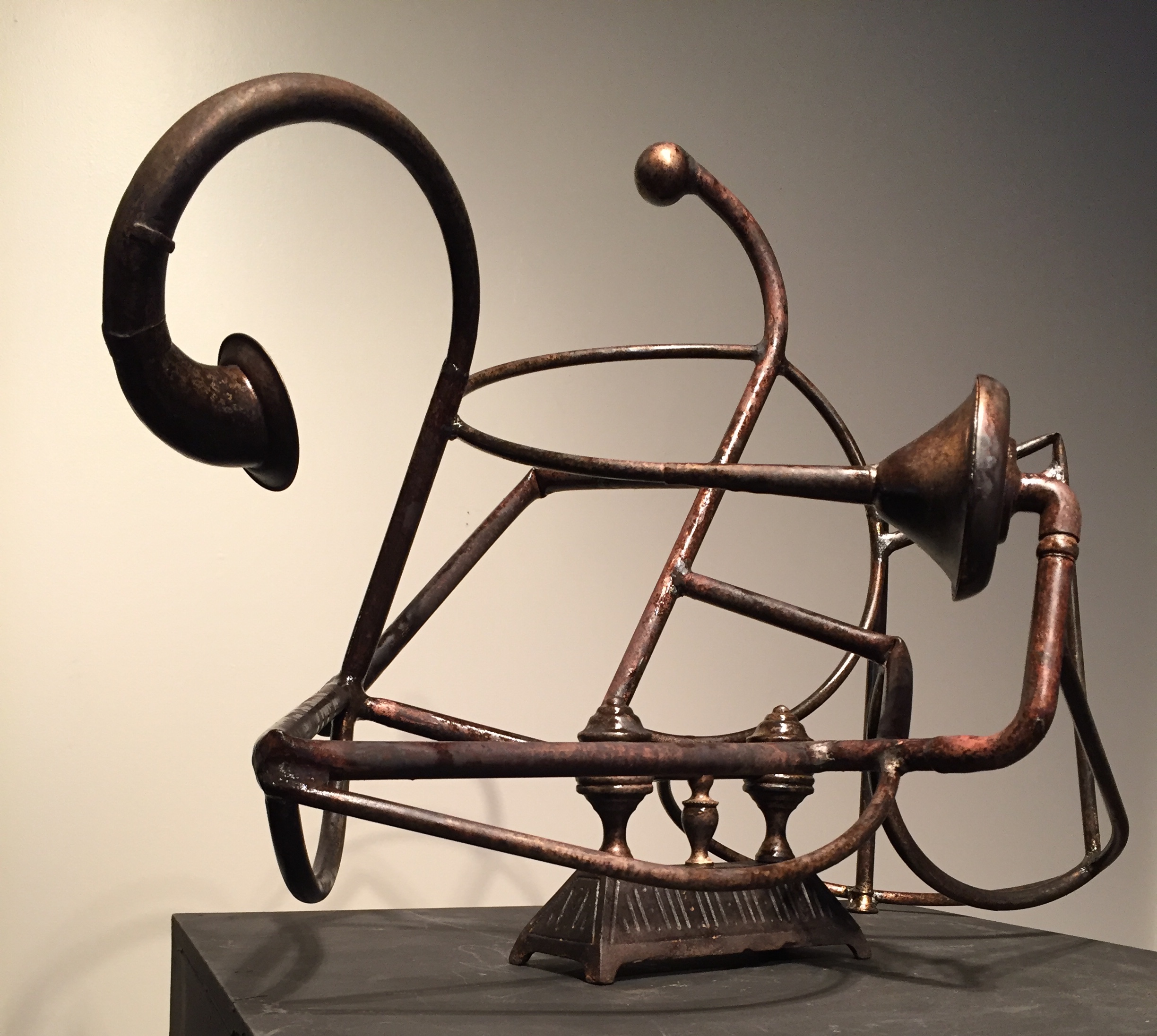
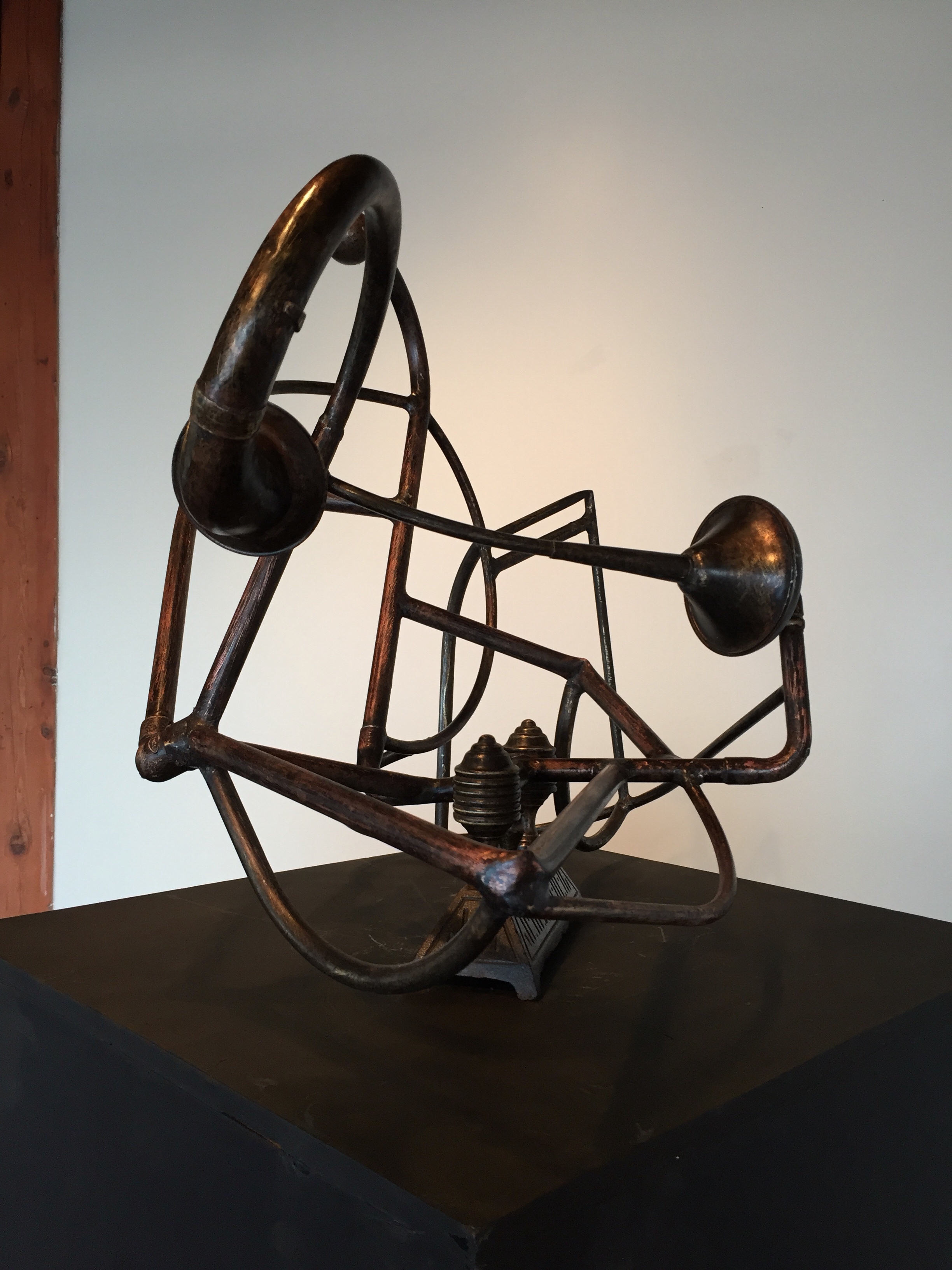
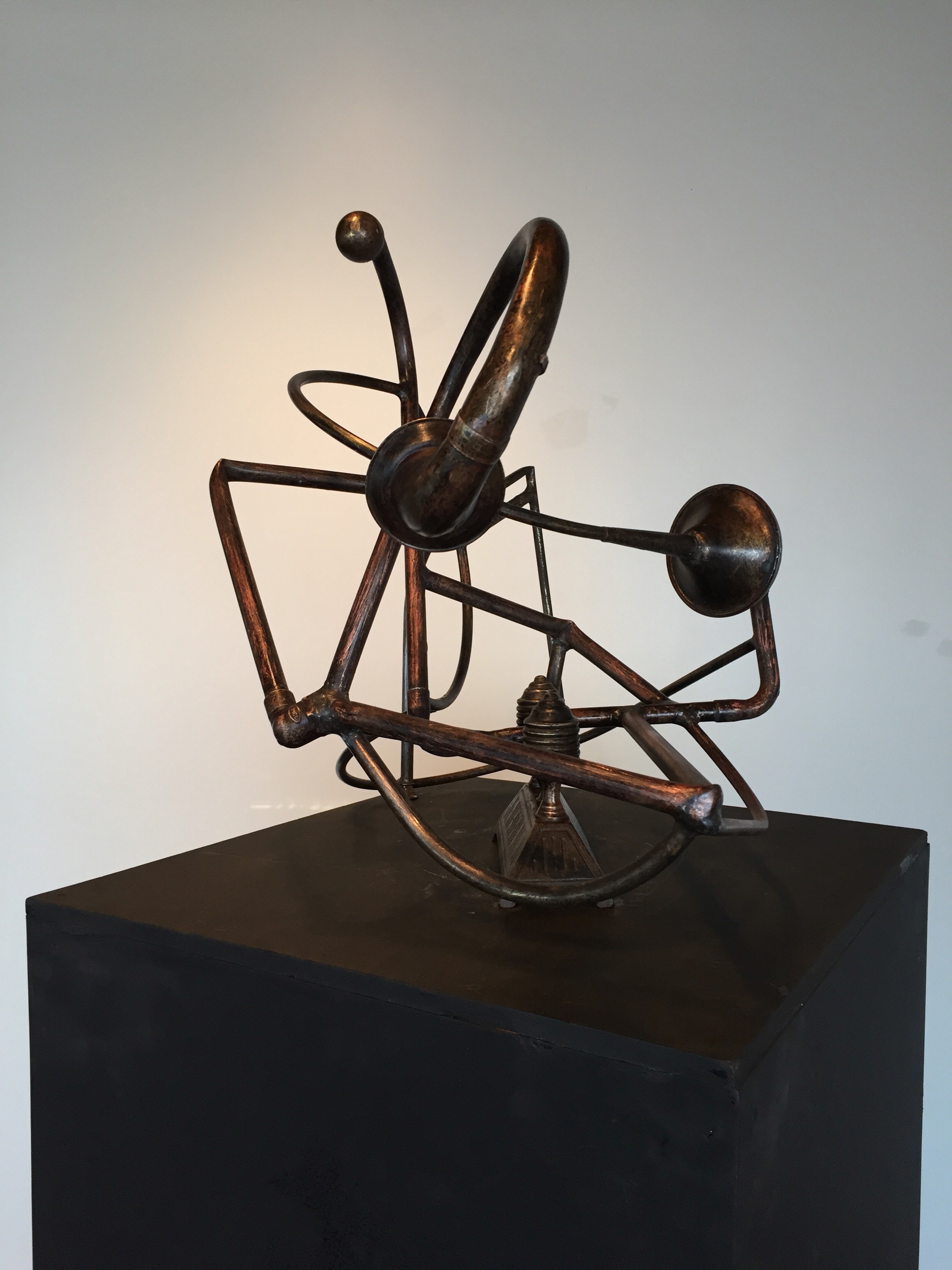
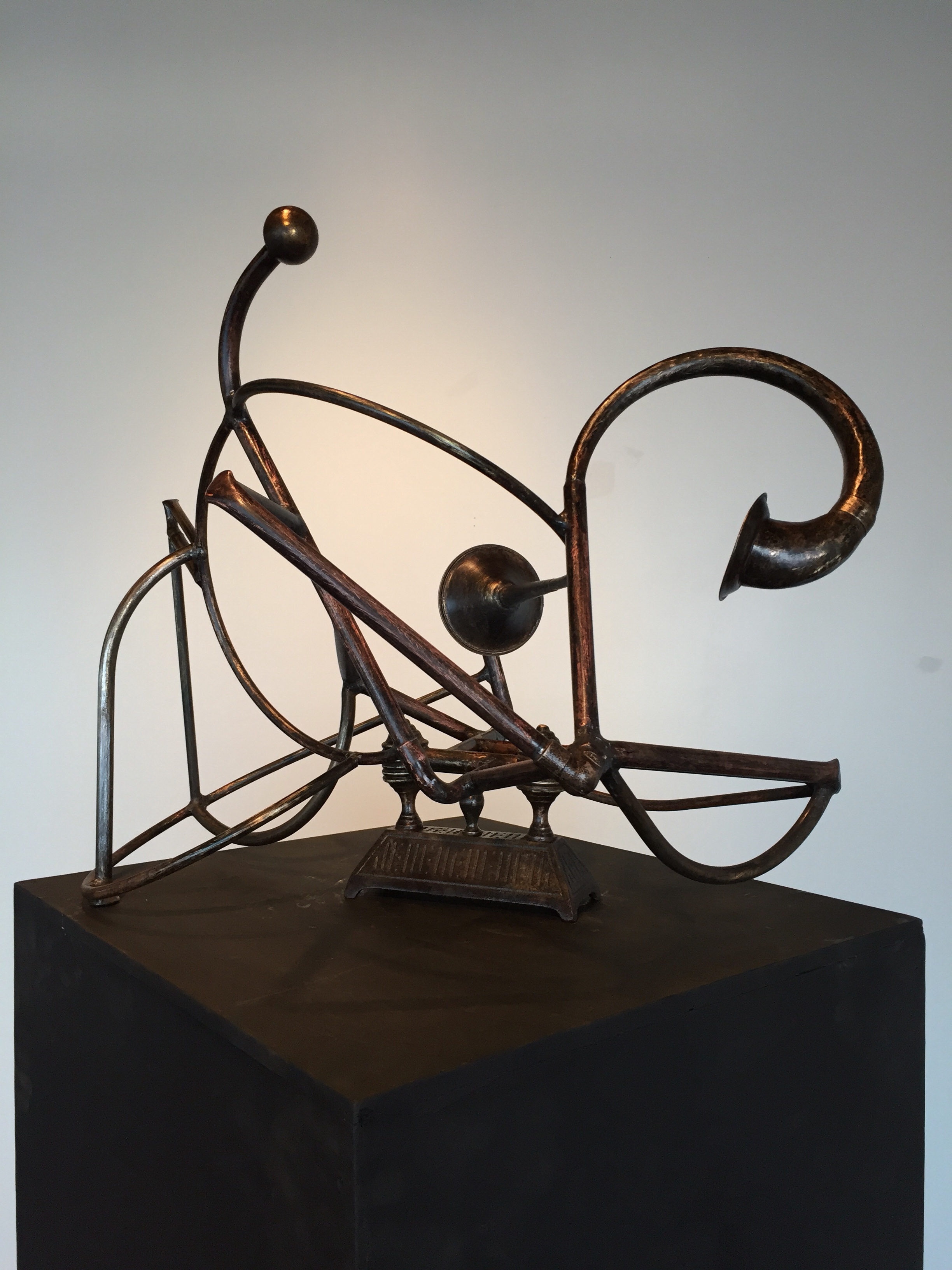
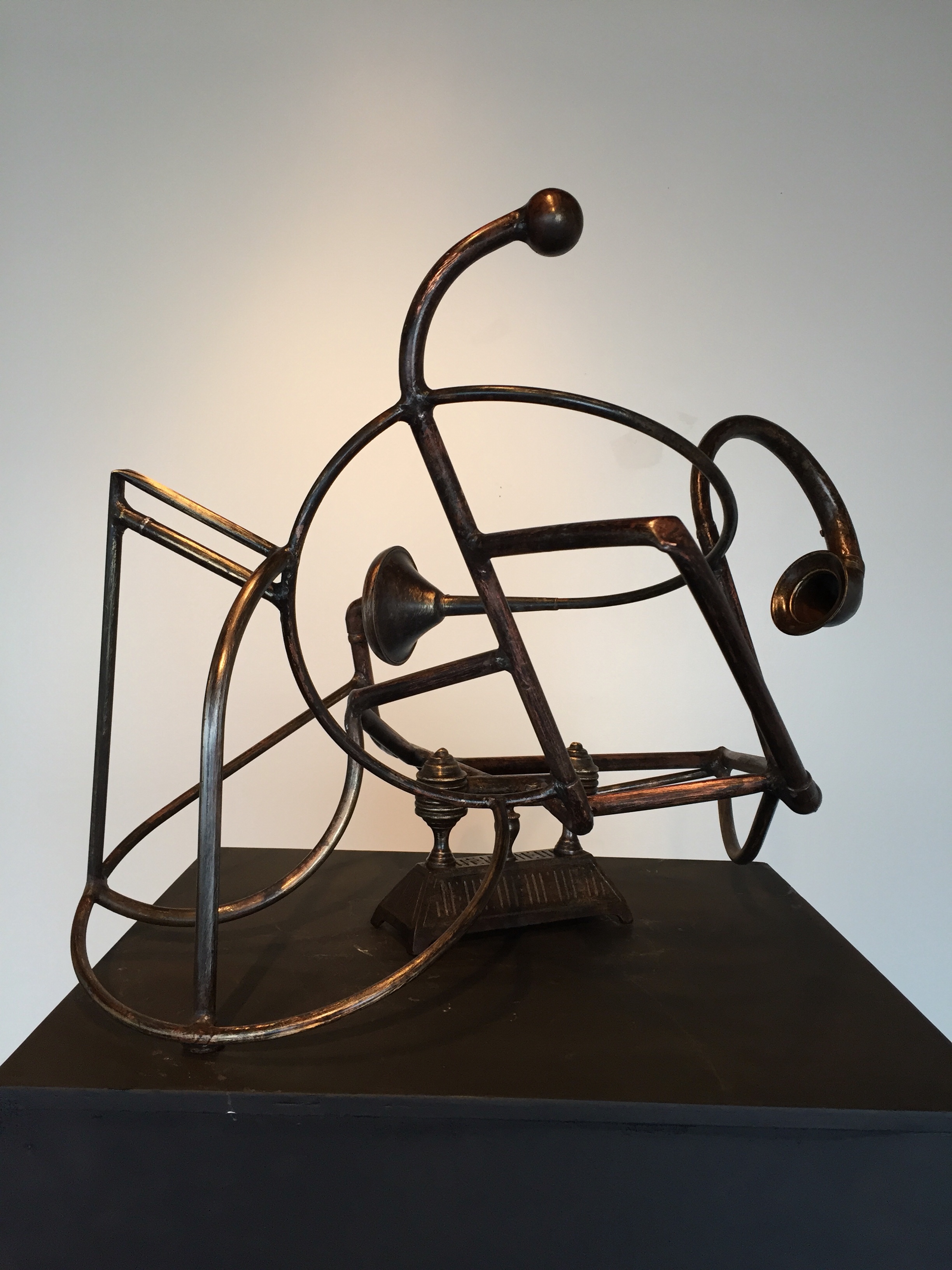
Cervantes describes Rocinante as bony and Don Quixote as lean and worn down. The sculpture treats both the same way. Horse and rider are built from tube, ring and bar with nothing filling the volumes, so each body is all frame. The ball on the curved stalk is the rider’s head, a solid sphere at the highest point of the figure. It sits above a structure of open lines and leans forward. The large curl at the left ending in a flared opening is the horse’s head, its mouth open like the bell of a horn.
Quixote is a man out of step with his time. Where a knight would carry a shield, a disc near the middle of the figure carries clock numerals, but the clock has no hands.
The frame leans forward and its curved members spread out from a small stand, so the pair is caught in motion. González’s iron Don Quichotte draws the knight in lines in space, and Picasso’s 1955 drawing reduces him to a few strokes. Quixote works in the same open manner.

