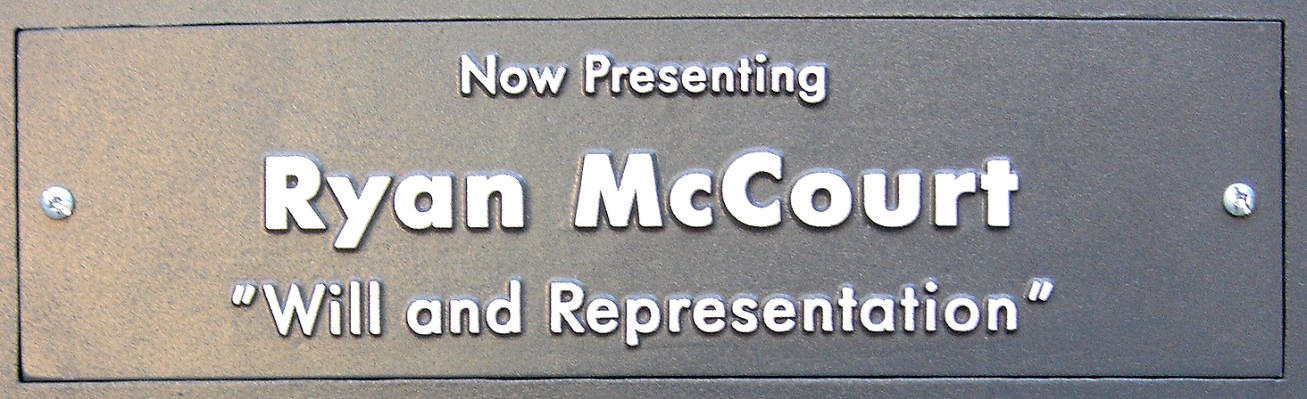
Painted welded steel, 16.5 x 21 x 12, 2015.
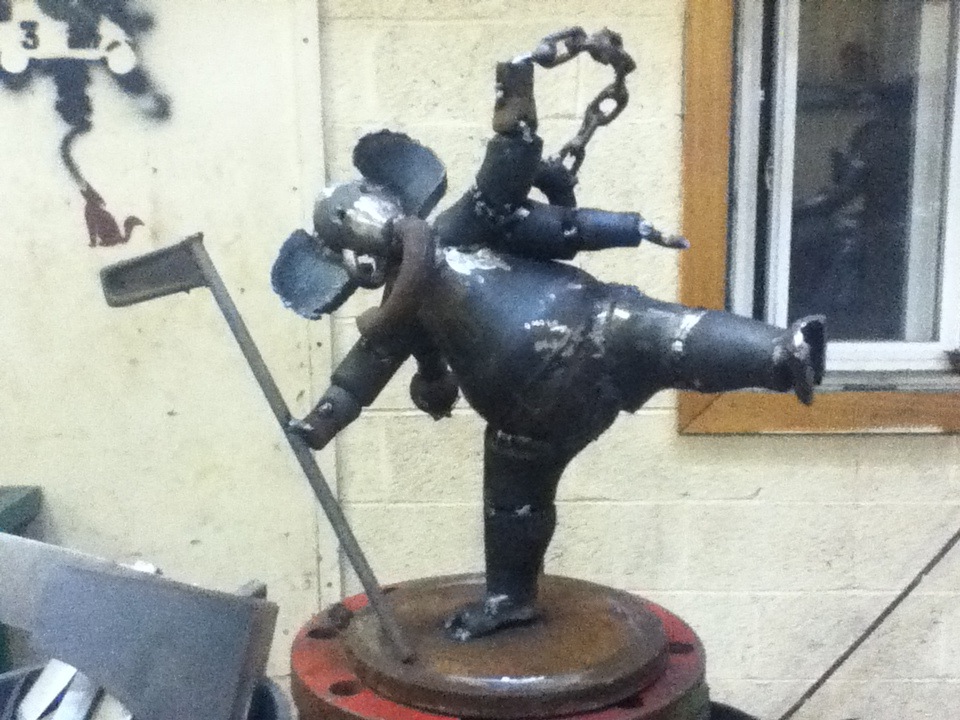
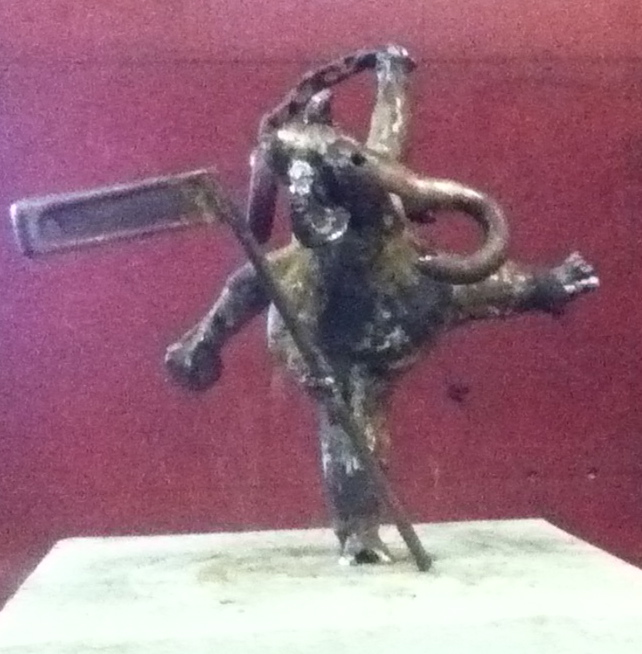
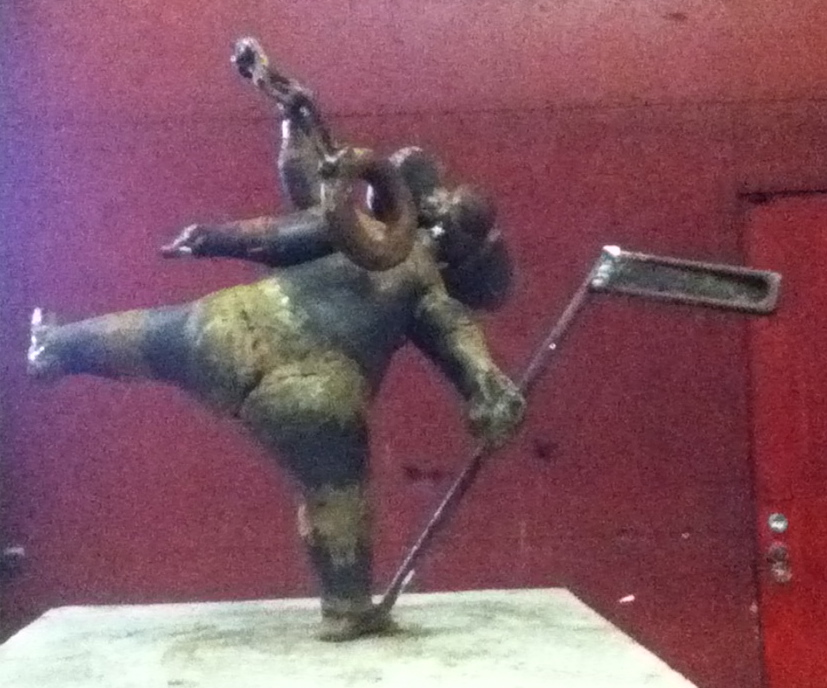
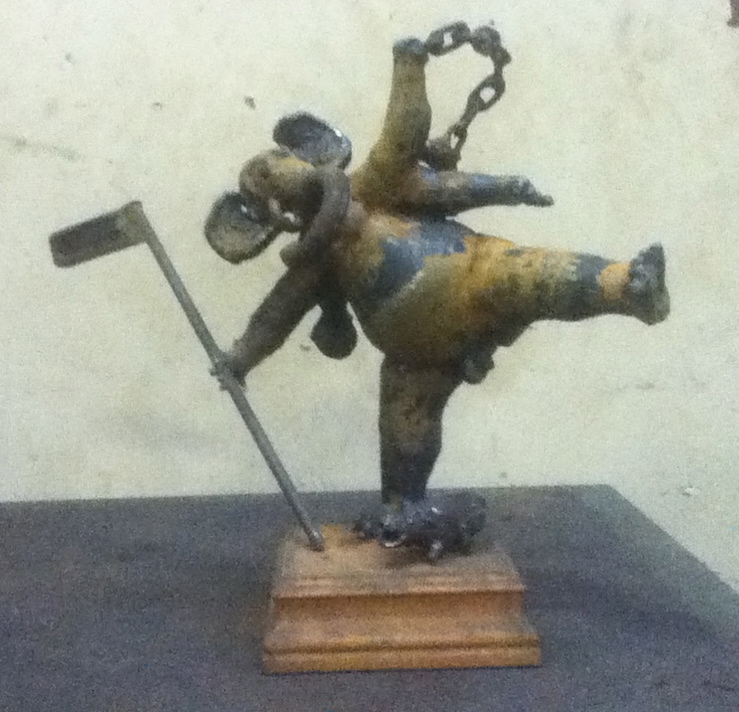
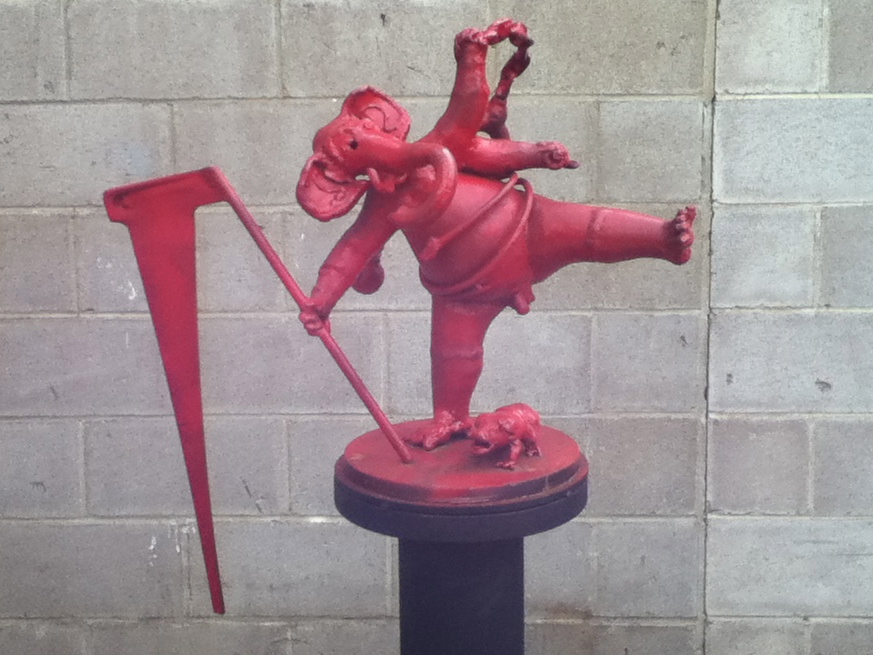
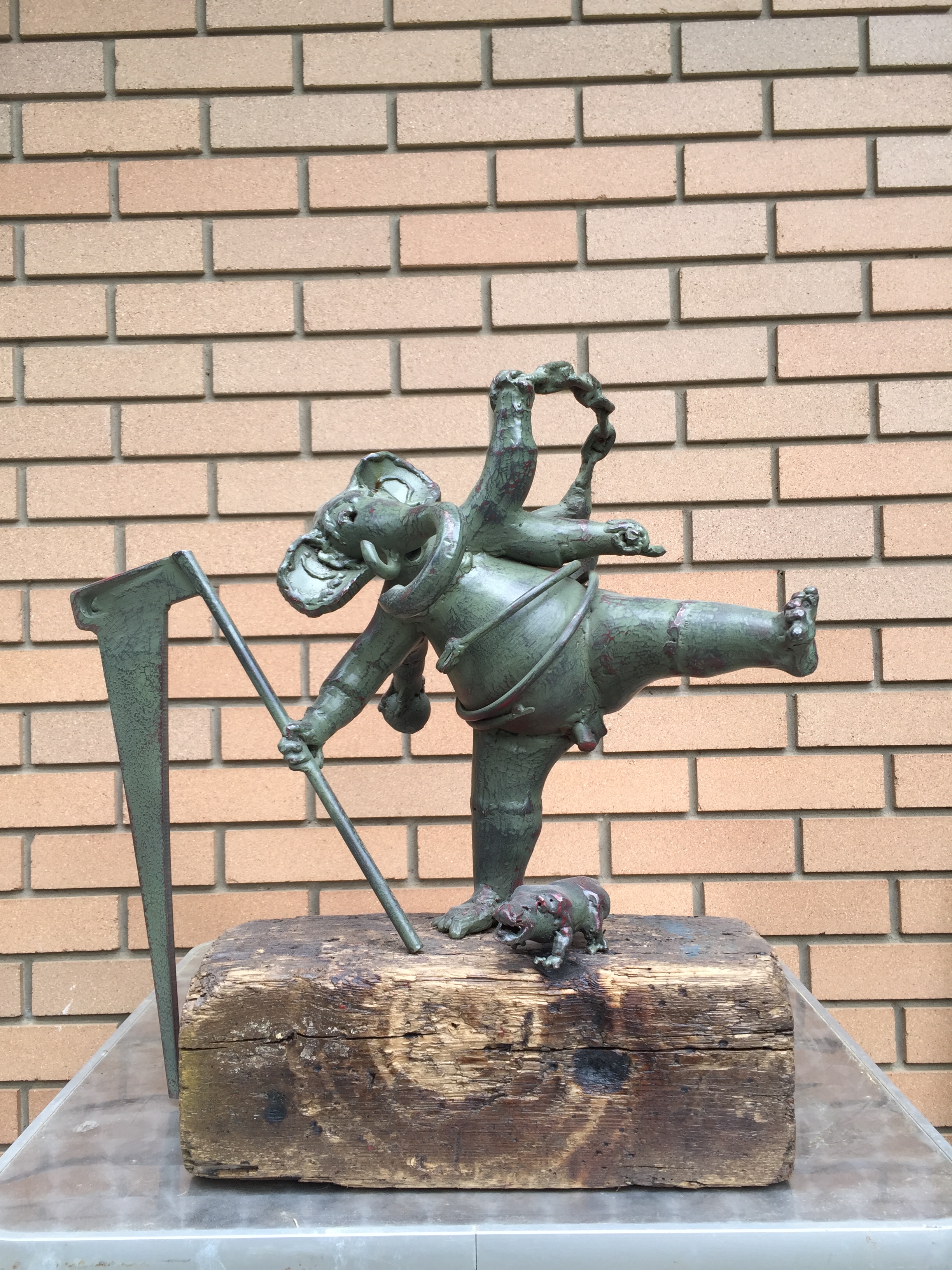
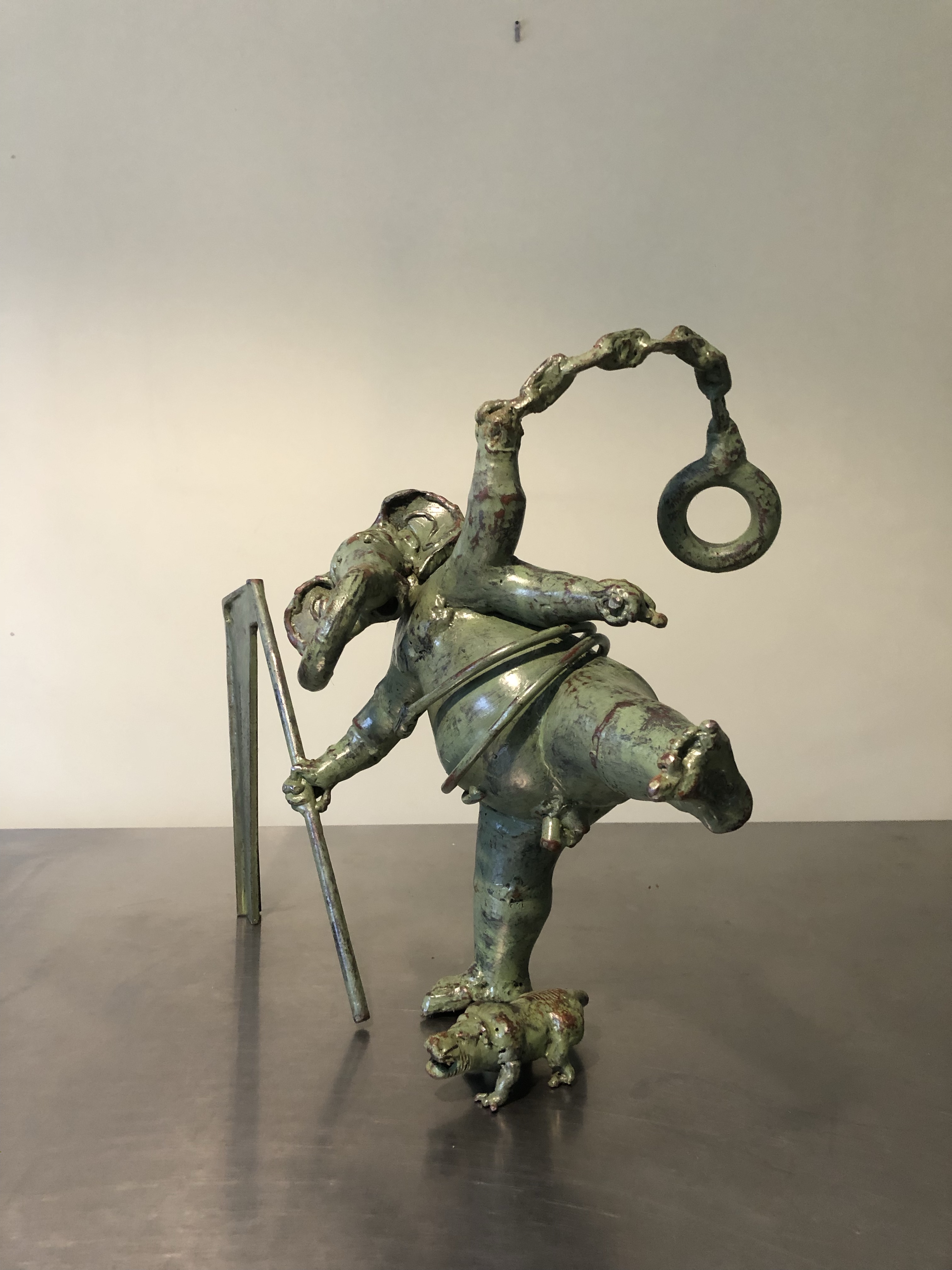
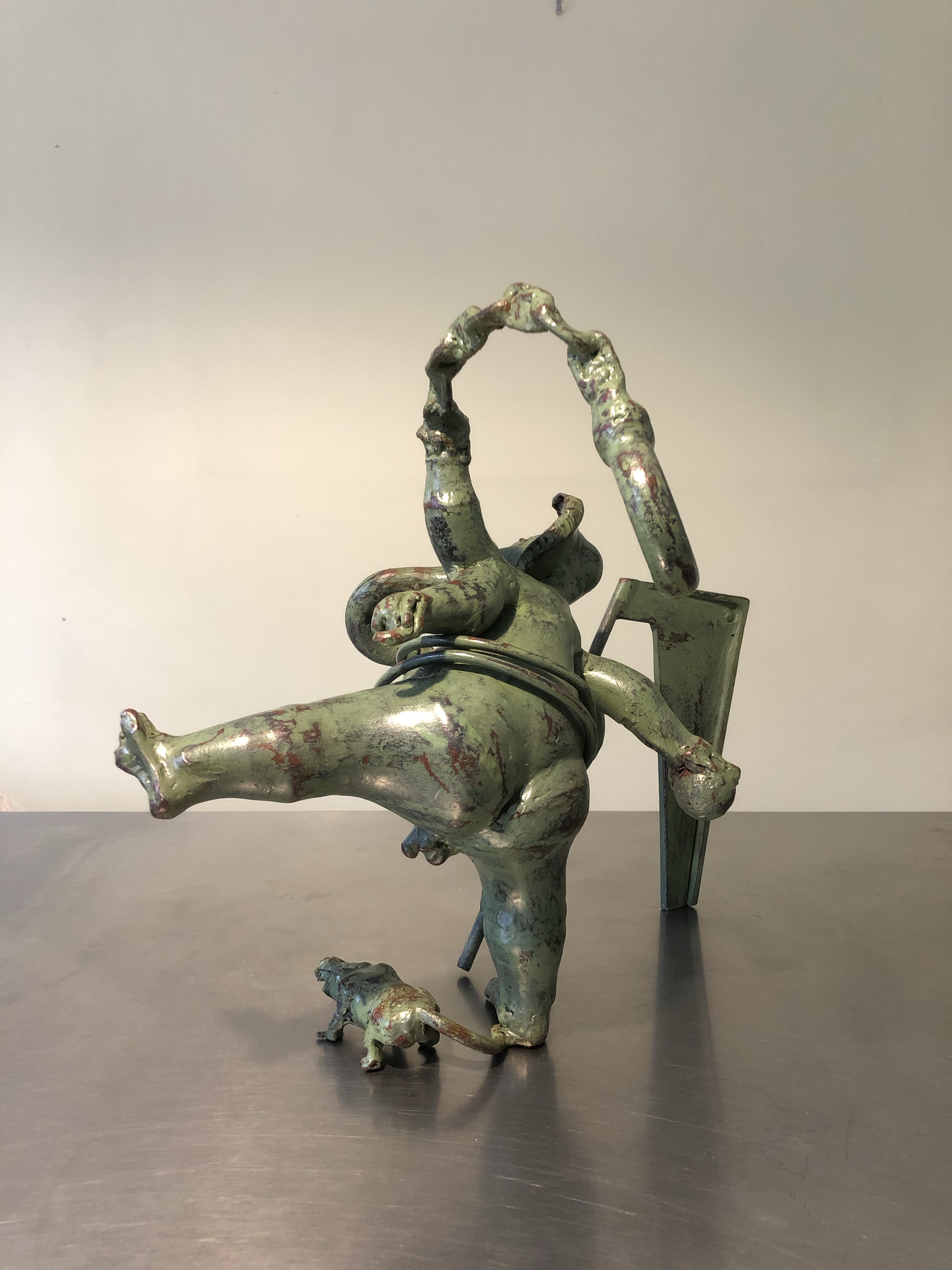
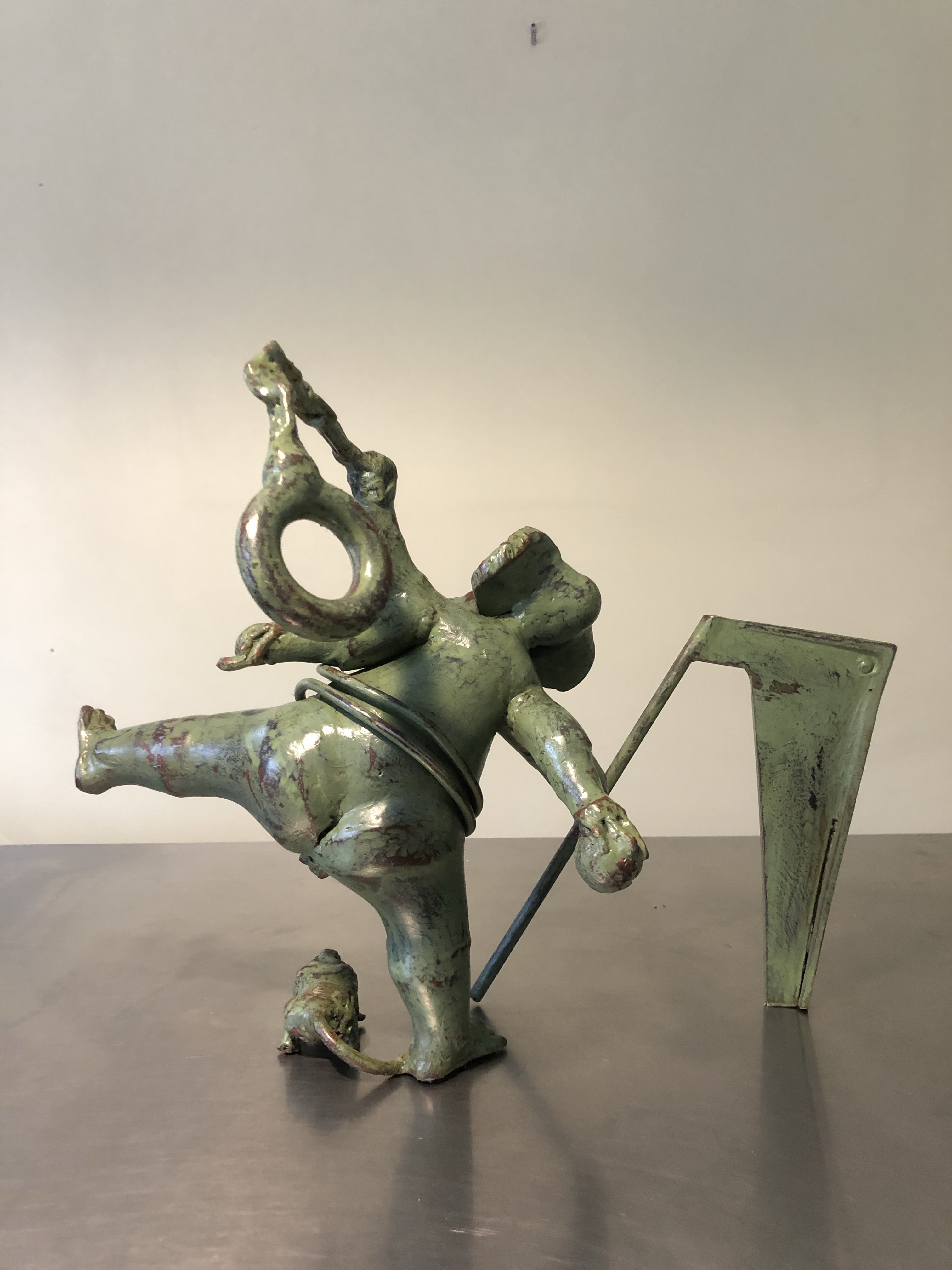
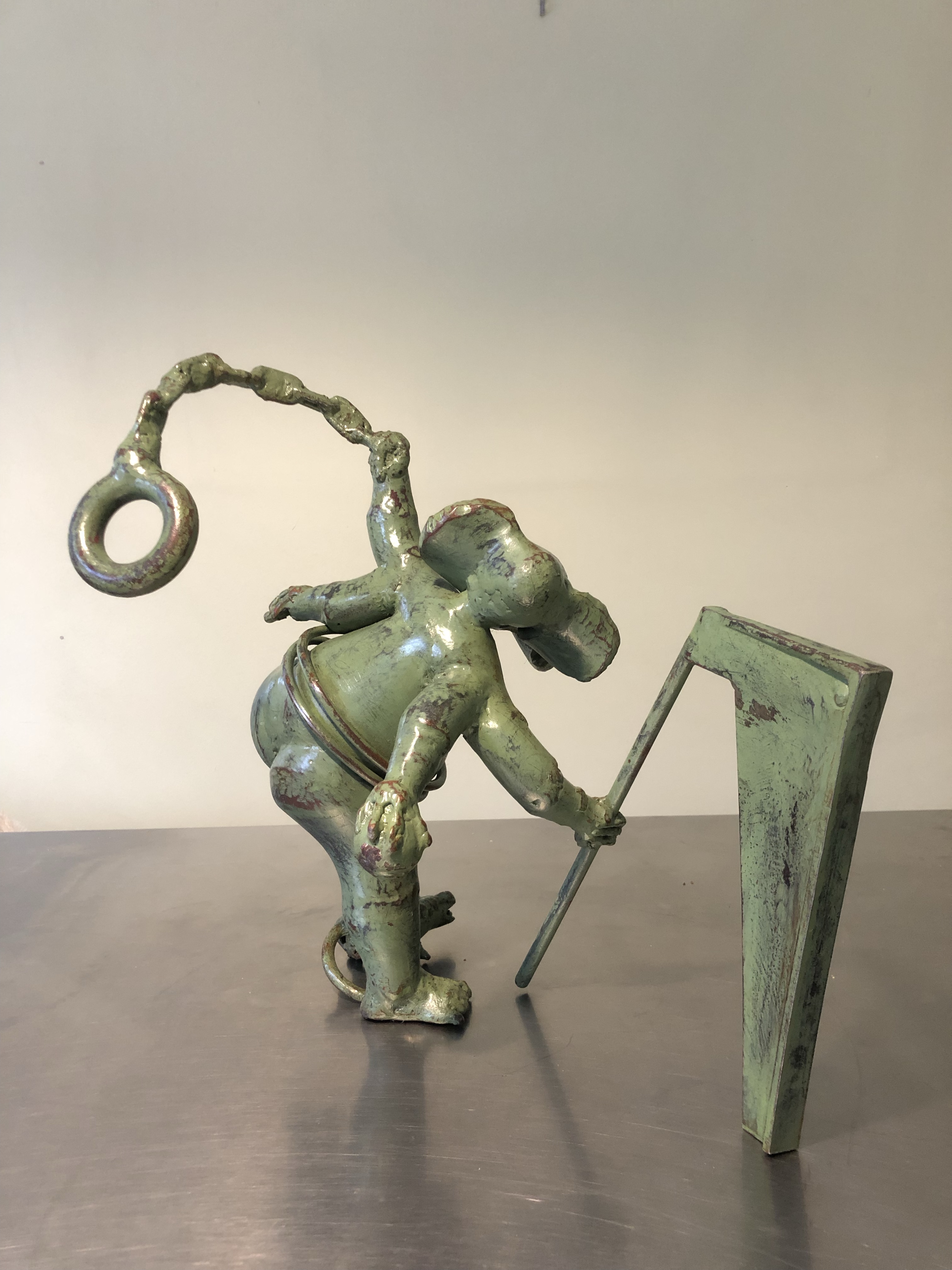
Bala Ganesha holds Ganesha in a single instant of extreme physical extension: weight on one bent leg, the other kicked out fully horizontal, the whole mass held in a balance that reads as dance rather than pose. That silhouette is a direct citation of Nataraja, Shiva as Lord of the Dance, whose raised leg and dynamic asymmetry are the defining convention of South Indian bronze sculpture from the Chola period onward. Placing Ganesha, not Shiva, in the Nataraja stance is a genealogical joke with real iconographic weight: Ganesha is Shiva’s son, and here he inherits his father’s signature choreography rather than his implements. The green-patinated paint finish reinforces the citation, giving welded steel the surface reading of aged bronze, the medium in which Nataraja images have been cast for a thousand years, even though the underlying material and process belong to McCourt’s own found-steel practice.
The attributes are redistributed rather than simply reduced. The tusk, broken and held in the trunk, anchors the figure to Ganesha’s core myth. The flagstaff planted against the ground reads as a dhvaja, a temple or processional standard, marking sovereignty and ritual occasion. The chain ending in a loop stands in for the pasha, the noose, rendered here as suspended hardware rather than coiled rope, fitting a figure caught mid-motion rather than seated in state. The ball-shaped element held aloft is a compressed modaka, the sweet reduced to its purest geometric form and lifted rather than cradled, consistent with the kinetic, ascending energy of the pose. The snake at the belly repeats the standard binding-myth detail: the moon’s mockery of Ganesha’s overeating, and his response of cinching his splitting belly shut. The mouse, small and grounded at the one planted foot, is the sole point of contact between the god’s aerial dynamism and the earth, ego and vehicle bearing the full weight of a deity in motion.

