Welded steel, 86 x 67 x 99, 2009.
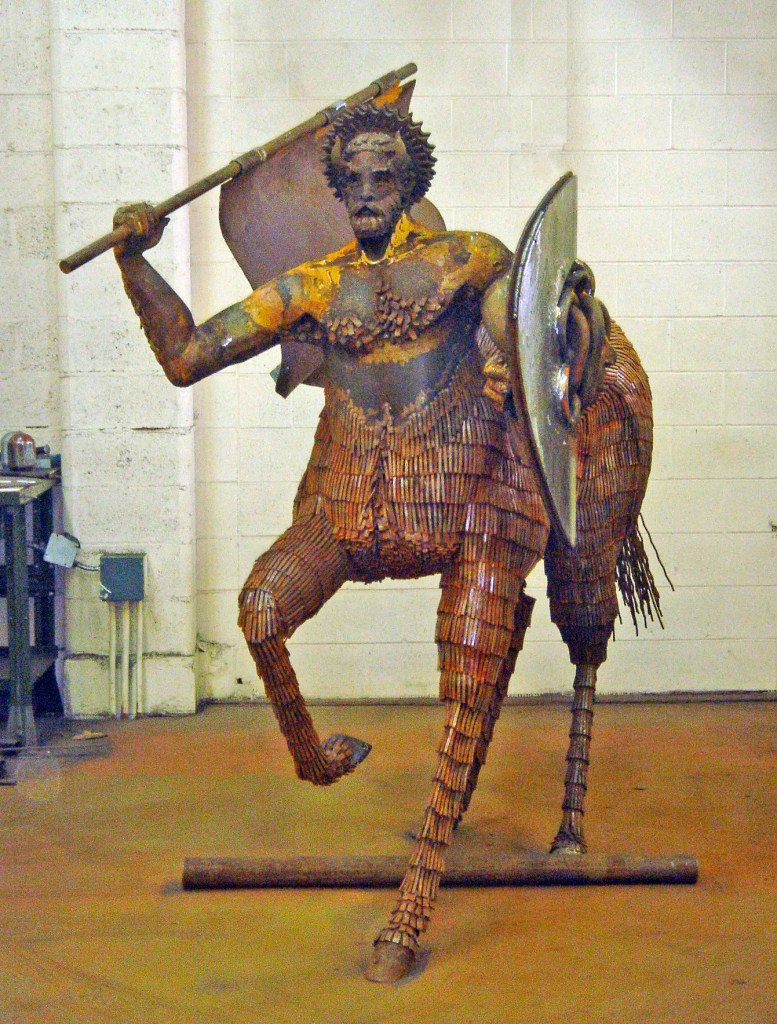
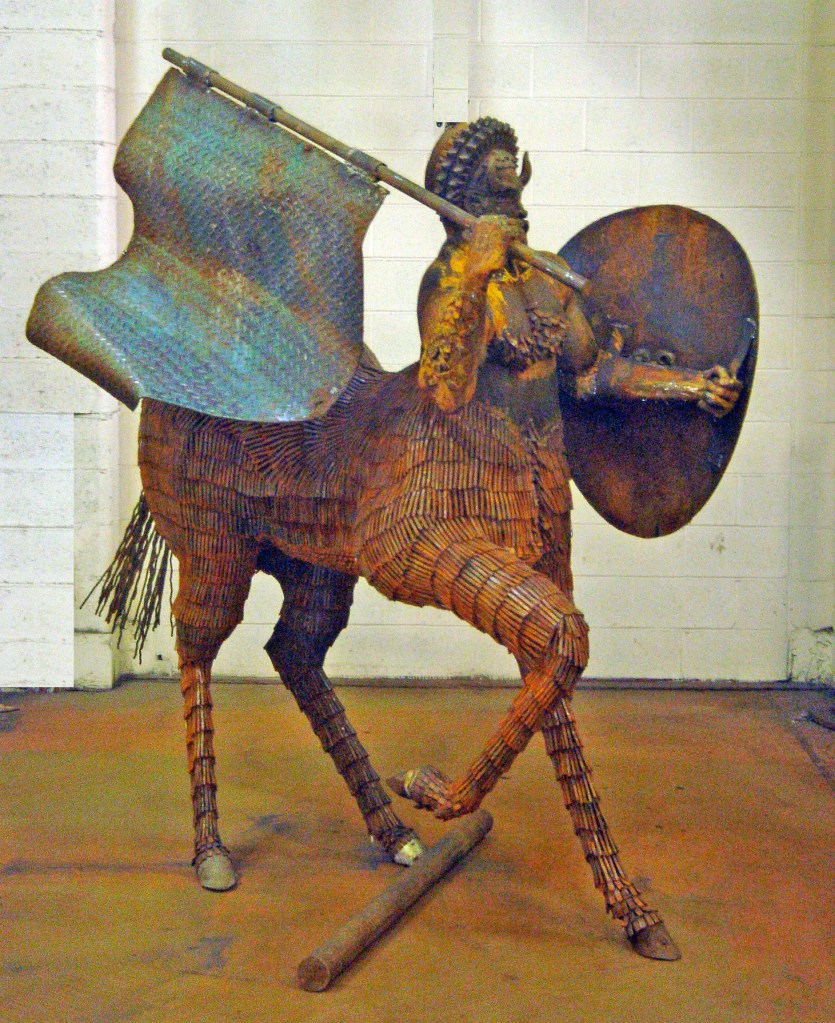
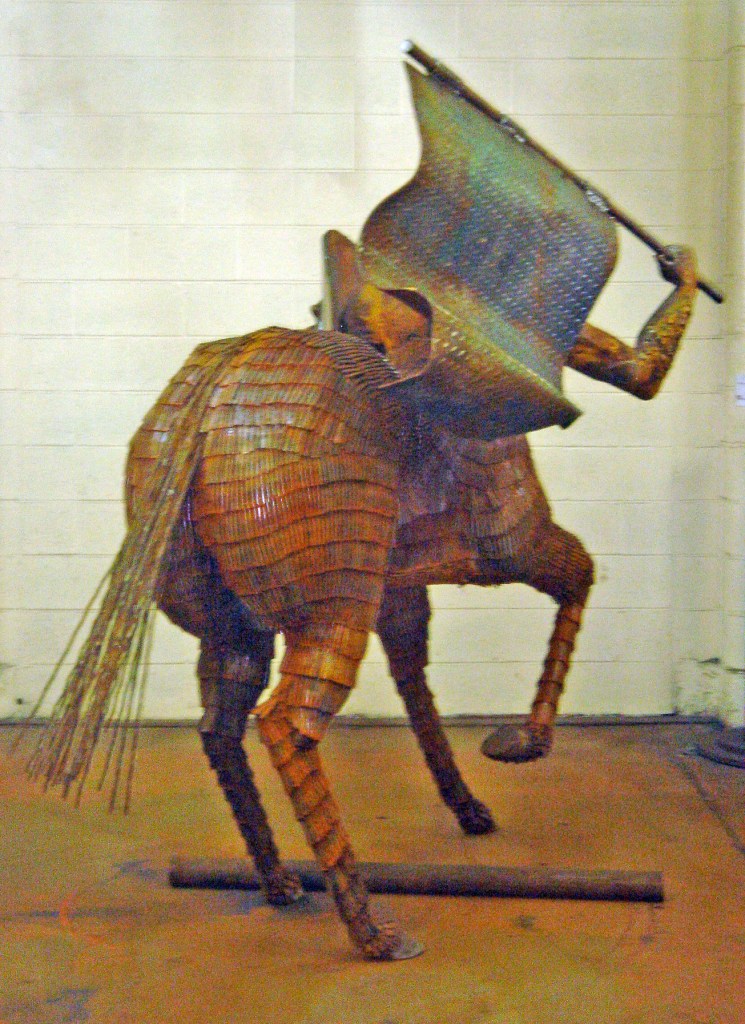
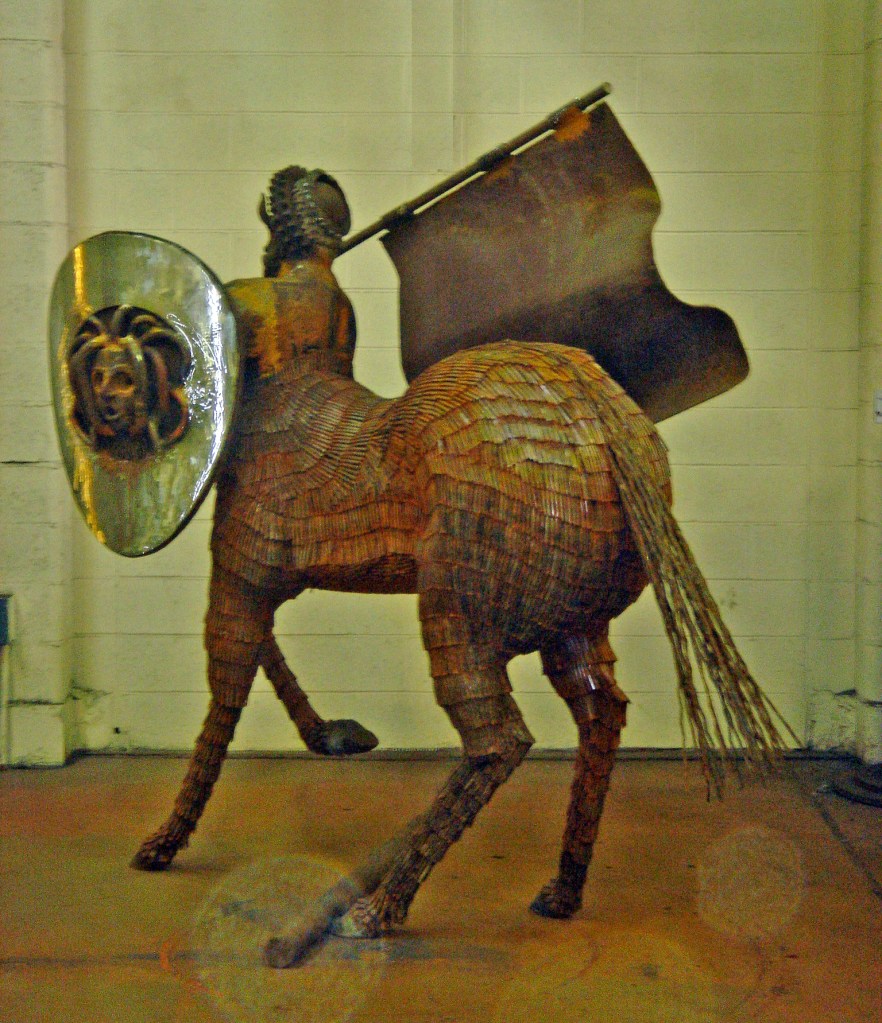
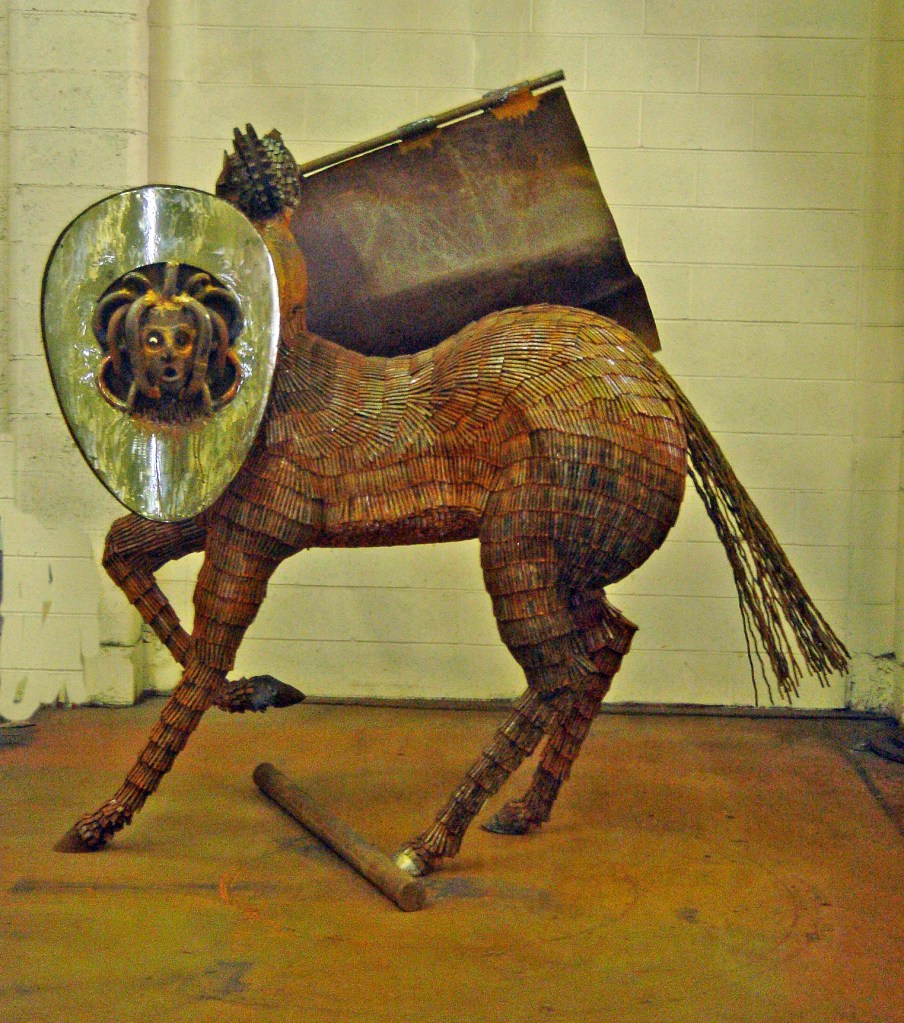
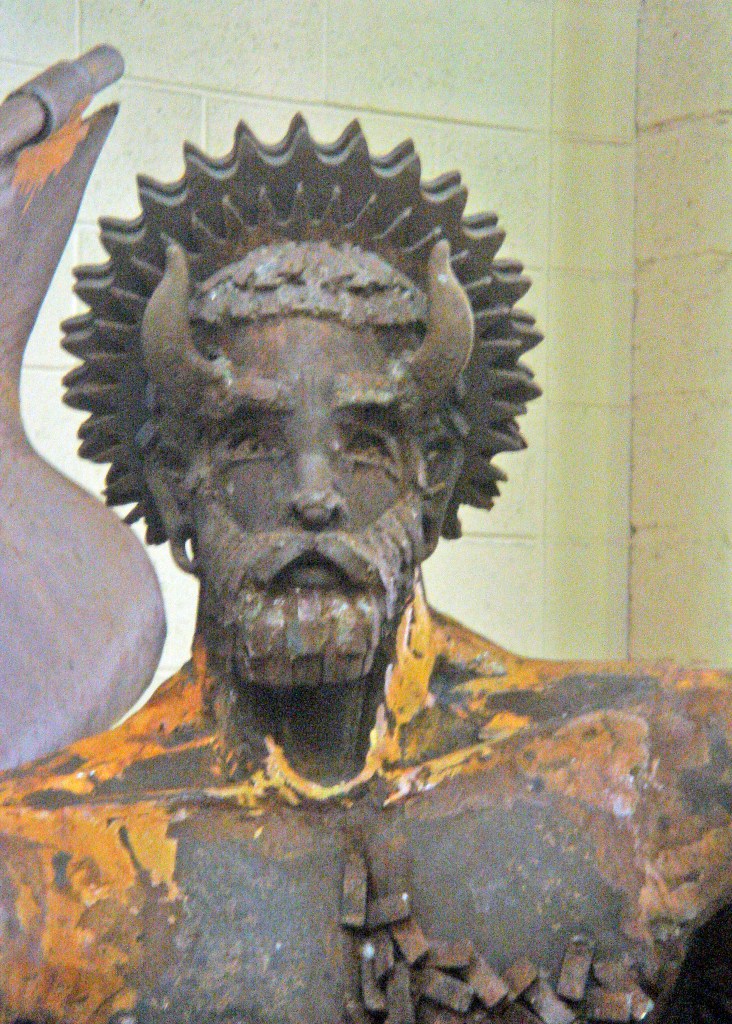
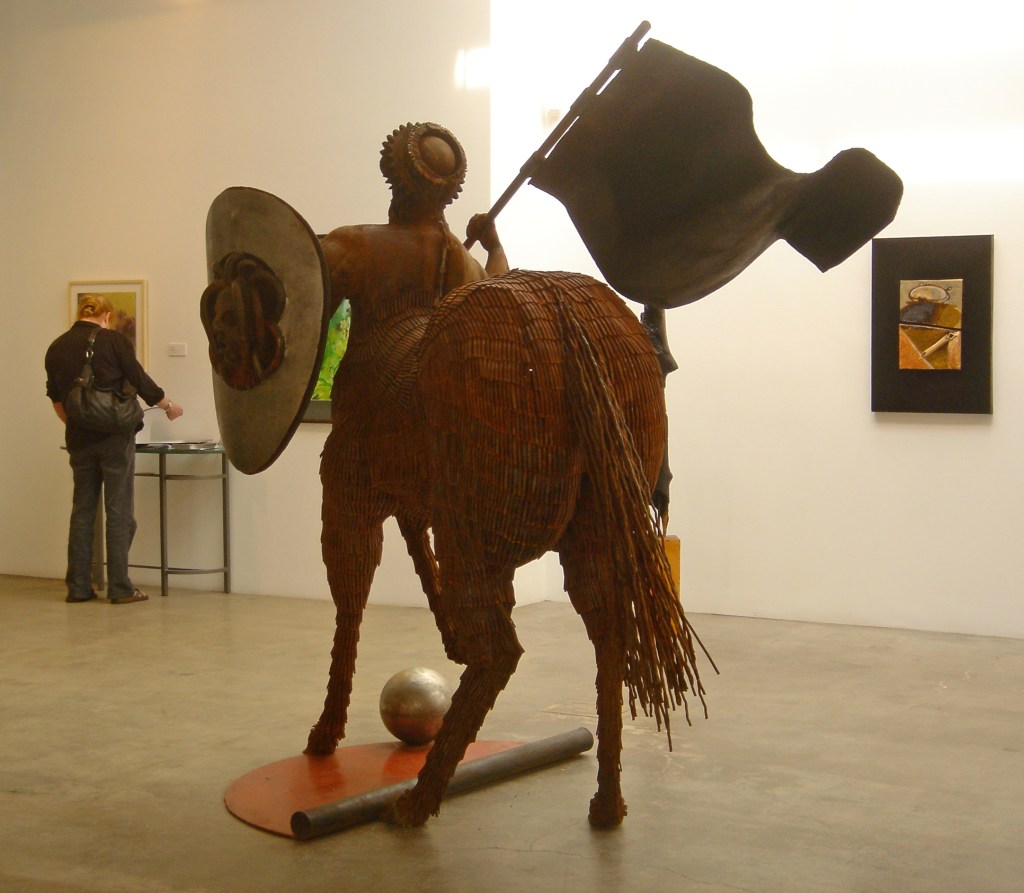
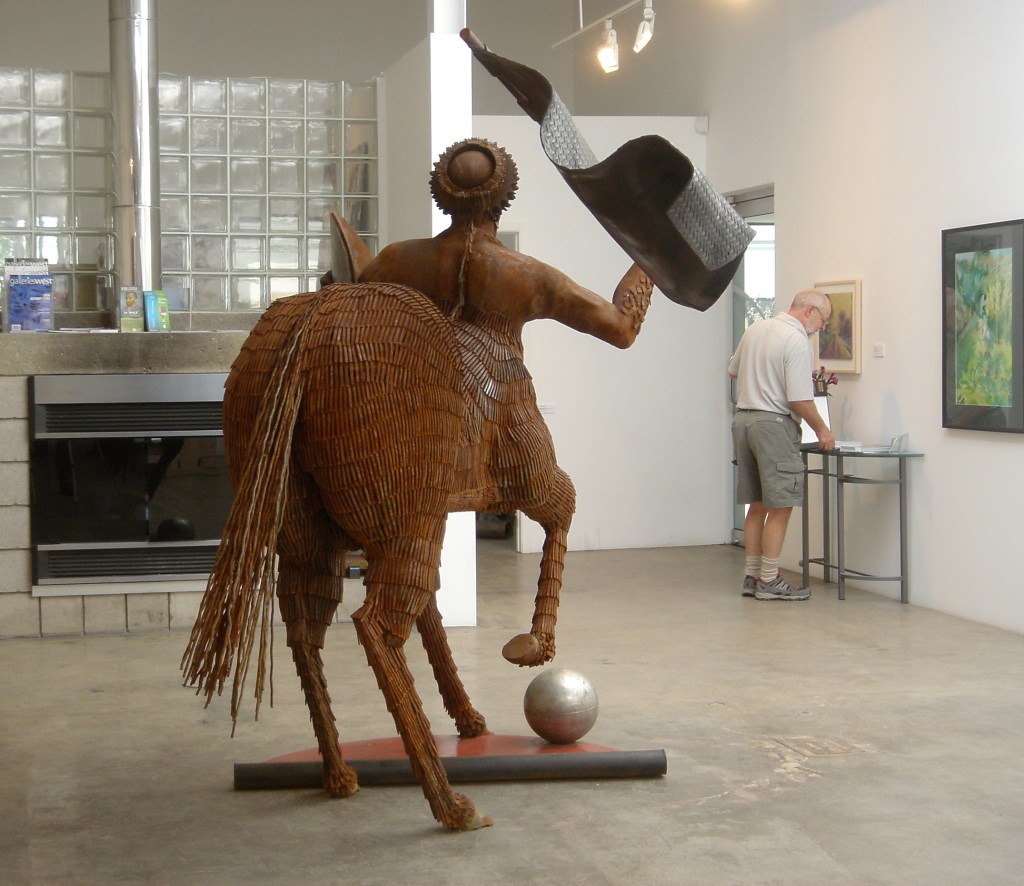
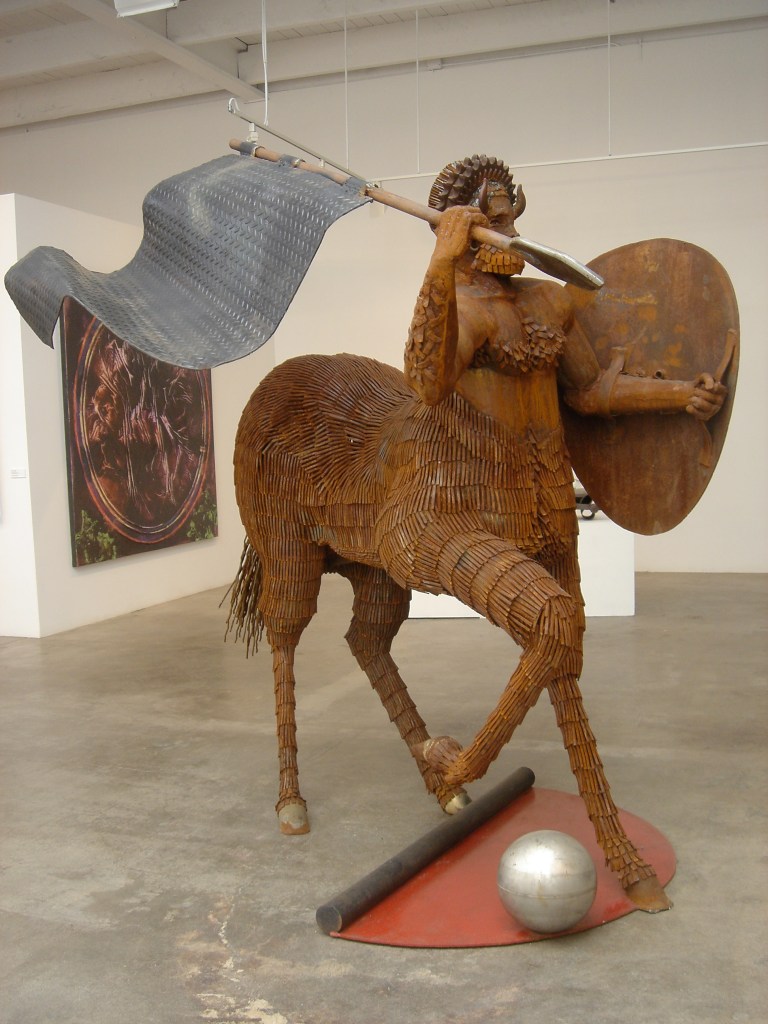
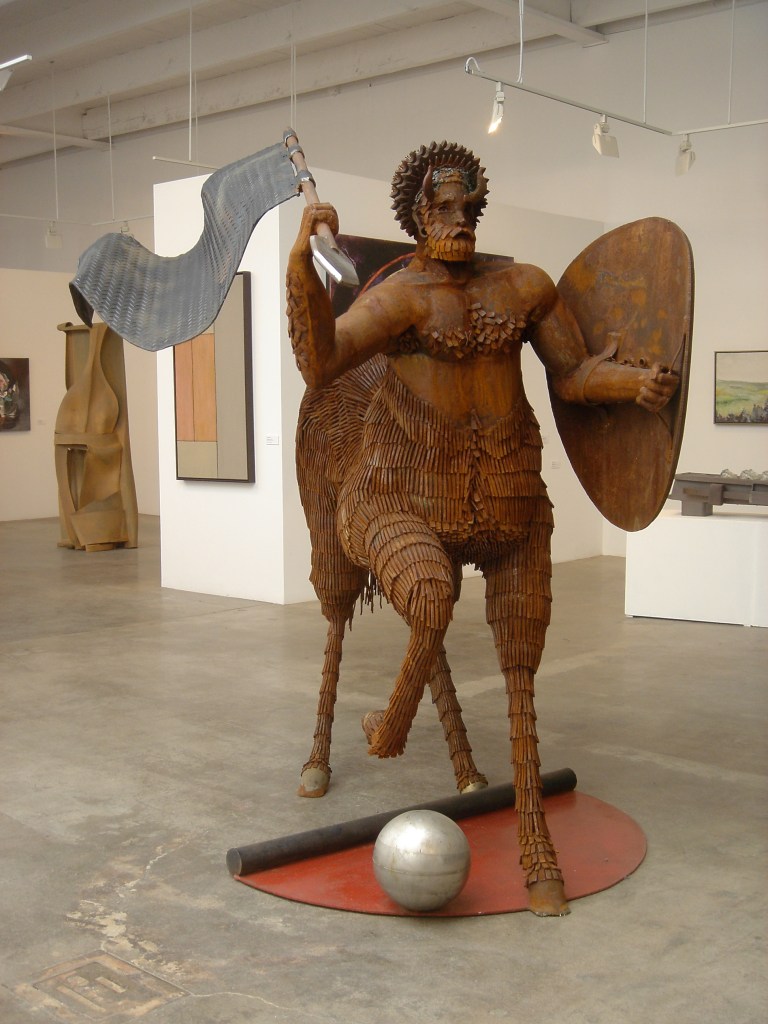
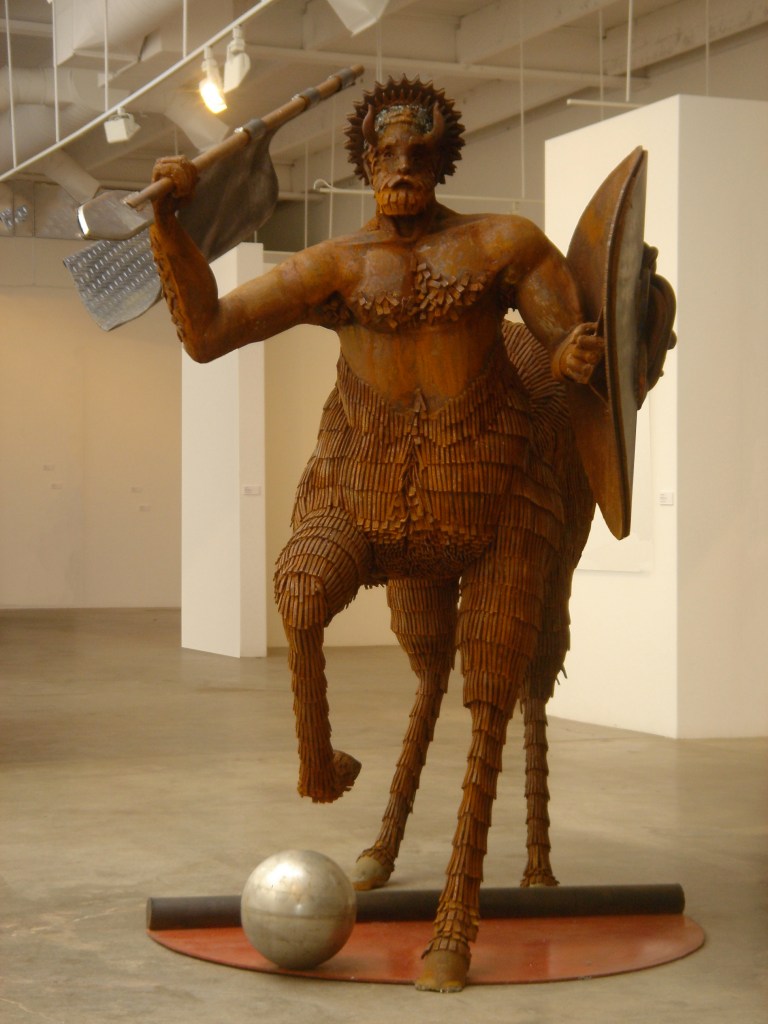
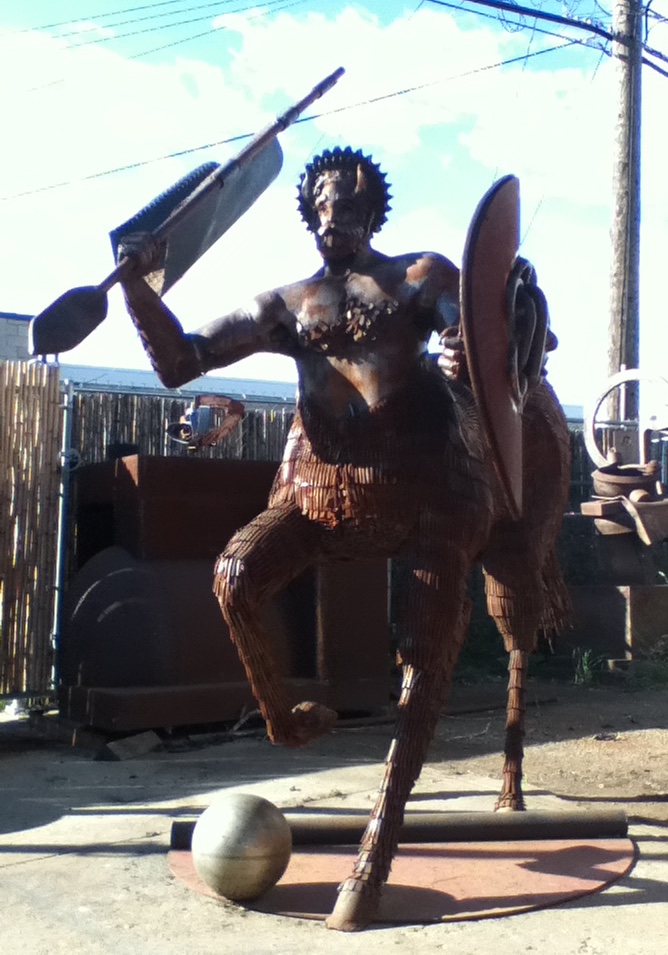
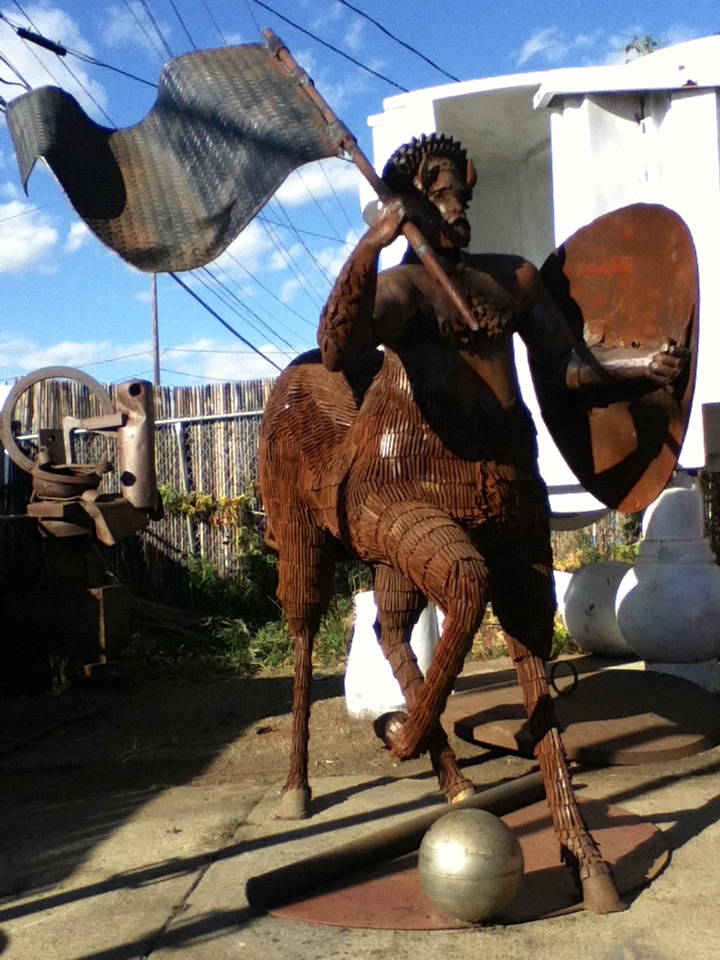
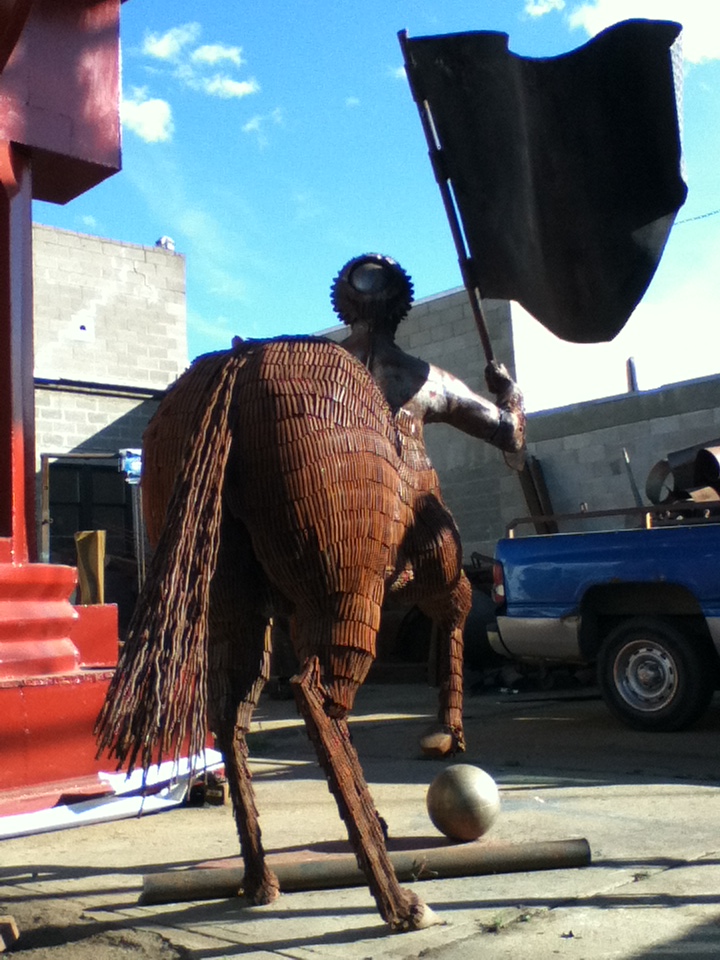
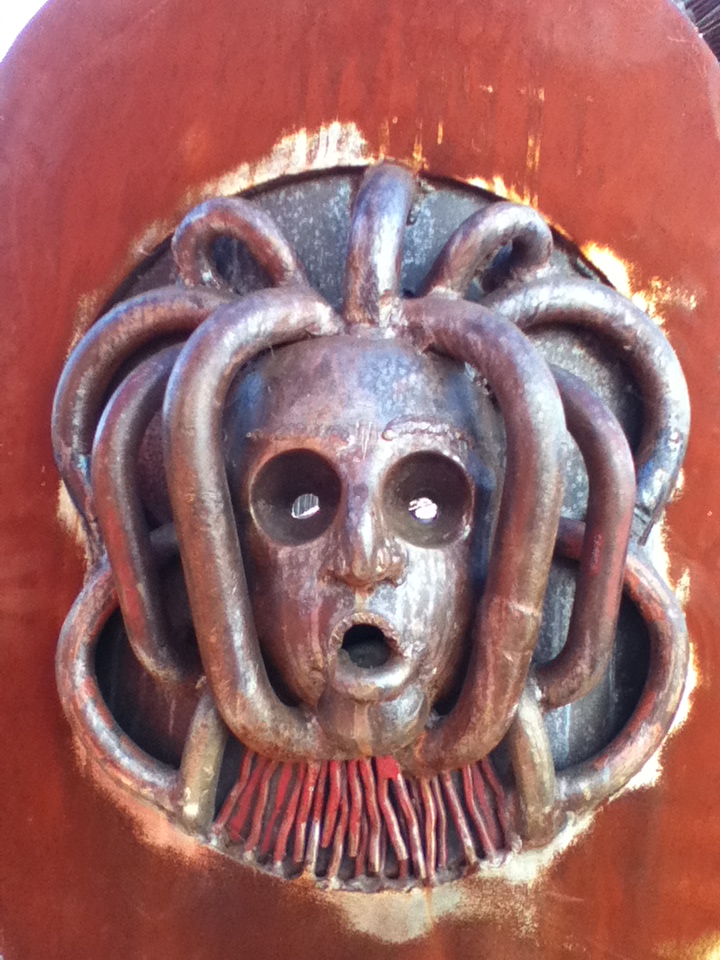
A horned, bearded personification of intuition, quadrupedal like a centaur, armed with a Gorgon-emblazoned shield (instinct as a kind of protective, pre-rational defense) and a raised spear and standard.
The centaur has a double history in Greek art. In the Parthenon metopes and the Lapith battles it is the figure of appetite and disorder, reason overcome by the animal body. Chiron is the exception: the learned centaur who taught Achilles and Asclepius, his knowledge carried in the body he shares with the beast. The Eminence of Intuition draws on both. Its figure has Chiron’s authority and the unruly centaur’s horns and readiness to fight. Horns belong to satyrs and Pan, to Dionysian instinct, and here they sit on a head with a beard, a gravity of bearing, and a radiating crown. Intuition is given the standing of a sage and the equipment of a warrior.
That the knowing is done by the horse’s body matters to the conception. The human torso turns and reaches while four legs carry the weight, so the thinking and the lunging belong to one animal. The raised forelimb,is poised to kick the ball before it. The Gorgoneion is the one frontal face in Greek art, the image that looks straight at the viewer, and it was worn on Athena’s aegis and on hoplite shields to arrest an enemy before contact. The detail shows it with open mouth, wide eyes with light passing through them, and snakes drawn as heavy looping bars. Medusa’s gaze turns a person to stone. Intuition here carries an instantaneous, unmediated look as its defence.
The raised spear with its rippling standard gives the figure a rank. A standard is carried so that a body of men can recognise where to go, and this one flies over a single combatant. Intuition is shown leading the army of the other faculties, with the banner moving as if in wind.

