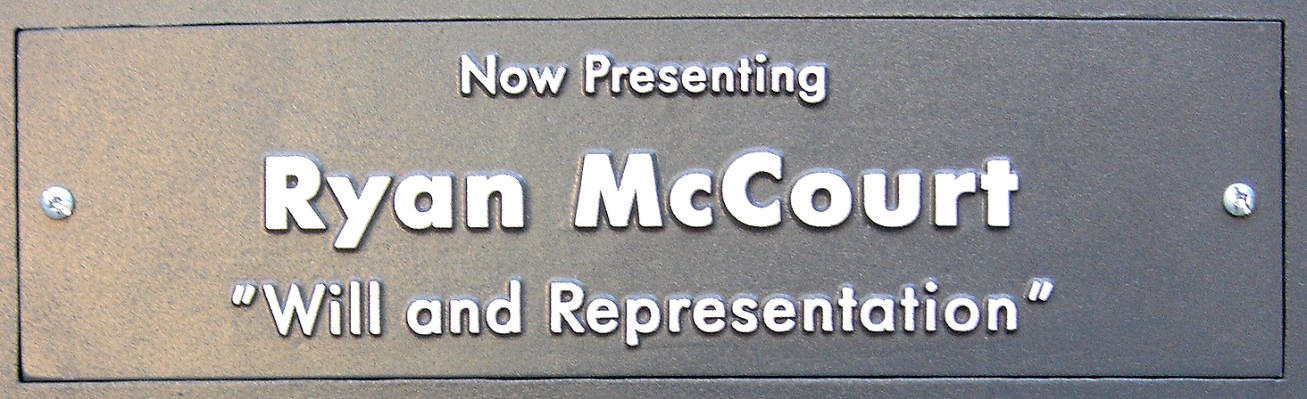
Soldered brass, 2009.
The “Helm of the Gorgon” by Ryan McCourt draws upon the mythological figure of Medusa, a Gorgon from Greek mythology whose hair was made of living snakes. In this sculpture, the snarling, twisting serpents radiate outward from the helmet, creating a dynamic sense of movement and aggression. Each serpent has a slightly different pose, some coiling protectively around the wearer’s head while others extend out, as if striking. This sense of motion captures the violent, transformative power of the mythic Gorgon, whose gaze could turn onlookers to stone. The Gorgon’s mask itself is minimalist, with hollowed eyes and a plain face, emphasizing the duality between beauty and monstrousness—a core theme in the Medusa myth.
The contrast between the smooth, featureless face and the chaotic, aggressive energy of the serpents enhances the sense of internal conflict or transformation. The wearer of this helm might evoke feelings of both fear and fascination, much like Medusa herself, who was both victim and villain. The hollow eyes of the mask invite interpretation, perhaps suggesting that the wearer—like Medusa—has been robbed of humanity or agency, becoming an instrument of violence. This emptiness could symbolize how individuals are reduced to mere symbols or monsters in the eyes of others, stripped of identity and autonomy.
One potential interpretation of the helm’s serpentine crown could also delve into themes of power and rebellion. In Greek mythology, Medusa’s transformation into a Gorgon was a result of Athena’s curse, following Medusa’s violation in Poseidon’s temple. In this context, the serpents could represent an anger that coils around the helmet’s wearer, ready to strike out against oppression or injustice. This reading would frame the wearer not as a monster, but as a figure of defiance, using fear as a weapon. The precise craftsmanship of the serpents, each differentiated from the others, may symbolize the many facets of wrath, trauma, or the transformative power of anger.
The choice of brass as the medium further enhances the sense of the helmet being a protective, metallic shell. The reflective surface of brass, particularly when polished, could evoke the mythic quality of Medusa’s gaze, bouncing back the hostility of those who dare to confront her. Like a mirrored surface, the wearer of the helm might reflect back the fears and judgments of others. The helm can also represent themes of identity and perception—how one is seen and what lies beneath the surface. McCourt’s work here blends ancient myth with contemporary reflections on power, trauma, and the intersection of beauty and monstrosity.


