
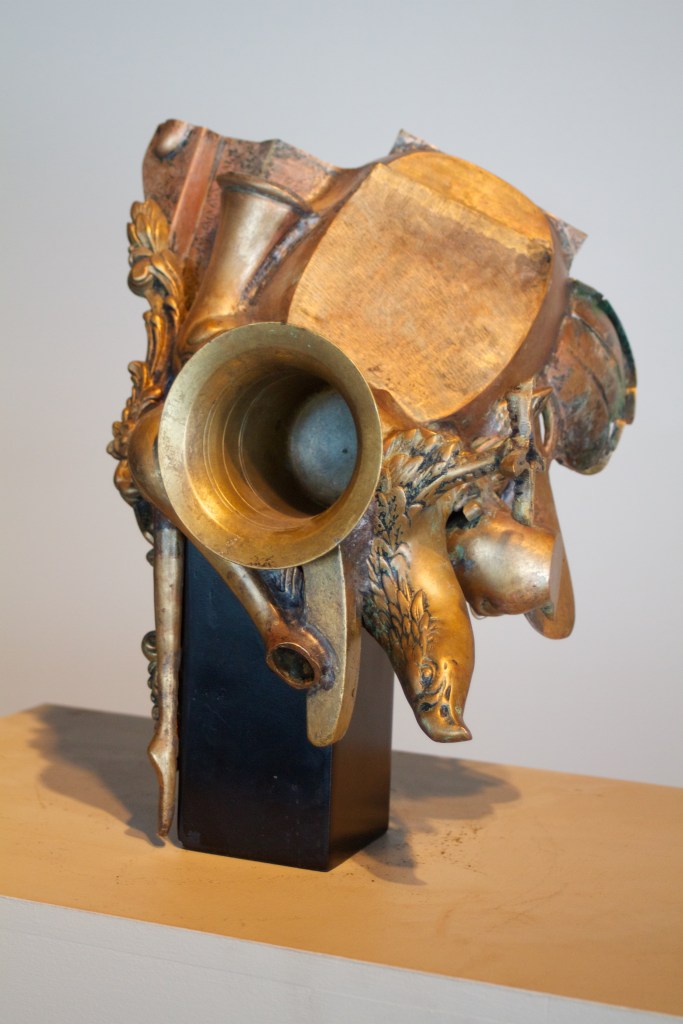
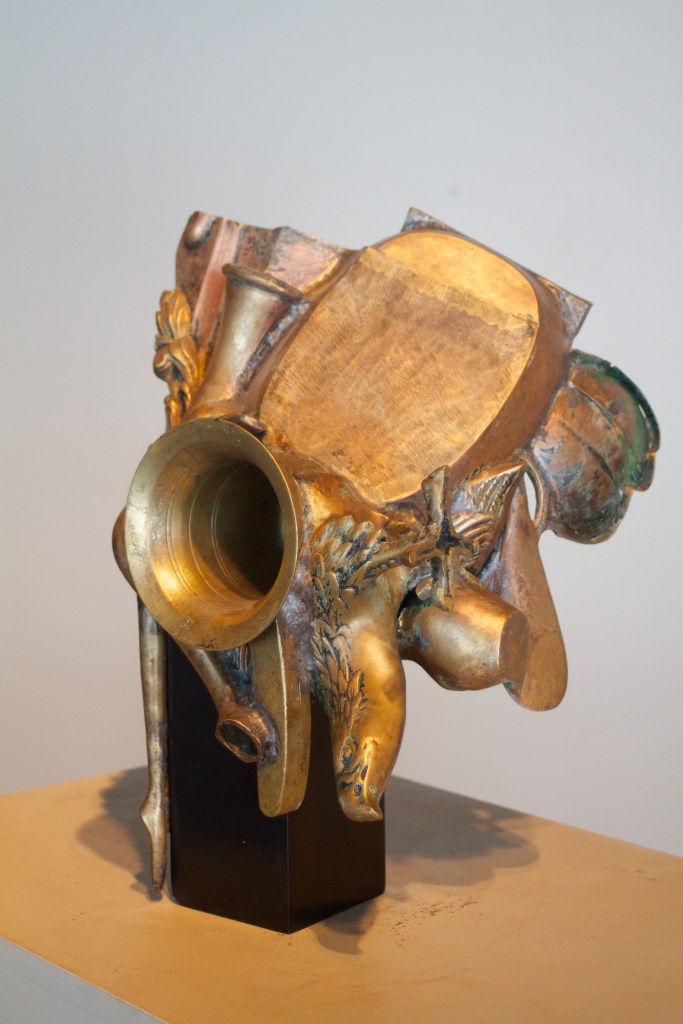
Soldered brass, stone, 15 x 11 x 10, 2008.
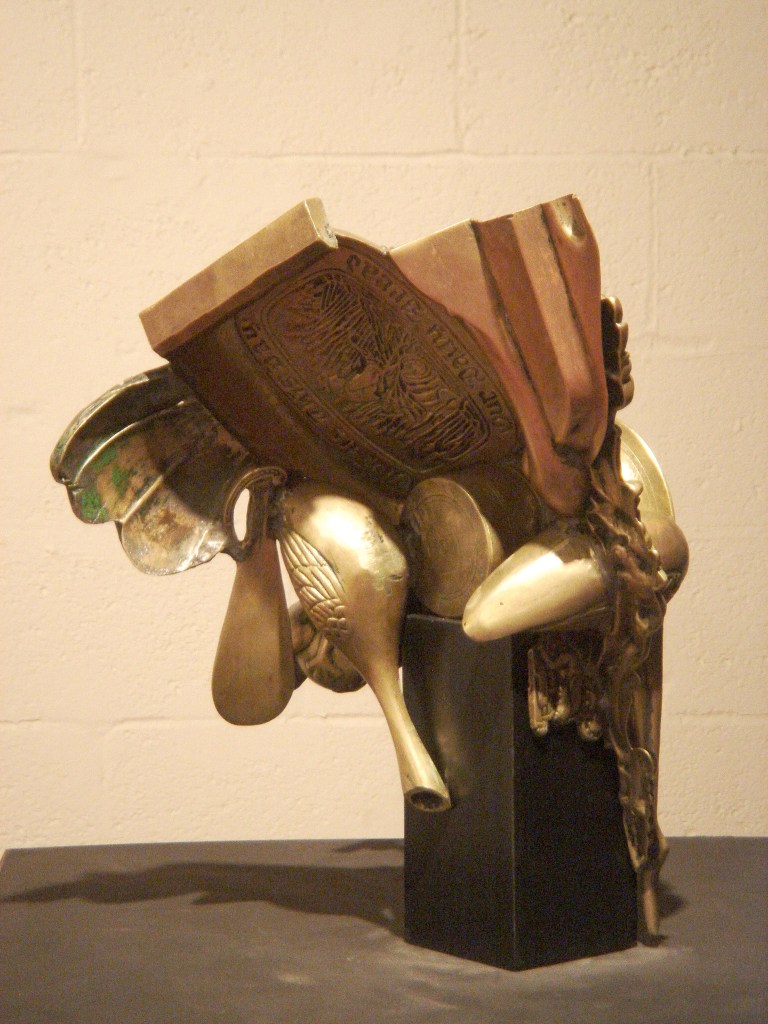
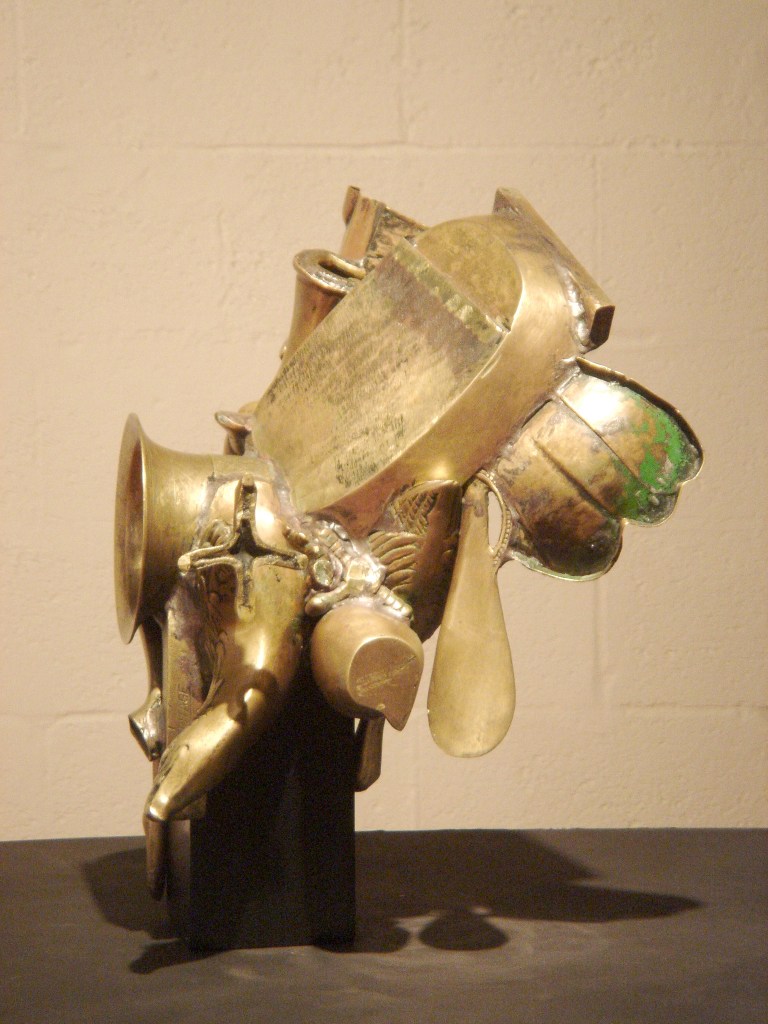
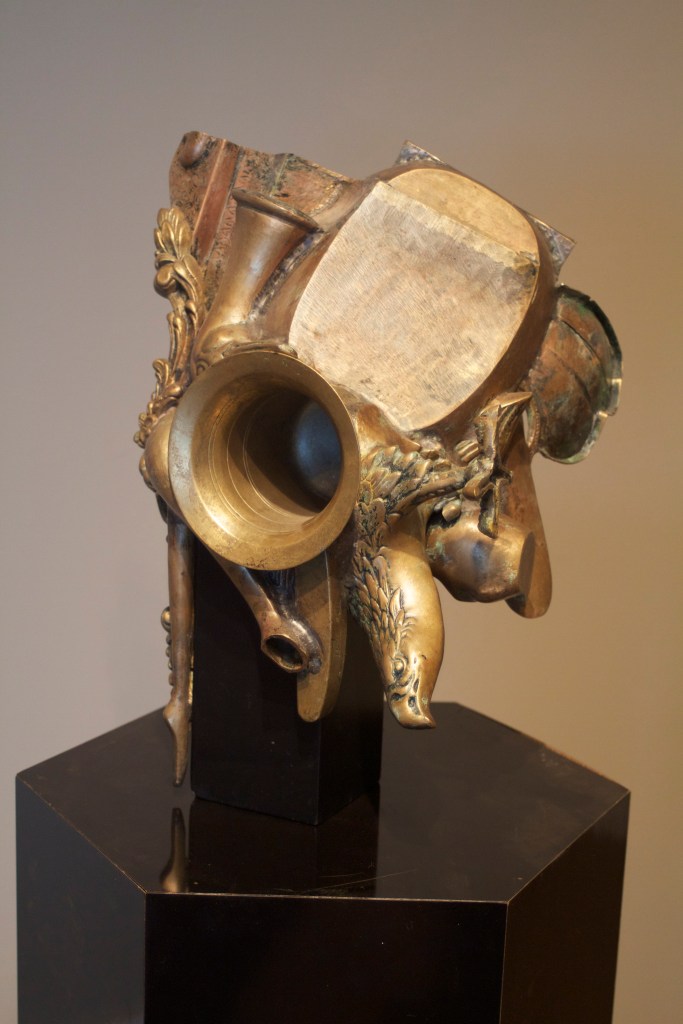
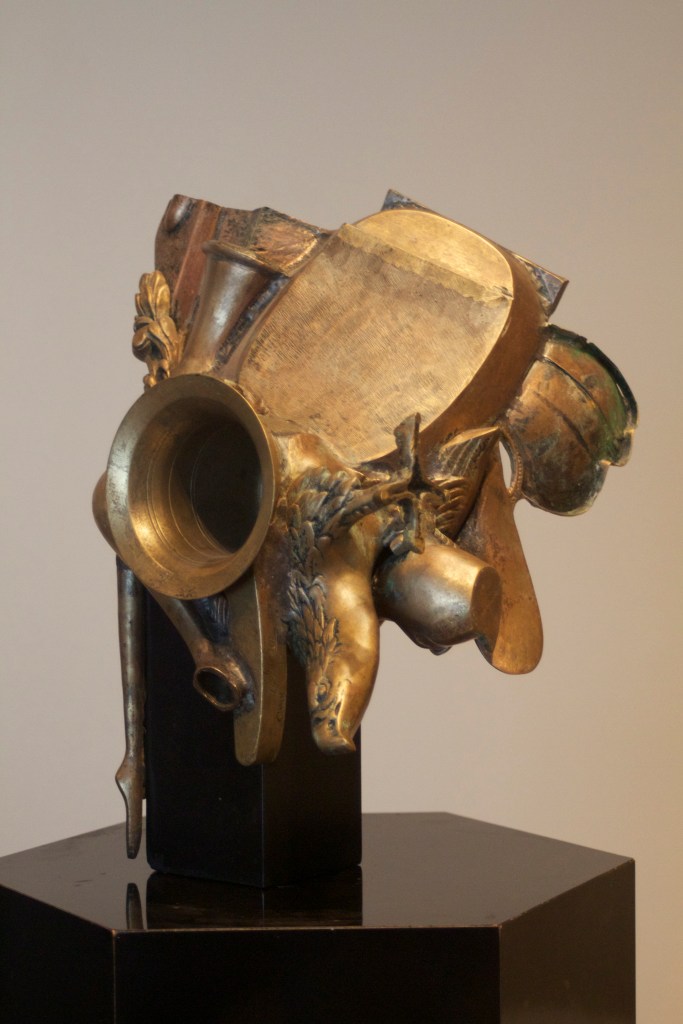
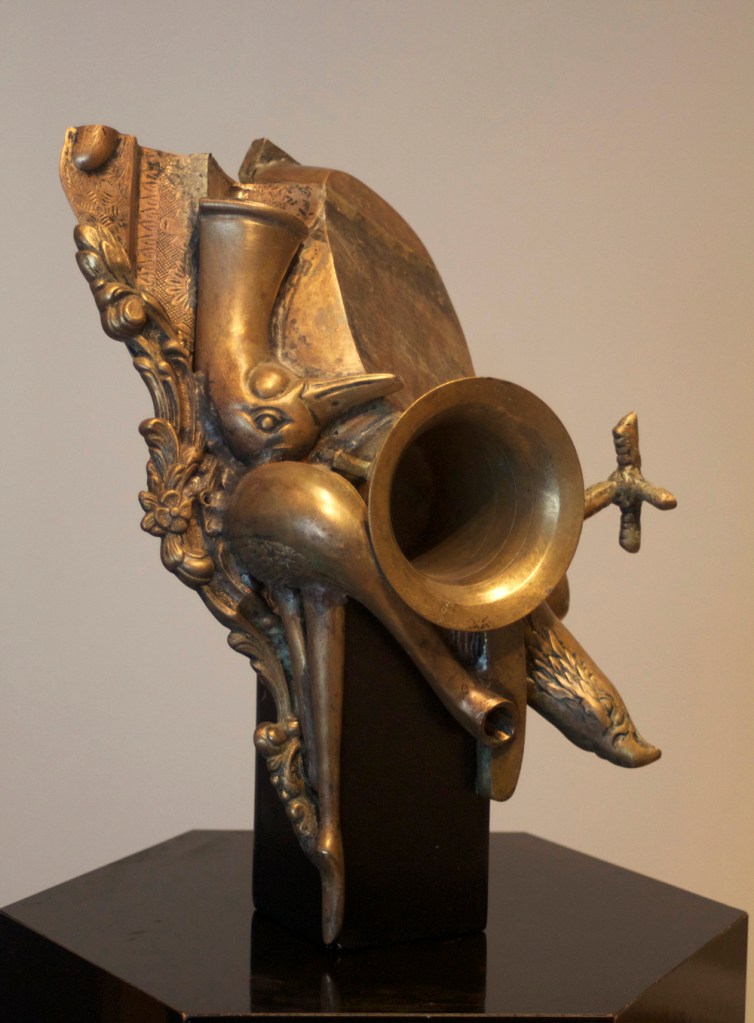
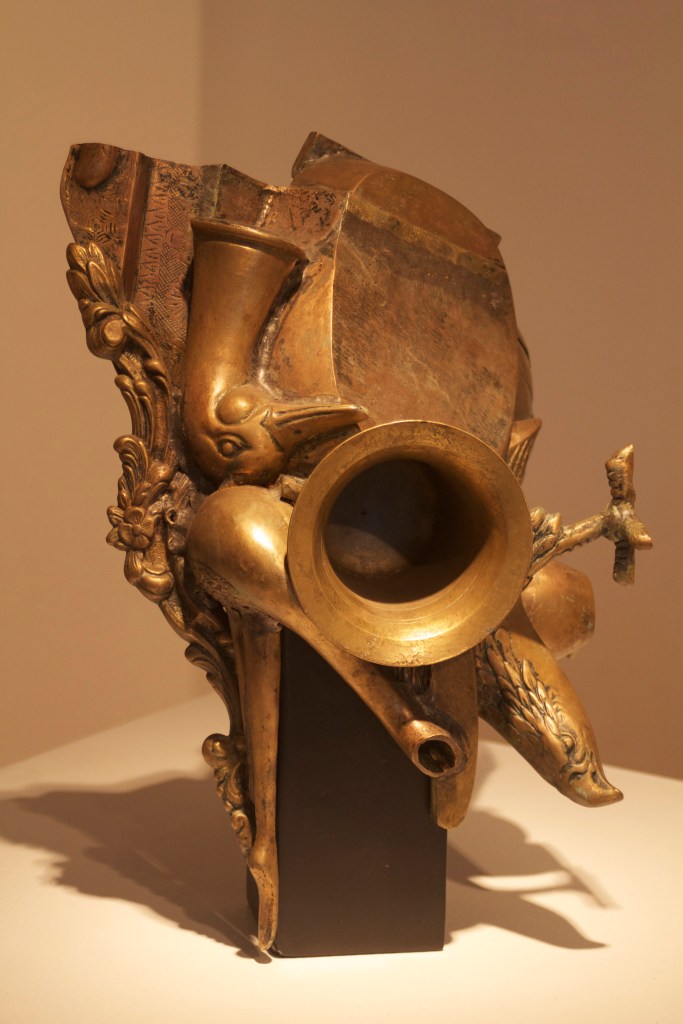
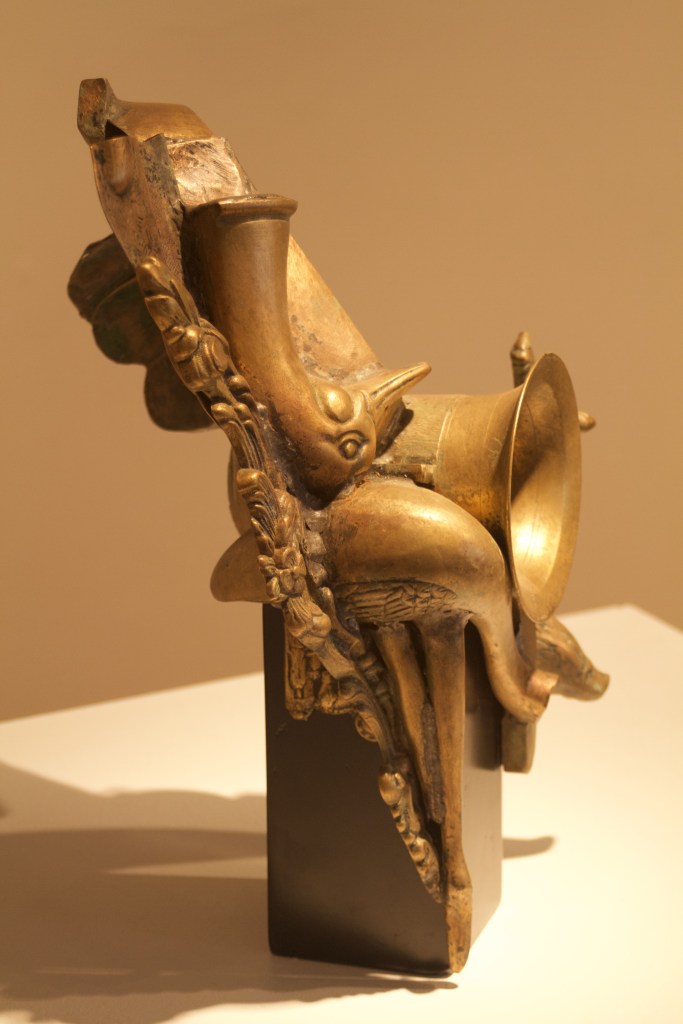
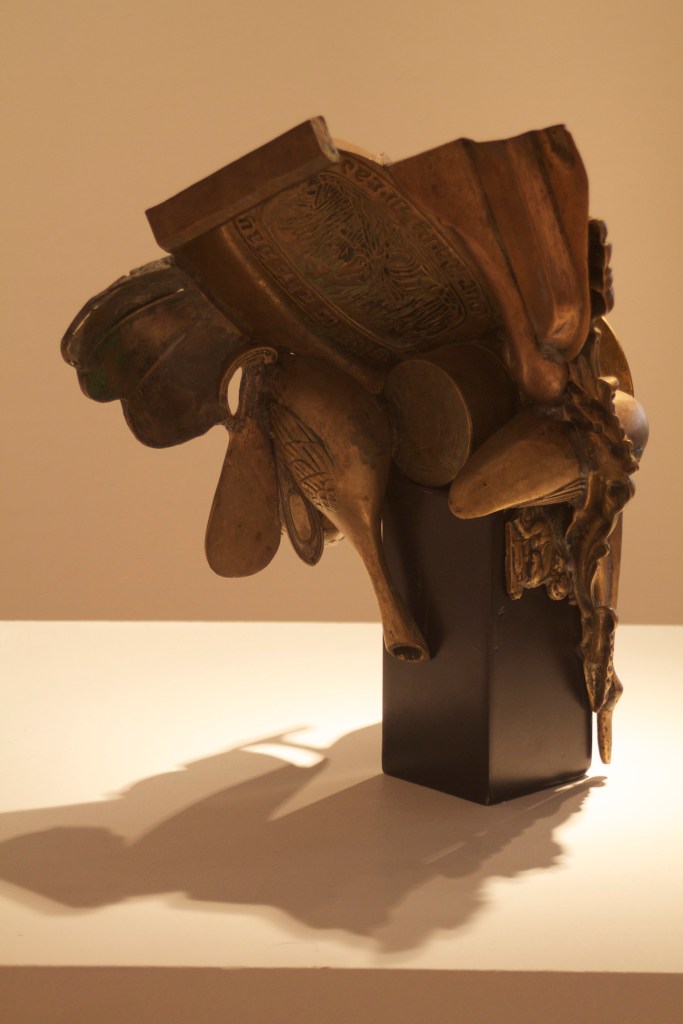
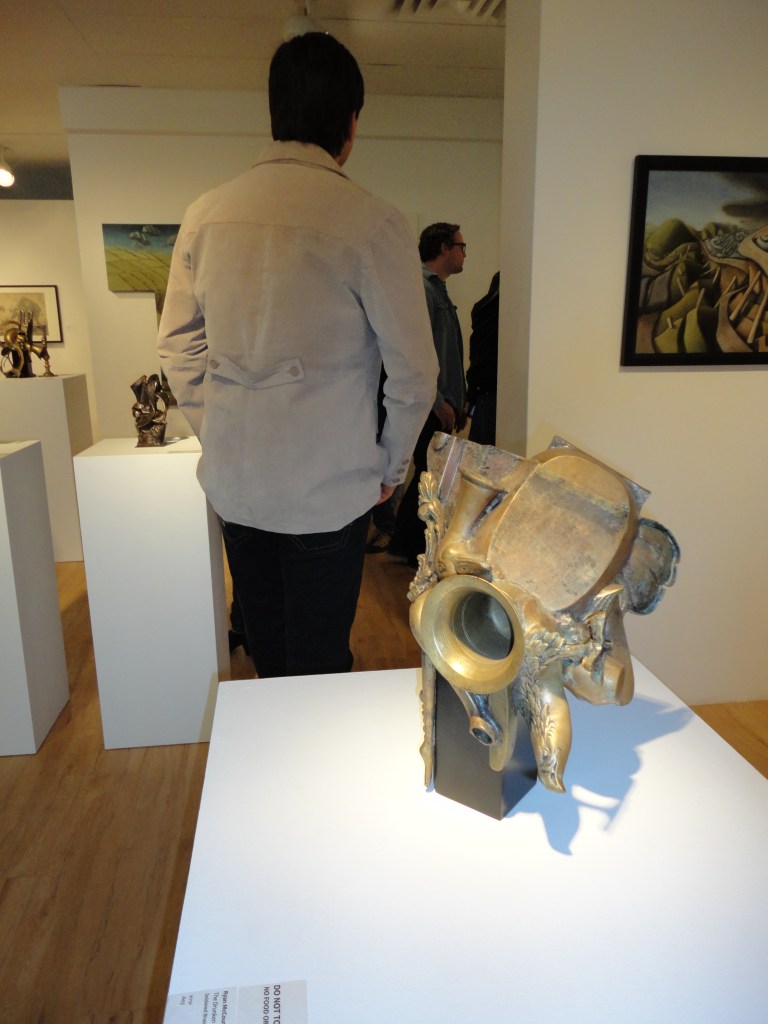
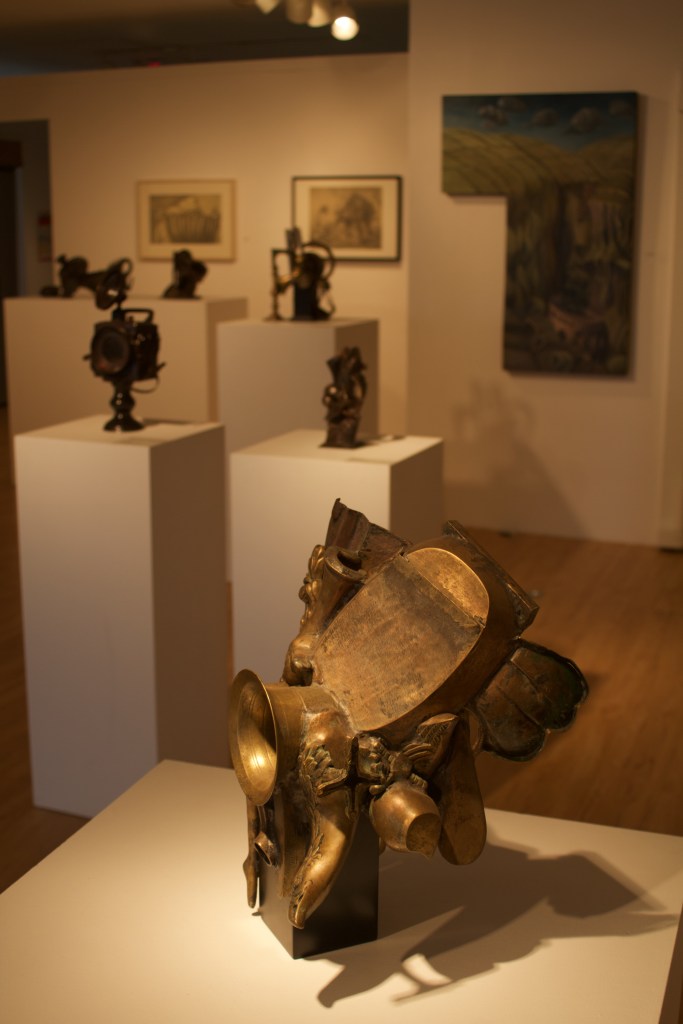
The Drunken Seder joins two sacred meals through the one thing they share, wine, and gives the result the posture of the Barberini Faun. The Hellenistic satyr sleeps it off on a rock, torso thrown back, arm flung overhead, a leg hanging slack. The sculpture’s mass lies back across its post in the same way, with the engraved panel thrown over the top and long forms trailing down the front. The post is the rock, and no part of the figure holds itself up.
The two halves of the title are rites of opposite temper. The Seder is among the most regulated meals in any tradition: a fixed order, a text read aloud, four cups drunk at prescribed moments. The satyr is the companion of Dionysus, for whom wine dissolves order. The sculpture sets one inside the other. The tilted panel is the text, still present and angled so it can no longer be read. The slump is what the cups produce when the sequence runs longer than the reading. The Seder prescribes the wine, and the satyr shows where the wine goes.
The bird heads link the two traditions. The satyr is a hybrid, a man with a goat’s legs and horns, and the Bird’s Head Haggadah, a medieval Ashkenazi manuscript, draws the people at the Seder table as men with the heads of birds. The sculpture’s bird heads, one rising from the ornament at the center with a round, attentive eye and another looking out from behind the horn, make its celebrants hybrids too, in the manner of the manuscript. The horn belongs to the satyr’s side, since pipes and horns are his instruments. Its bell opens toward the viewer, the one form in the piece still sounding.

