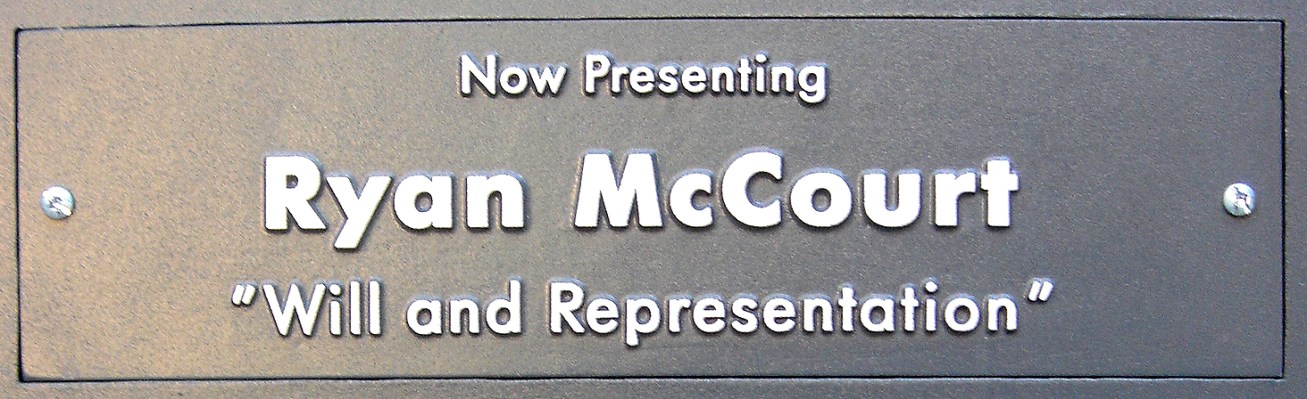
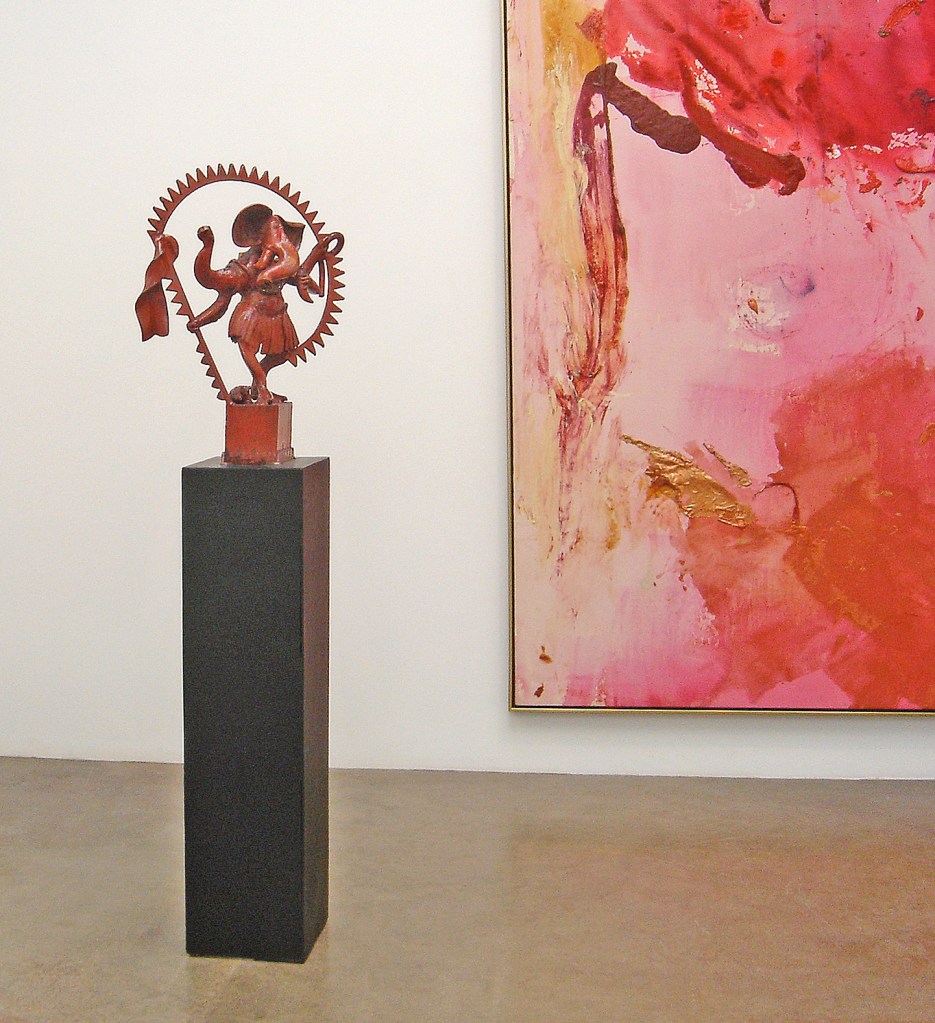
Painted welded steel, 63 x 19 x 16, 2007.
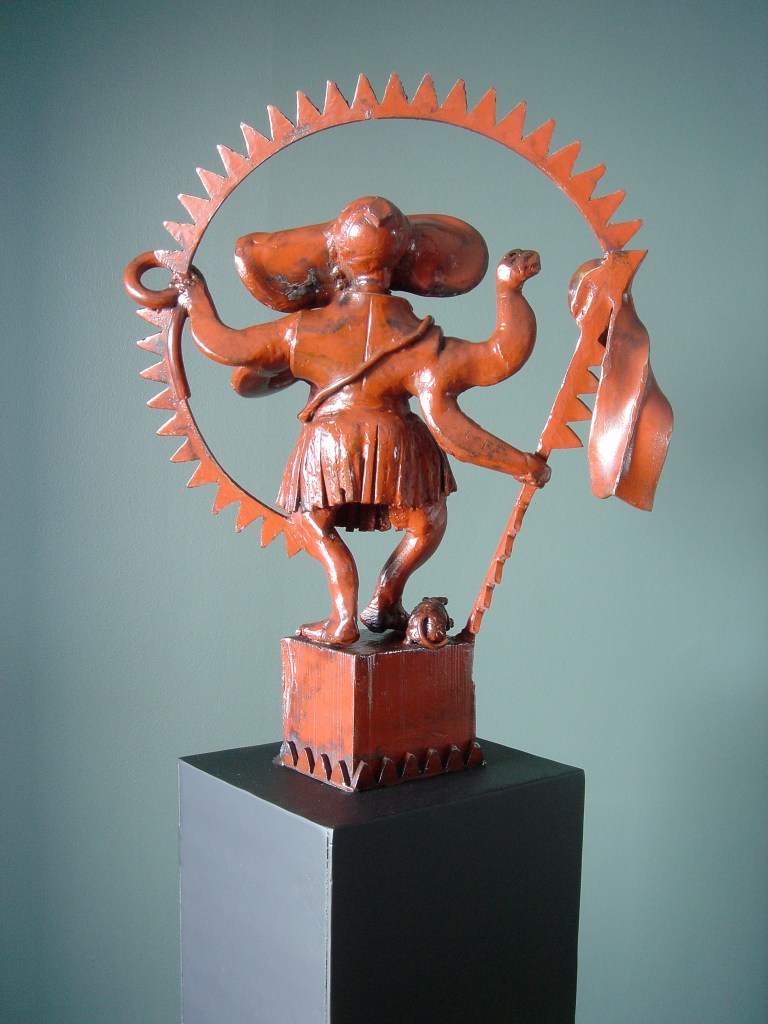
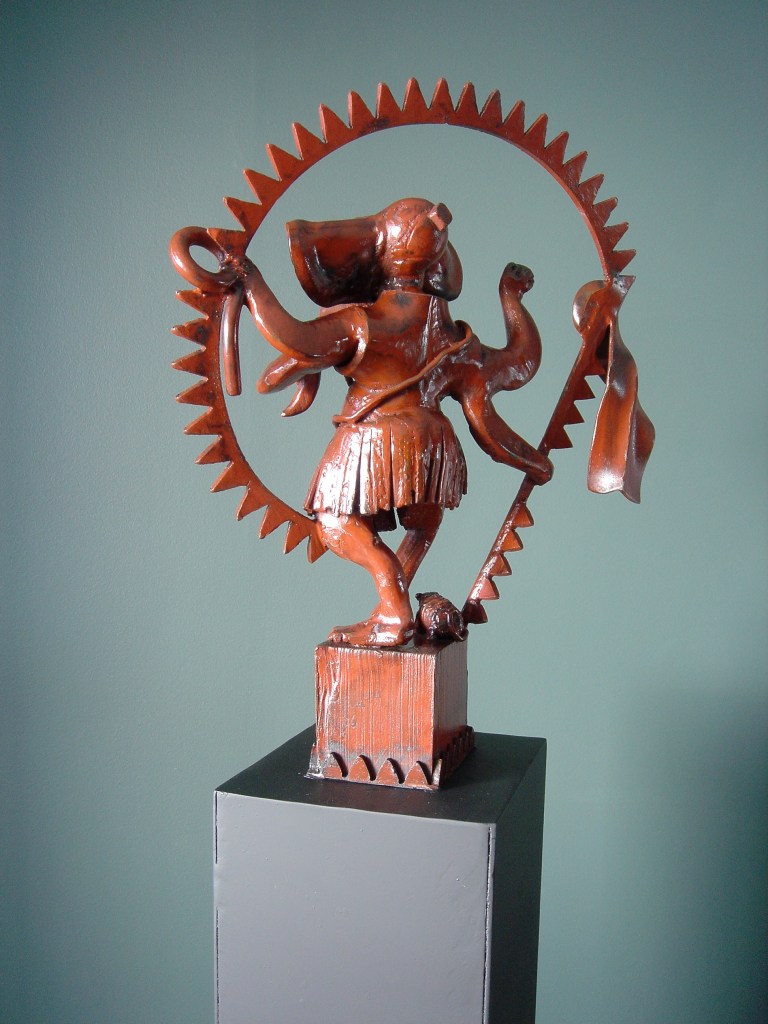
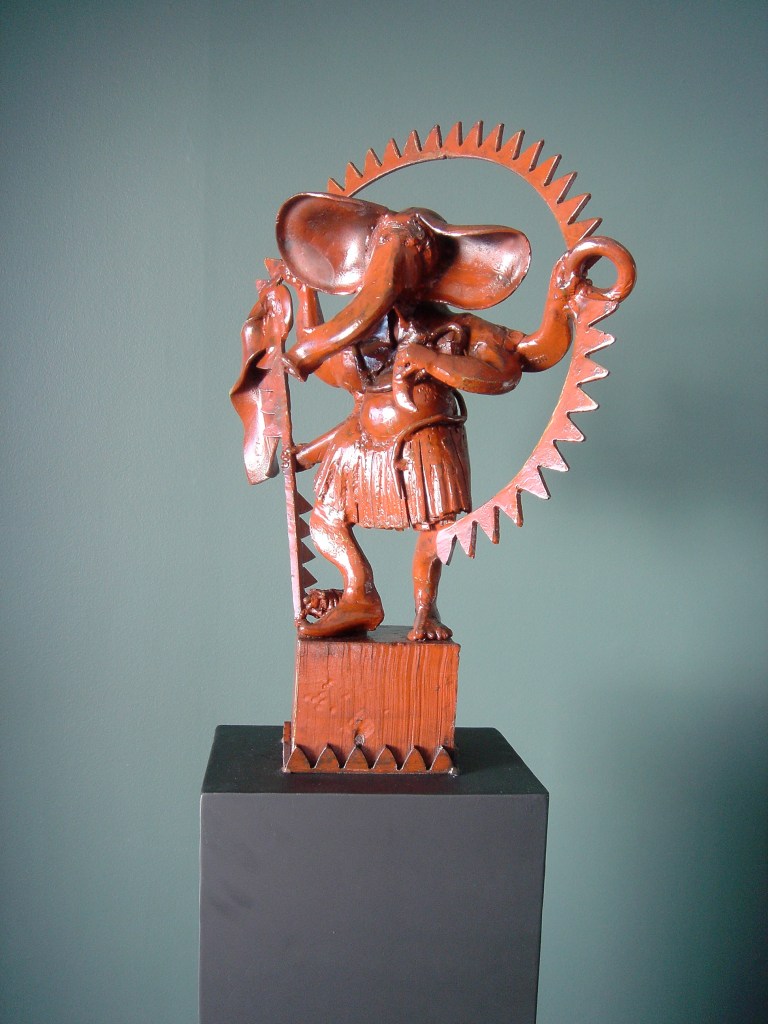
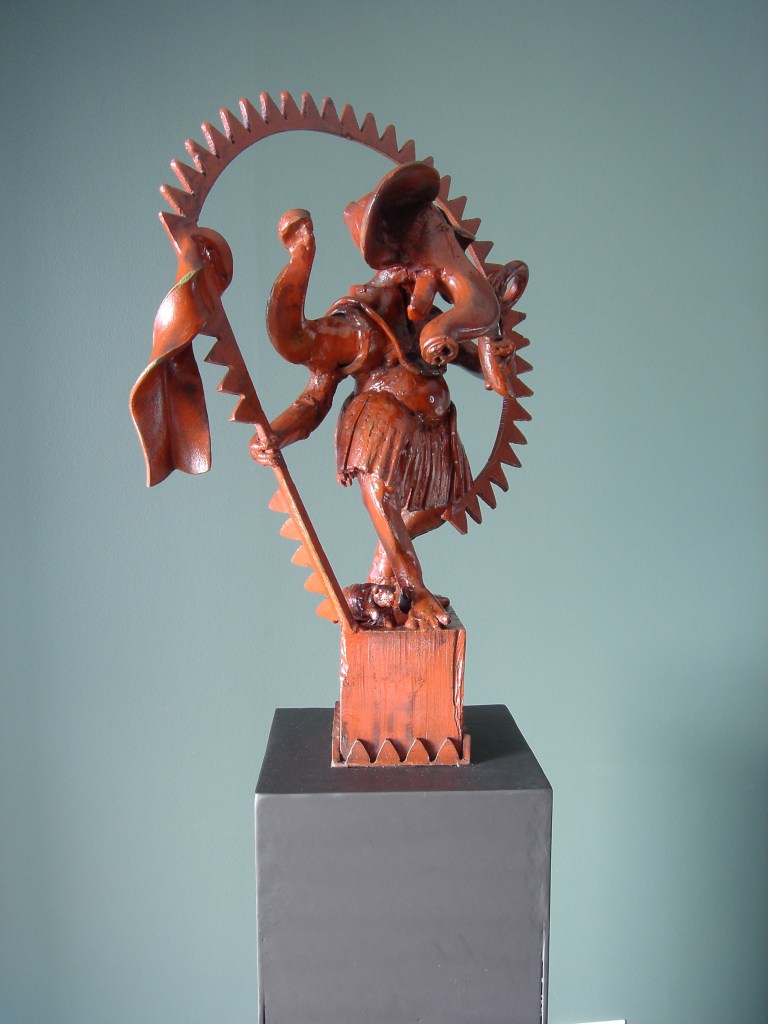

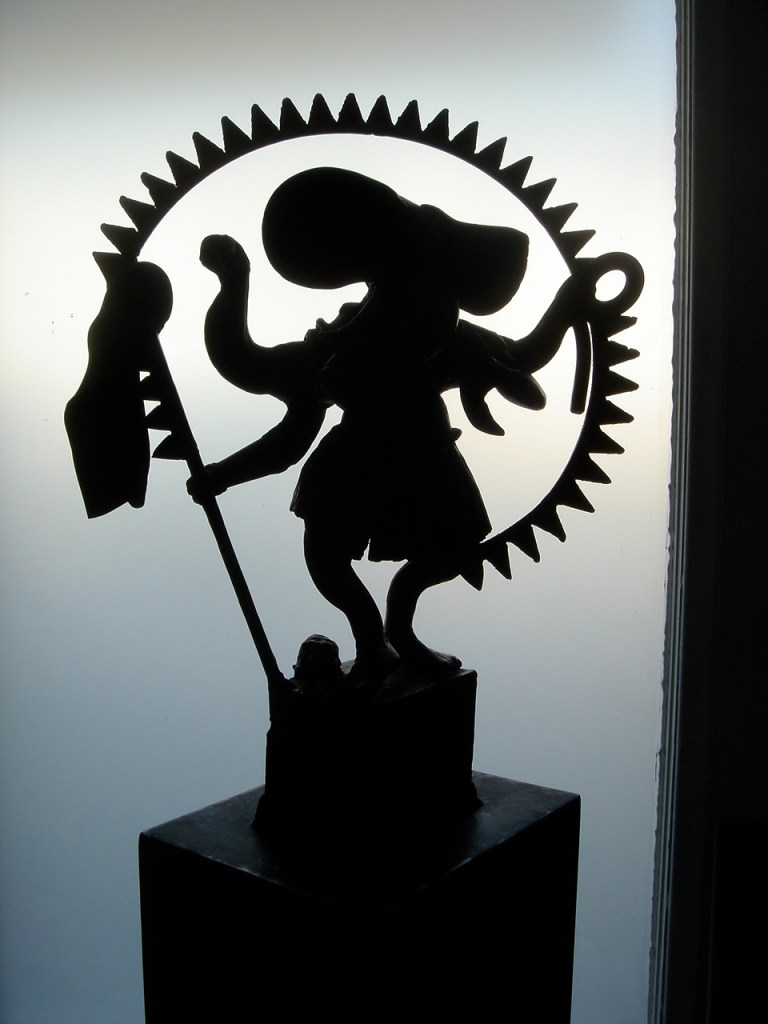
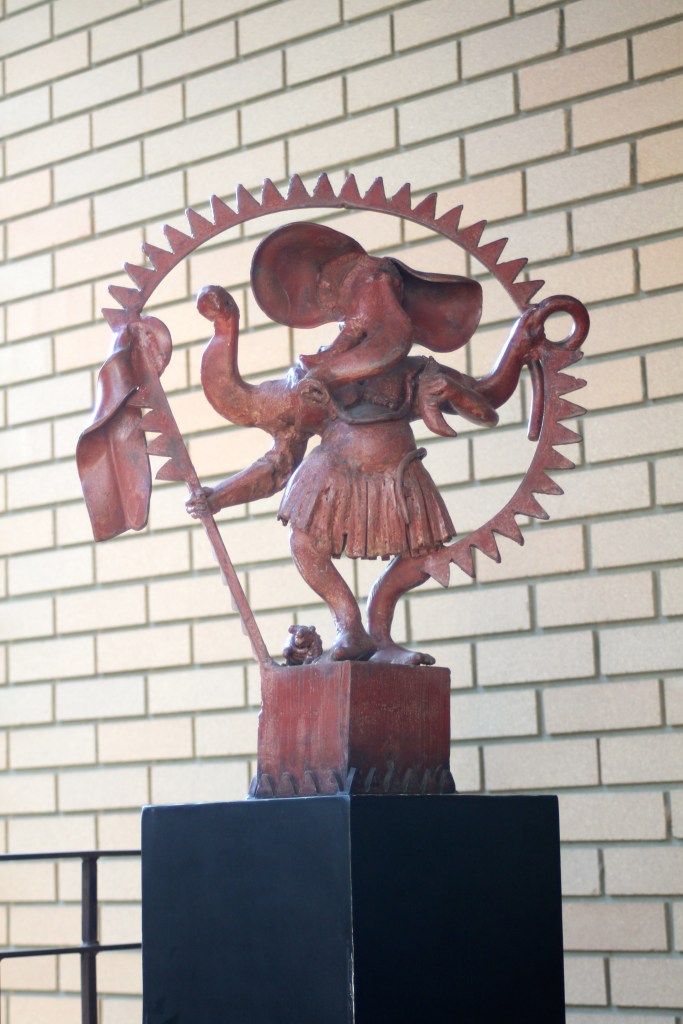
Ganesha is the god invoked first. An Indian classical dance or music recital customarily opens with a salutation to him, and so does the start of a book, a building or a journey. The remover of obstacles is the patron of beginnings, and an art has as much need of a beginning as any undertaking.
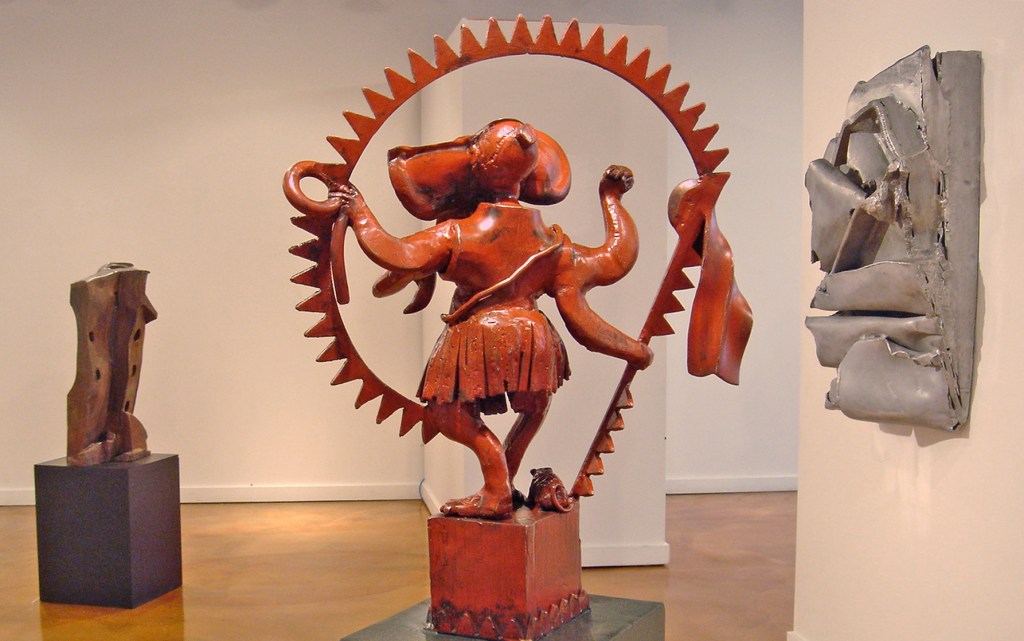
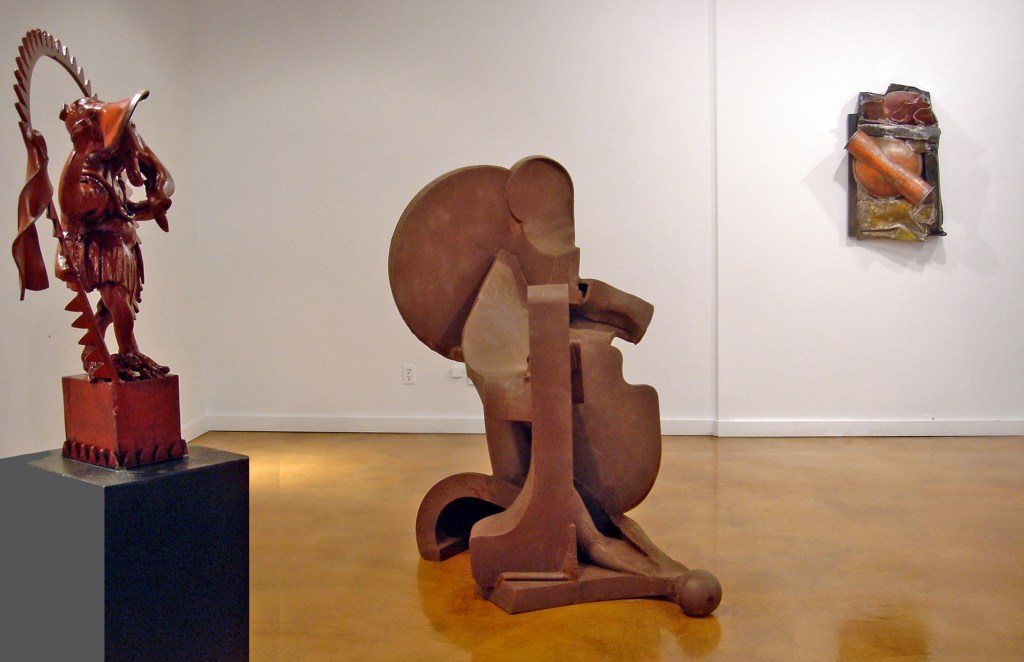
This patron dances. He stands on one leg with the other bent and lifted, one arm raised high, the trunk curled to the side and the great ears flared. The pose and the ring behind him come from the dancing Shiva Nataraja, Ganesha’s father, who dances inside a ring of flame, and Ganesha has a dancing form of his own, Nritta Ganapati. The ring here is toothed, with the teeth pointing outward. The same triangular tooth runs along one edge of his staff and around the foot of the block, and the repetition gives the piece a beat. His pleated skirt has the look of a dancer’s costume.
He carries a banner on a staff, the kind carried at the head of a procession, and a looped rod in another hand. His mouse crouches by the standing foot. The invocation that opens a performance has become the performance, and the god of beginnings is shown mid-step.

