Welded steel, 100 x 94 x 98, 2002.
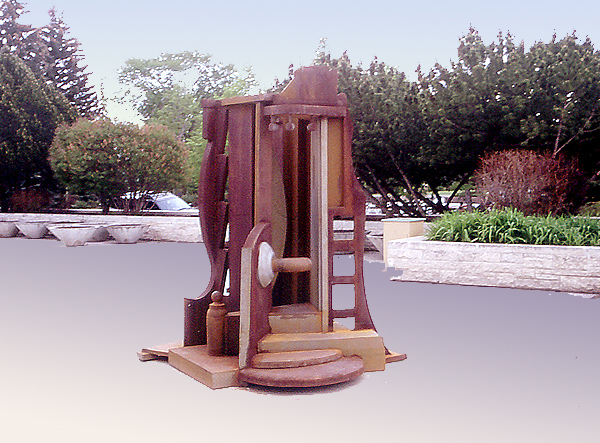
The English word covers three things that the sculpture turns into one. An overture is an opening, since the French ouverture means exactly that. It is also the piece an orchestra plays before an opera begins, while the audience settles and the curtain is still down. And it is the first approach one person makes to another, a proposal that can be accepted or refused. At eight feet high and eight feet across, the sculpture has an opening through its middle that a visitor can squeeze through, and going in is the approach.
The passage is a hard one. It’s convoluted, and a visitor who takes it is handled on the way: shoulders turn, the body twists, and the steel presses close on each side. Making an overture is like that, a move toward something unknown that costs the person who makes it, and the sculpture charges the visitor what the word charges anyone. Its walls are made of different forms. At the left a tall leaf-shaped blade stands behind a circular plate with a short knob at its center that looks like a door fitting. At the right a column of small rectangular openings runs down a slender upright, and a plate caps the top like a lintel. Each wall has its own character, and the visitor passes between them.
An opera overture is heard before the action begins, and the passage ends with the visitor standing on the other side of the structure, past its walls and under its lintel. The work is a threshold, and what follows it is left to the person who has crossed.

