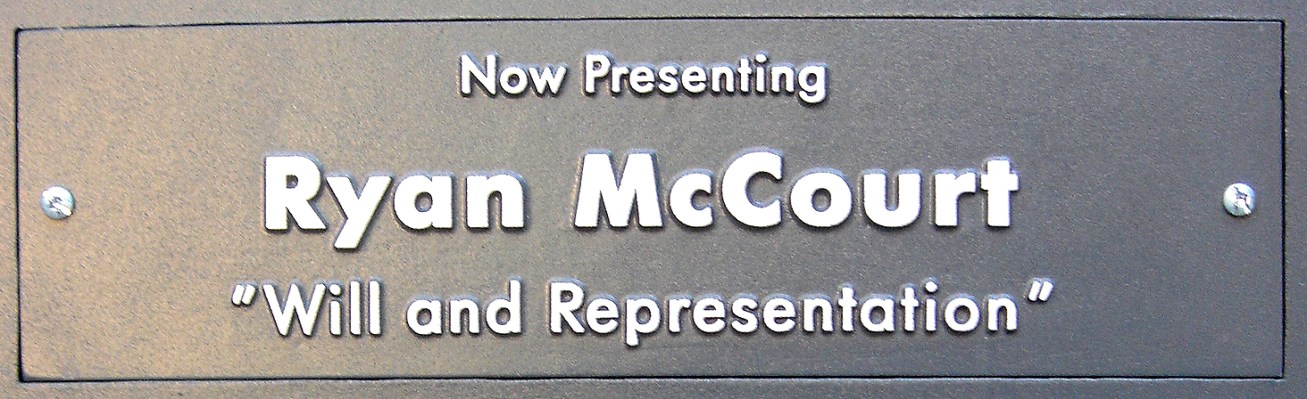
Welded steel, 2002.
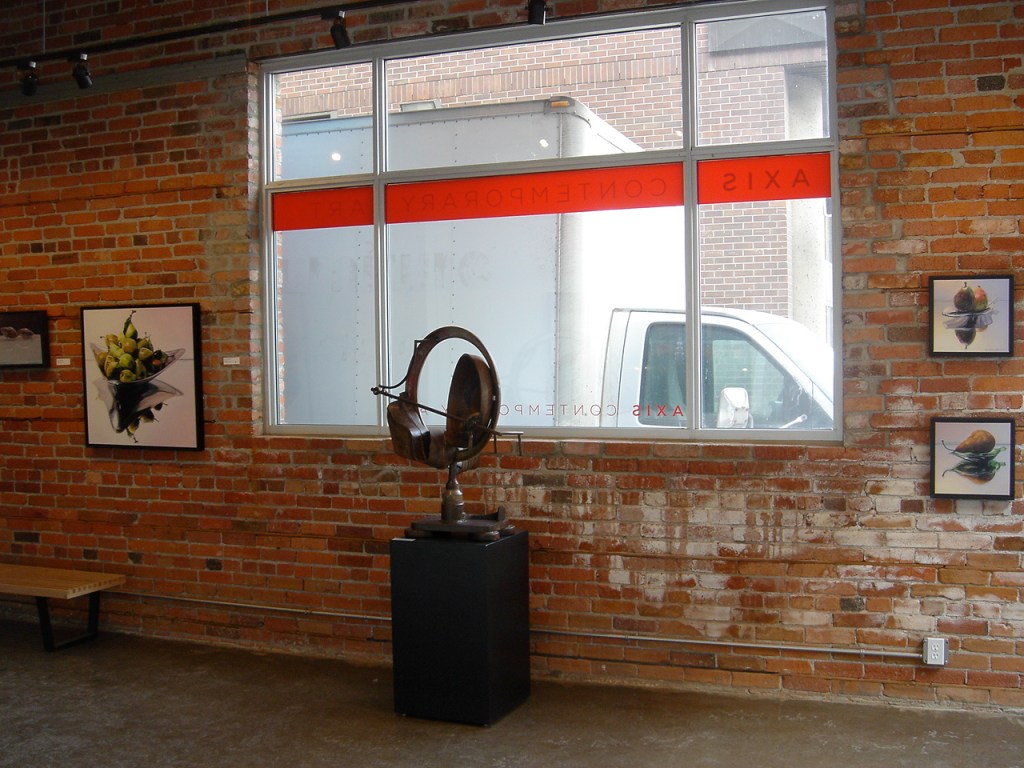
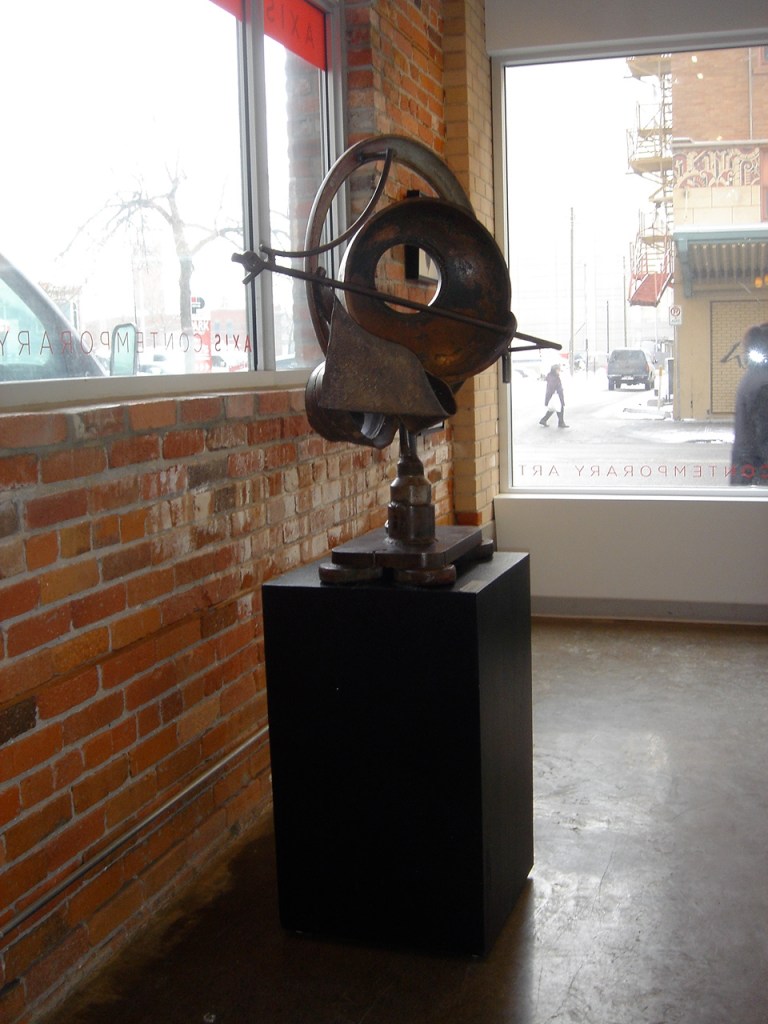
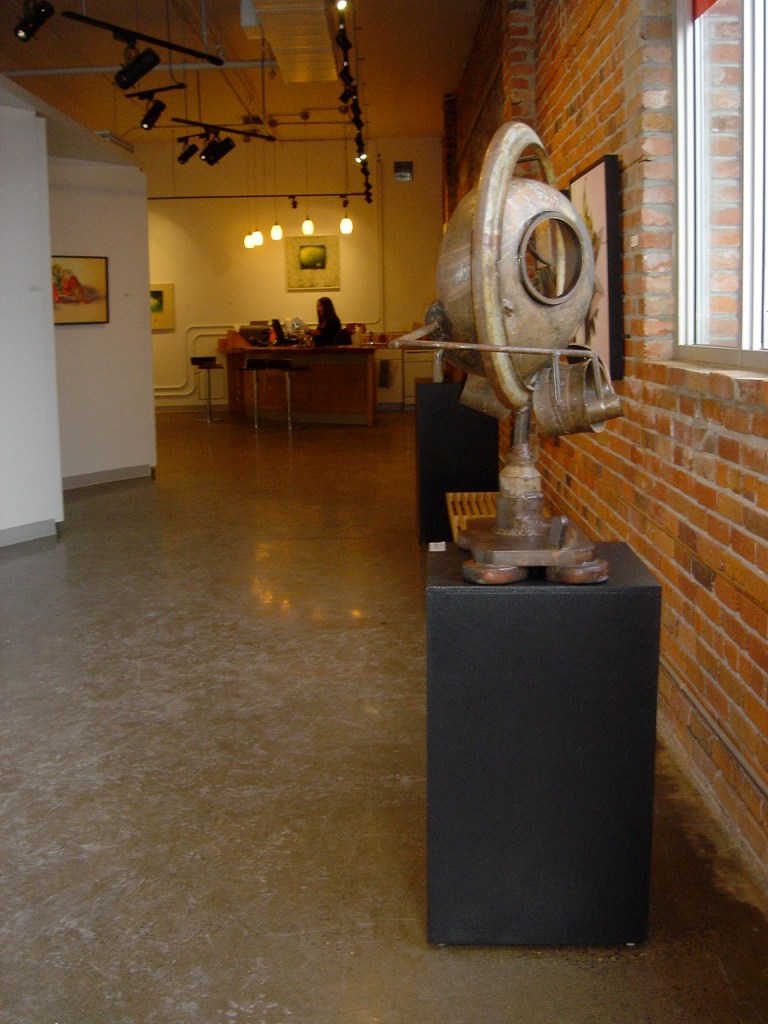
“Revolution” has two meanings, and the sculpture makes one object of both. It’s one trip of a body around a center, and it’s the overthrow of an order. The October Revolution is the Bolshevik seizure of power in Petrograd in October 1917, by the Russian calendar then in use. The month in the title gives the date of the second event, and the form gives the first.
The sculpture is built as an instrument of turning. A wide ring encircles a rimmed dish, the way a ring encircles a planet, and the pair is mounted at a tilt on a short vertical spindle that rises from a flat plate. A thin bar crosses the ring on the diagonal and ends in small hooks. The dish has a round opening at its center, and the room behind shows through it. Everything about the mounting says the assembly can swing round on its axis, and it is held at one point in a rotation that has no end.
The word meant a turn round a center before it meant an overthrow, and the sculpture keeps both uses in view without choosing between them. The ring sets the circuit and the opening in the dish is the one aperture in the piece. Whoever stands in front of it can look straight through the middle of the turning thing.

