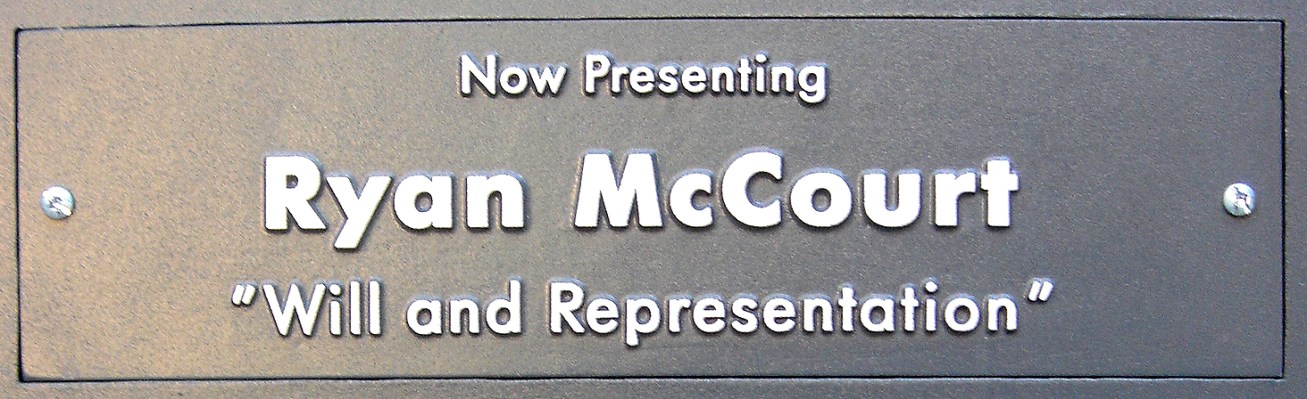
Welded steel, 1997.
In art-historical usage, “after” marks a work made in response to an earlier artist’s: a painting after Poussin, a print after Rembrandt. The title puts a city where the name would go. The city is London as the artist first met it, through the Tate’s galleries, so the sculpture reads as a response to what he saw there. It answers in the terms of the lineage that runs from Moore through Caro, and from Caro to Hide, the artist’s own teacher. Steel planes are cut and joined at different angles, the broad base is built into the work, and the mass spreads sideways at least as much as it climbs.
Within that vocabulary the sculpture raises a chair. The seat and its tall, flaring back stand on one tapering leg at the top of stepped slabs, which can be read as a stair leading up to them. The seat is empty, and a chair implies a body without depicting one. Here the body implied is the visitor, climbing toward the seat of the tradition that the title names.

