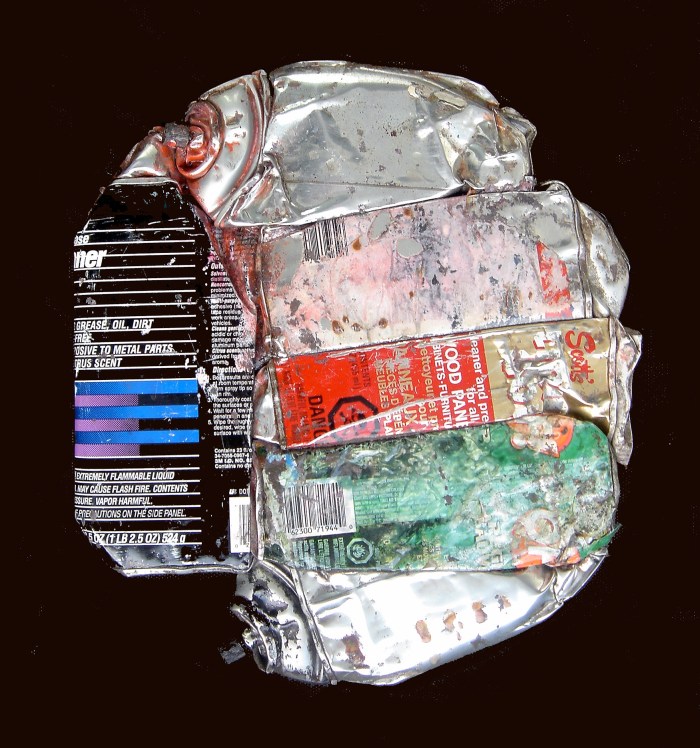
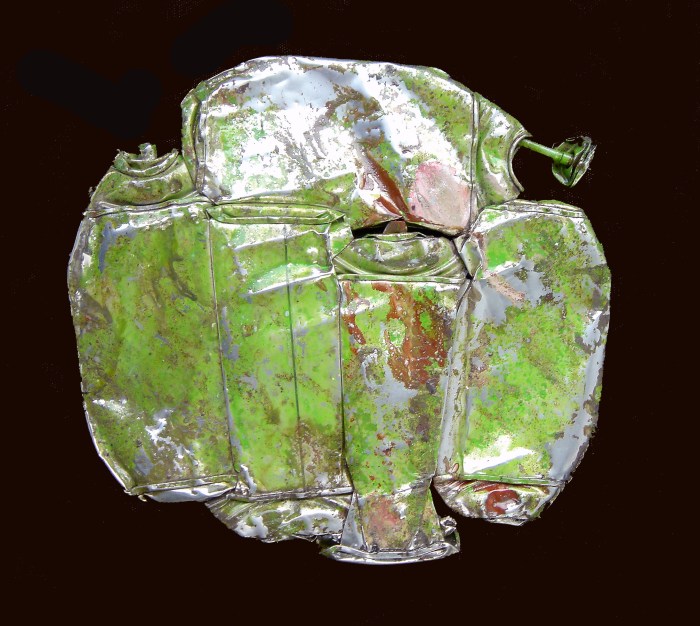
Crushed cans, 12 x 12, 2006. The aerosol cans that these pieces are constructed from can be imagined narratively as the peripheral artifacts of creation, bearing more than a passing resemblance to a traditional painter’s flattened, empty metallic tubes of oil paint. Viewing the sculptures literally, this conception expands to represent the peripheral artifacts of … Continue reading Jardin d’Amour
Author: MC
Occupational Hazards
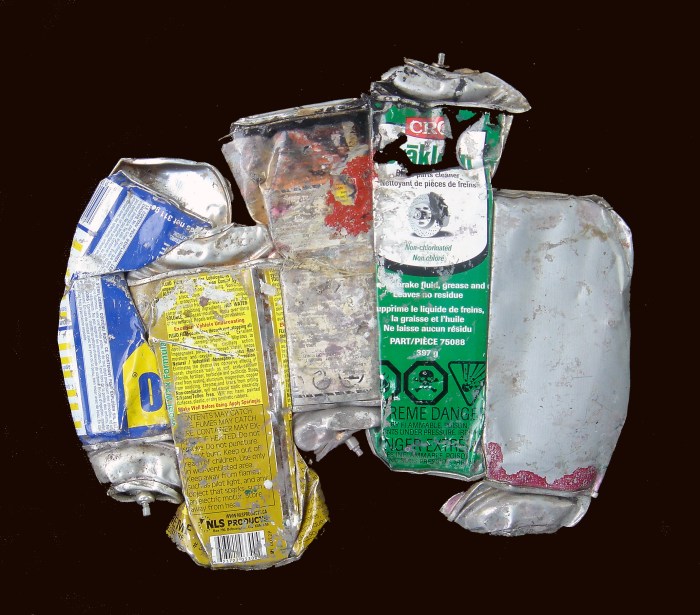
Crushed cans, 12 x 12, 2006. The aerosol cans that these pieces are constructed from can be imagined narratively as the peripheral artifacts of creation, bearing more than a passing resemblance to a traditional painter’s flattened, empty metallic tubes of oil paint. Viewing the sculptures literally, this conception expands to represent the peripheral artifacts of … Continue reading Occupational Hazards
Shoptalk
Crushed cans, 12 x 12, 2006. The aerosol cans that these pieces are constructed from can be imagined narratively as the peripheral artifacts of creation, bearing more than a passing resemblance to a traditional painter’s flattened, empty metallic tubes of oil paint. Viewing the sculptures literally, this conception expands to represent the peripheral artifacts of … Continue reading Shoptalk
The Abduction of Liberty
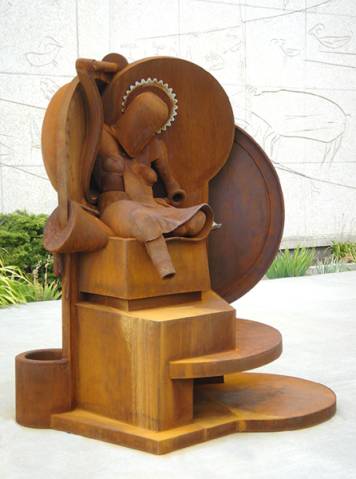
Welded steel, 88 x 80 x 76, 2005. Abduction is a subject of motion in European sculpture. The figure in The Abduction of Liberty sits still. Liberty’s usual iconography is a set of things she holds: the torch and the tablet. This figure holds nothing. Her arms stop short, and each ends in a ring … Continue reading The Abduction of Liberty
The Persistence of Tyranny
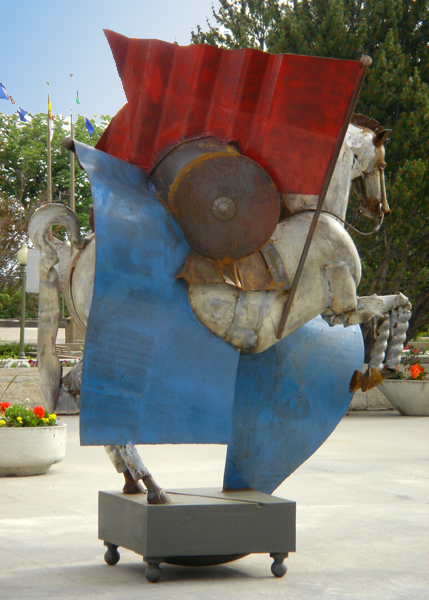
Painted welded steel, 124 x 90 x 54, 2005. The rider in this group is the least imposing part of it. He is a small, plain figure in a broad-brimmed hat and a jacket with a red cuff, on a horse that dwarfs him. A red banner billows behind him, as large as he … Continue reading The Persistence of Tyranny